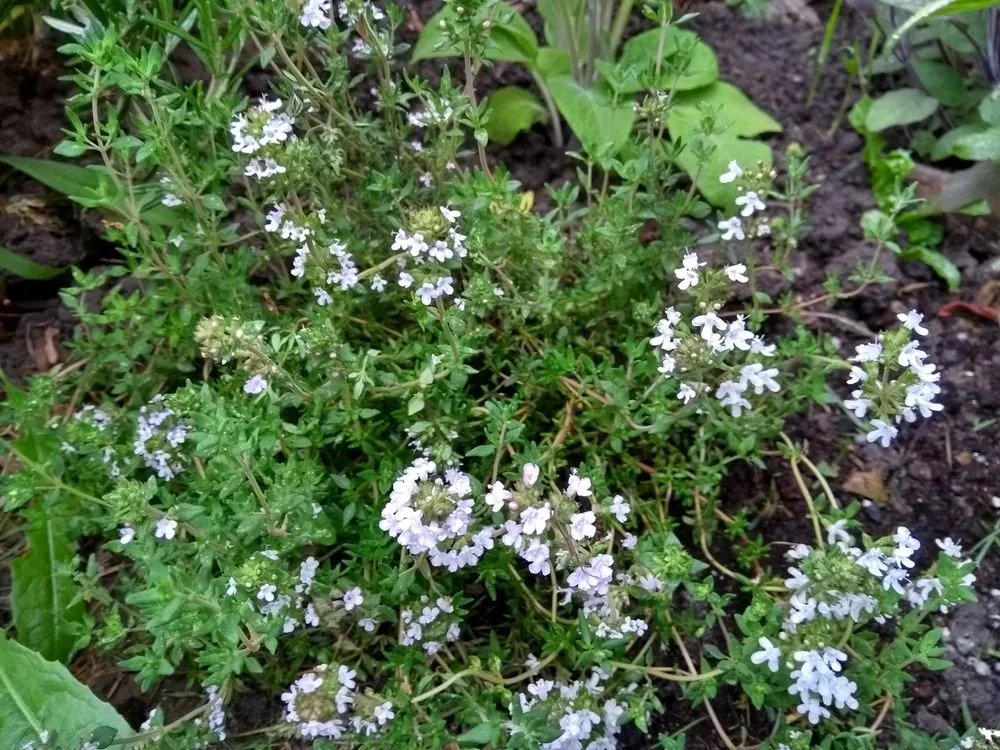
A low, wiry mound of Common Thyme covered in small pale lilac flowers, growing in a sunny garden bed

Common Thyme

Thymus vulgaris
Care level: Easy

Common Thyme is the low, woody Mediterranean herb that most culinary thyme comes from: a sun-loving sub-shrub to about 20–30cm, with tiny grey-green aromatic leaves on wiry stems that turn almost white with hairs in strong light. Left to its own devices it forms a tight, rounded mound and smothers itself in small pale lilac flowers in early summer, which bees find from a distance. It is one of the easiest herbs to kill with kindness: it wants poor, dry, sunny conditions and resents being fussed over.

I have this plant

Information

Varieties and related species
Thymus vulgaris 'Silver Posie'Thymus × citriodorusThymus vulgaris 'Compactus'

Light

Full sun, the more the better. Thyme grown in shade becomes thin and straggly and loses most of its scent.

Water

Let the compost or soil dry out almost completely between waterings. Established plants in open ground often need no watering at all once rooted in, even through a dry summer.

Humidity

Not a factor; thyme is a dry-hillside plant and good air movement around it matters far more than ambient moisture.

Soil

Poor to average, sharply drained and on the alkaline side if anything. Rich, moisture-retentive soil is the main reason a potted thyme fails.

Temperature

Hardy to around -20°C once established.

Size

15-30cm tall and 15-40cm wide.

Growth speed

Medium

Non-toxic to pets

Considered non-toxic to cats and dogs.

Source: ASPCA

Signature feature

It is the one common kitchen herb that is genuinely better dried than many cooks give it credit for: the flavour concentrates rather than fading, because the oils sit in the leaf itself rather than evaporating the way basil's do. A woody stem stripped and crumbled into a slow-cooked dish works as well as fresh, which is not true of most soft-leaved herbs.

Care by Season

Spring

New growth resumes; this is the best time to divide an established clump or plant out new ones, once the worst frosts have passed.

Summer

Flowering, usually June. Harvest regularly, which doubles as the pruning it needs, and trim lightly once flowering finishes to stop it going woody.

Autumn

Growth slows. A light trim now, rather than a hard one, tidies the plant without leaving bare, frost-vulnerable cuts going into winter.

Winter

Hardy down to around –20°C once established, and evergreen, so a little can usually still be picked. Wet, poorly drained soil in winter kills it far more often than cold does.

Growing & Maintenance

Soil and pot

Poor to average, sharply drained soil, sandy or stony and neutral to alkaline. In a pot, mix plenty of grit into the compost.

Fertilising

None needed. Rich soil and feeding make soft growth with less scent.

Pruning

Trim whenever it gets leggy, and cut back in early spring and again after flowering to slow the build-up of wood. Always leave green growth: old wood rarely resprouts.

Propagation

Stem cuttings, layering or division, best in early spring. Seed germinates unevenly.

Pests & Diseases

Common problems

Woody and bare in the middle

Most likely cause: Age. Thyme rarely resprouts from old wood.
What to do: Replace the plant with cuttings taken from the leafy outer growth, and trim young plants every year.

Weak scent and taste

Most likely cause: Too much water or soil that is too rich.
What to do: Grow it harder: full sun, poor soil, and water only when almost dry.

Thin, straggly growth

Most likely cause: Too little sun.
What to do: Move it to the sunniest spot you have.

Yellowing, collapsing plant, often in winter

Most likely cause: Root rot in wet, poorly drained soil.
What to do: Improve the drainage with grit, or grow it in a raised bed or pot.

No regrowth after a hard cut

Most likely cause: The cut went into bare, old wood.
What to do: Only cut where there are green leaves below the cut.

Pests & Diseases

Root rot

Signs: Wilting that does not recover after watering, and a blackened, mushy stem base on close inspection.
Treatment: Almost always a drainage problem rather than a pest. Lift the plant, cut away any rotten roots, and replant in gritty, free-draining soil or a fresh pot; there is no treatment that works if the soil stays wet.

Spider mite

Signs: Fine pale speckling on the leaves and faint webbing between stems, usually on plants kept too warm and dry indoors.
Treatment: Rare outdoors. Indoors, increase air movement and rinse the plant under running water to dislodge mites; a plant this tolerant of dry conditions is still better moved outside if space allows. Check the undersides of the leaves and the crevices where the leaf stem meets the main stalk.

Rosemary beetle

Signs: Small metallic green and purple striped beetles and greyish grubs eating the shoot tips
Treatment: Shake them onto a sheet laid under the plant, or pick them off by hand.

FAQ

My thyme has gone woody and bare in the middle. Can it be saved?

Not by cutting it hard back into the old wood, which thyme rarely resprouts from. The usual fix is to take cuttings from the leafy outer growth, root a handful of replacements, and treat the old plant as a stopgap until they take over; most gardeners replace thyme every 3–4 years for exactly this reason. Trimming it lightly after flowering every year, rather than only when it looks tired, is what keeps a plant bushy for longer.

Why does my thyme smell and taste weaker than thyme I've bought at a shop?

Almost always too much water or too rich a soil. Thyme's aromatic oils are a response to stress in its native dry, stony hillsides, and a plant grown soft and fast in fertile, well-watered compost produces more leaf and less flavour. Cutting back on both water and feed, and growing it in a lean, gritty mix, brings the scent back more reliably than any amount of pruning.

When is the best time to harvest thyme?

Just before it flowers, when the leaves hold the most essential oil. Cut the top growth and leave about 12cm of the plant so it can regrow.

Is thyme safe for cats and dogs?

Yes, common thyme is not toxic to cats or dogs.

Can thyme grow indoors?

Only on a very sunny windowsill. It needs full sun and dry air, and in a dim room it grows thin and loses its scent.

How do I propagate thyme?

From stem cuttings, by layering or by dividing a clump. Early spring is the best time. Growing it from seed is slow and uneven.

You might also like