No results. Is a plant missing? Tell uscontact@wikiplant.net
Never Never Plant
Ctenanthe burle-marxii
Care level: Moderate
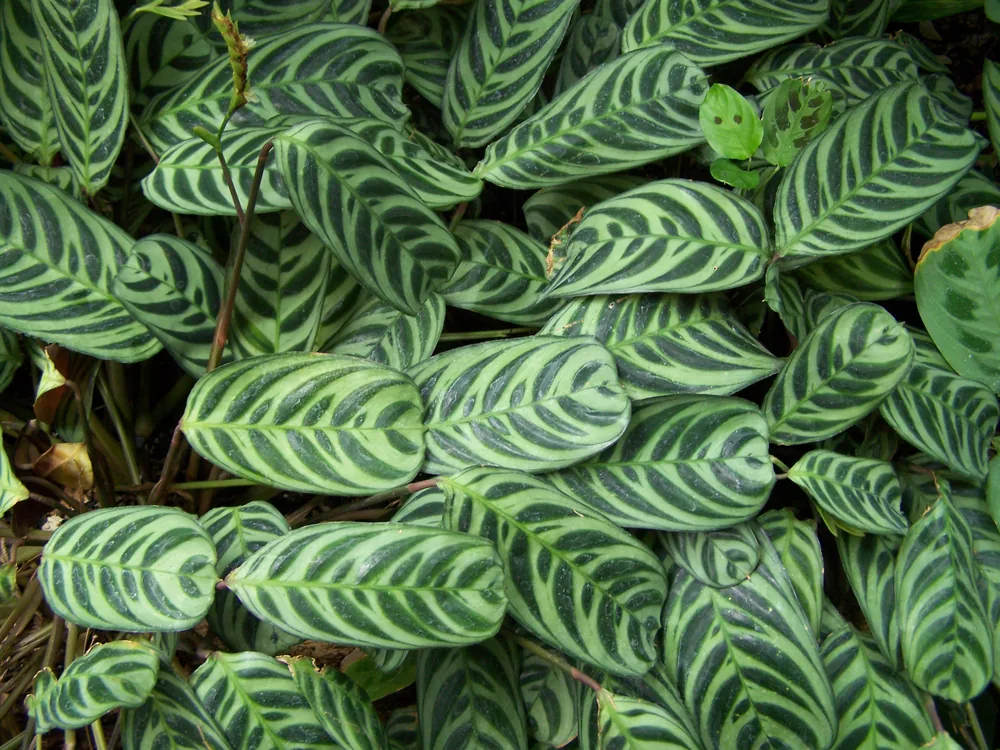
Ctenanthe burle-marxii gets its common name, Never Never Plant, from the remote Never Never region of the Australian outback, though the plant itself actually hails from the Brazilian rainforest floor, where its painted, herringbone-patterned leaves catch the dim light filtering through the canopy above.
Prefers low to medium indirect light and can scorch in direct sun.
Water
Keep soil evenly moist, watering about once a week, and never let it dry out completely.
Humidity
Needs high humidity (60%+); crispy leaf edges signal air that is too dry.
Soil
A light, peat-based potting mix with good moisture retention but free drainage.
Temperature
Warm. Keep it above 16°C, away from cold draughts and heating vents.
Best position
north / north-east-facing windowanywhere up to about 2 m from the window
east-facing windowabout 1 m from the window or further back
west-facing windowabout 2 m from the window or further back
Watch for strong direct sun at east / west windows.
See every window directionHide window directions
Best position
right by the window
about 1 m
about 2 m
about 4 m
4 m or more
north
works well✓
works well✓
works well✓
just about~
just about~
north-east
works well✓
works well✓
works well✓
just about~
just about~
east
just about~
works well✓
works well✓
works well✓
works well✓
south-east
too much direct sun☼
just about~
just about~
works well✓
works well✓
south
too much direct sun☼
too much direct sun☼
too much direct sun☼
just about~
works well✓
south-west
too much direct sun☼
too much direct sun☼
just about~
works well✓
works well✓
west
too much direct sun☼
too much direct sun☼
works well✓
works well✓
works well✓
north-west
too much direct sun☼
just about~
works well✓
just about~
just about~
✓works well~just about○too dark☼too much direct sun
A rough guide based on window direction and typical daylight through the year. Window size, curtains and whatever stands outside matter just as much.
?Pet safety not confirmed
As a precaution, keep it out of reach of children and pets.
Did you know?
Like other prayer-plant relatives, Ctenanthe leaves fold upright at night and flatten out again by day, a rhythmic movement driven by a hinge-like pulvinus at the base of each leaf stalk.
Care by Season
Spring
Resume light feeding every 4 weeks and repot if roots are crowded.
Summer
Water freely and mist regularly to counter heat and low indoor humidity.
Autumn
Taper off fertilizer and watch for leaves folding upright at night, a normal prayer-plant response.
Winter
Reduce watering slightly, keep away from cold drafts and heating vents, and maintain warmth above 16°C.
Growing & Maintenance
Soil and pot
A light, peat-based mix that holds moisture but drains freely, in a pot with drainage holes.
Repotting
In spring, when the roots have filled the pot.
Fertilising
A light feed every four weeks in spring and summer. Taper off in autumn.
Propagation
By division when you repot, giving each piece its own roots and leaves.
Pests & Diseases
Common problems
Brown, crispy leaf edges
Most likely cause: Low humidity or hard tap water.
What to do: Keep the humidity at 60% or more and water with filtered, distilled or rain water.
Yellow leaves
Most likely cause: Overwatering.
What to do: Keep the compost evenly moist but never soggy, and make sure the pot drains.
Scorched patches
Most likely cause: Direct sun.
What to do: Move it to low or medium indirect light.
Curled, limp leaves
Most likely cause: The compost has dried out.
What to do: Water thoroughly and do not let it dry out completely again.
Leaves folding upright at night
Most likely cause: Normal for prayer-plant relatives.
What to do: Nothing to do.
Pests & Diseases
Spider mites
Signs: Fine webbing and tiny pale speckles on leaf surfaces.
Treatment: Raise humidity, rinse foliage, and treat with insecticidal soap if infestation persists. Check the undersides of the leaves and the crevices where the leaf stem meets the main stalk.
Mealybugs
Signs: Small white cottony masses along stems and leaf undersides.
Treatment: Remove with an alcohol-soaked cotton swab and repeat weekly until gone. Check the undersides of the leaves and the crevices where the leaf stem meets the main stalk.
Leaf edge browning
Signs: Crispy, dry margins on otherwise healthy leaves.
Treatment: Increase ambient humidity and switch to filtered or distilled water.
FAQ
Why are my Ctenanthe leaf edges going brown and crispy?
This almost always points to humidity that is too low or watering with hard tap water; raise ambient moisture around the plant and switch to filtered or rested water to stop new edges from crisping.
Is it normal for my Ctenanthe's leaves to curl up at night?
Yes, this nightly folding is a natural behavior shared with prayer plants and is nothing to worry about; the leaves relax flat again once morning light returns.
How often should I water a Ctenanthe?
About once a week, so the compost stays evenly moist and never dries out completely. Use filtered, distilled or rain water if your tap water is hard.
How much light does a Ctenanthe need?
It needs low to medium indirect light. Direct sun scorches the leaves.
How do I propagate a Ctenanthe?
By division. Split the clump when you repot, giving each piece its own roots and leaves.
What temperature does a Ctenanthe need?
It needs warmth, above 16°C. Keep it away from cold draughts and from the dry air of heating vents.