No results. Is a plant missing? Tell uscontact@wikiplant.net
Dill
Anethum graveolens
Care level: Easy
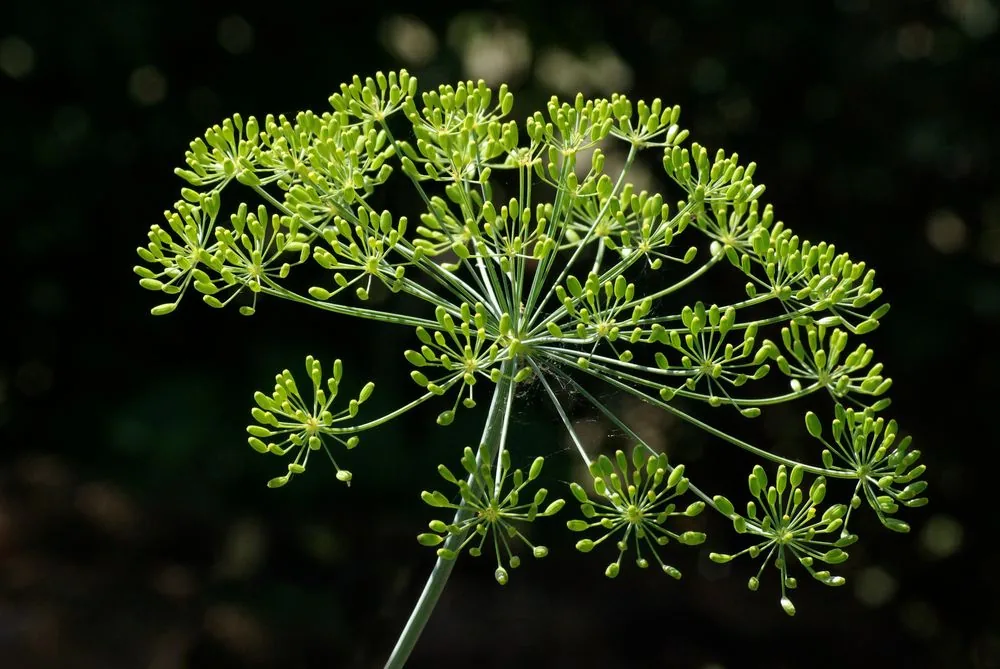
Dill is an upright annual herb with thread-fine, blue-green, aromatic leaves and flat yellow flower heads in midsummer. The leaves, the flower heads and the seeds are all used in the kitchen, with fish, potatoes and pickles above all. It grows quickly from seed, reaches 60-100cm, flowers, sets seed and dies within one season, and often seeds itself for the following year.
Full sun. It tolerates light shade, but stems are strongest and yields highest in sun.
Water
Keep the soil evenly moist. Dry spells make the plant flower early.
Humidity
Not a factor for this outdoor herb.
Soil
Well-drained, slightly acid to neutral soil.
Temperature
Grown as an annual: sown from spring, finished by autumn.
Size
0.6-1m tall.
Growth speed
Medium
?Pet safety not confirmed
As a precaution, keep it out of reach of children and pets.
Common mistake
Sowing dill in a tray and transplanting it later is the usual reason it bolts early. Dill forms a taproot and resents being moved, so sow it where it is to grow and thin the seedlings instead.
Care by Season
Spring
Start sowing directly outdoors and repeat every few weeks. Thin the seedlings.
Summer
Pick leaves regularly and keep sowing until midsummer. The plants flower; cut heads for pickling.
Autumn
Collect ripe brown seed, or leave some heads to self-seed. The plants die back.
Winter
Nothing to do. Self-sown seed waits in the soil for spring.
Growing & Maintenance
Planting
Sow directly where the plants are to grow, in well-drained soil in full sun, sheltered from strong wind. Sow in succession from spring to midsummer and thin the seedlings.
Pruning
None is needed. Picking leaves regularly delays flowering a little.
Propagation
By seed only. Left alone, the plant seeds itself.
Pests & Diseases
Common problems
Early flowering
Most likely cause: Root disturbance, drought or heat.
What to do: Sow direct, water in dry weather and sow again every few weeks.
Tall stems falling over
Most likely cause: An exposed, windy position.
What to do: Sow in a sheltered spot or support the stems with twigs.
Seedlings that stopped growing after transplanting
Most likely cause: The taproot was disturbed.
What to do: Sow where the plants are to grow.
Yellowing lower leaves
Most likely cause: Dry soil, or a plant that has finished flowering.
What to do: Water young plants; replace old ones with a new sowing.
Dill coming up all over the bed
Most likely cause: Self-seeding from ripe flower heads.
What to do: Cut the heads before the seeds drop, or hoe off unwanted seedlings.
Pests & Diseases
Aphids
Signs: Clusters of small green insects on the stems and flower heads, sometimes with sticky leaves.
Treatment: Rinse them off with water. Ladybirds and hoverflies, which dill flowers attract, usually keep them in check.
Slugs and snails
Signs: Seedlings eaten off at ground level overnight.
Treatment: Protect young plants and pick the slugs off by torchlight after dark.
Powdery mildew
Signs: A white, powdery coating on the leaves and stems, late in a dry summer.
Treatment: Water the soil in dry spells and pull out badly affected plants; later sowings usually stay clean.
FAQ
Why does my dill flower so quickly?
Dill runs to flower when it is stressed: by root disturbance, by drought, or by heat. Sow it direct, keep the soil moist, and sow a new batch every few weeks from spring to midsummer so that there is always a young plant to pick from.
When and how do I sow dill?
Sow in succession from spring to midsummer, straight into well-drained soil in full sun, and thin the seedlings rather than transplanting them. A spot sheltered from strong wind stops the tall stems from blowing over.
How do I harvest dill?
Cut young leaves as needed once the plant is well grown. For pickling, cut the flower heads as they open. For seed, wait until the seeds turn brown, then cut the heads and dry them in a paper bag.
Can I grow dill in a pot?
Yes, in a deep pot that leaves room for the taproot, in full sun. Compact varieties suit containers best. Water regularly, because dry compost makes it flower early.
Does dill come back every year?
The plant itself does not; it is an annual. But if some flower heads are left to ripen, dill seeds itself freely and new plants appear the following spring.
Is the whole plant edible?
Yes. The leaves have the freshest flavour, the flower heads go into pickles, and the seeds are used as a spice with a stronger, slightly bitter taste.