No results. Is a plant missing? Tell uscontact@wikiplant.net
Dumb Cane
Dieffenbachia seguine
Care level: Easy
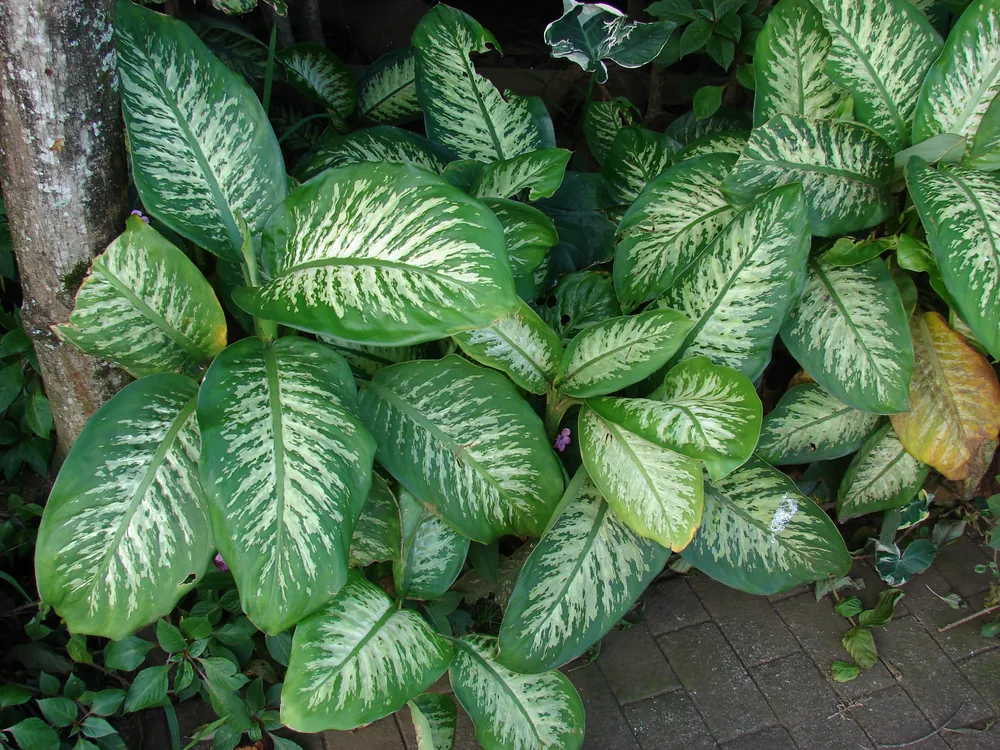
Dieffenbachia earned its common name, dumb cane, from an unpleasant historical fact: chewing its sap-laden tissue causes the mouth and throat to swell so severely that speech becomes temporarily impossible, a defense once tested (unintentionally) by curious colonial-era workers in the Caribbean. Beyond that grim backstory, it's a striking foliage plant, with broad, patterned leaves in shades of cream, green, and white that make it a longtime favorite for filling shaded corners.
Tolerates low light but grows fuller in medium to bright indirect light; avoid direct sun.
Water
Water when the top 2-3cm of soil dries out, roughly every 7-10 days.
Humidity
Prefers moderate to high humidity, benefiting from occasional misting.
Soil
Well-draining, rich potting mix with added perlite.
Temperature
Warm room temperatures, out of cold draughts.
Size
0.9-2.4m tall and 60-90cm wide.
Best position
north / north-east-facing windowanywhere up to about 2 m from the window
east-facing windowabout 1 m from the window or further back
west-facing windowabout 2 m from the window or further back
Watch for strong direct sun at east / west windows.
See every window directionHide window directions
Best position
right by the window
about 1 m
about 2 m
about 4 m
4 m or more
north
works well✓
works well✓
works well✓
just about~
just about~
north-east
works well✓
works well✓
works well✓
just about~
just about~
east
just about~
works well✓
works well✓
works well✓
works well✓
south-east
too much direct sun☼
just about~
just about~
works well✓
works well✓
south
too much direct sun☼
too much direct sun☼
too much direct sun☼
just about~
works well✓
south-west
too much direct sun☼
too much direct sun☼
just about~
works well✓
works well✓
west
too much direct sun☼
too much direct sun☼
works well✓
works well✓
works well✓
north-west
too much direct sun☼
just about~
works well✓
just about~
just about~
✓works well~just about○too dark☼too much direct sun
A rough guide based on window direction and typical daylight through the year. Window size, curtains and whatever stands outside matter just as much.
!Toxic to pets
Toxic to cats and dogs if eaten.
Chewing it can irritate the mouth, causing drooling and trouble swallowing.
If your pet has eaten some, contact your vet.
Source: ASPCA
Safety note
Every part of the dumb cane contains calcium oxalate crystals that cause intense burning, swelling of the mouth and throat, and difficulty speaking or swallowing if chewed, so keep it well out of reach of curious pets and small children and wash hands after handling cut stems.
Care by Season
Spring
Resume regular watering and monthly feeding as new leaves unfurl from the cane.
Summer
Water consistently and keep humidity up during peak growth.
Autumn
Reduce watering frequency and stop feeding as growth slows.
Winter
Water sparingly, keep away from cold drafts, and hold off on fertilizer.
Growing & Maintenance
Soil and pot
A loose, fertile mix rich in organic matter, with added perlite, in a pot with drainage holes.
Fertilising
Feed once a month in spring and summer, as new leaves unfurl. Stop in autumn.
Pruning
A cane that has lost its lower leaves can be cut back in spring; it resprouts below the cut. Wear gloves and keep the sap off your skin and out of your eyes.
Propagation
By division, or from cane and tip cuttings.
Pests & Diseases
Common problems
Lower leaves yellowing, leaving a bare cane
Most likely cause: Age, and low light.
What to do: Give it brighter indirect light. A bare cane can be cut back to resprout.
Drooping leaves
Most likely cause: Thirst, or a cold draught.
What to do: Water when the top 2-3cm is dry and move the plant away from doors and cold windows.
Scorched patches
Most likely cause: Direct sun.
What to do: Move it to partial shade or indirect light.
Spots on the leaves
Most likely cause: A leaf spot disease, encouraged by wet foliage.
What to do: Remove the affected leaves and keep the foliage dry when you water.
Yellow leaves and a soft stem
Most likely cause: Overwatering, which leads to root rot.
What to do: Let the top of the compost dry between waterings, trim rotten roots and repot in fresh mix.
Pests & Diseases
Spider mites
Signs: Fine webbing and stippled pale spots on leaves in dry conditions.
Treatment: Wipe leaves clean, raise humidity, and apply insecticidal soap if needed. Check the undersides of the leaves and the crevices where the leaf stem meets the main stalk.
Mealybugs
Signs: White cottony clumps at leaf joints and along the cane.
Treatment: Dab with an alcohol-soaked cotton swab, repeating weekly until clear. Check the undersides of the leaves and the crevices where the leaf stem meets the main stalk.
Bacterial leaf spot
Signs: Water-soaked brown spots with yellow halos on leaves.
Treatment: Remove affected leaves, avoid wetting foliage when watering, and improve air circulation.
FAQ
Is dumb cane actually dangerous to have around pets or kids?
Yes, its sap contains calcium oxalate crystals that cause painful swelling of the mouth and throat if chewed, so it should be kept away from pets and small children and handled with care when pruning or repotting.
What should I do if my cat or dog chews on my dumb cane?
Rinse their mouth out and contact a vet promptly, since even a small bite can cause painful swelling and drooling; the reaction is rarely life-threatening but is distressing and needs monitoring.
How often should I water a dumb cane?
Roughly every 7-10 days, when the top 2-3cm of compost has dried. Water sparingly in winter.
How big does a dumb cane get?
Between 0.9 and 2.4m tall and 60 to 90cm wide, depending on the variety. Compact forms stay at the lower end.
How do I propagate a dumb cane?
By division, or from cuttings of the cane or the leafy tip. Always wear gloves: the sap is a strong irritant.
How much light does a dumb cane need?
It needs indirect light or partial shade. It tolerates low light but grows fuller in brighter conditions, and direct sun scorches the leaves.