No results. Is a plant missing? Tell uscontact@wikiplant.net
Elephant Ear (Taro)
Colocasia esculenta
Care level: Moderate
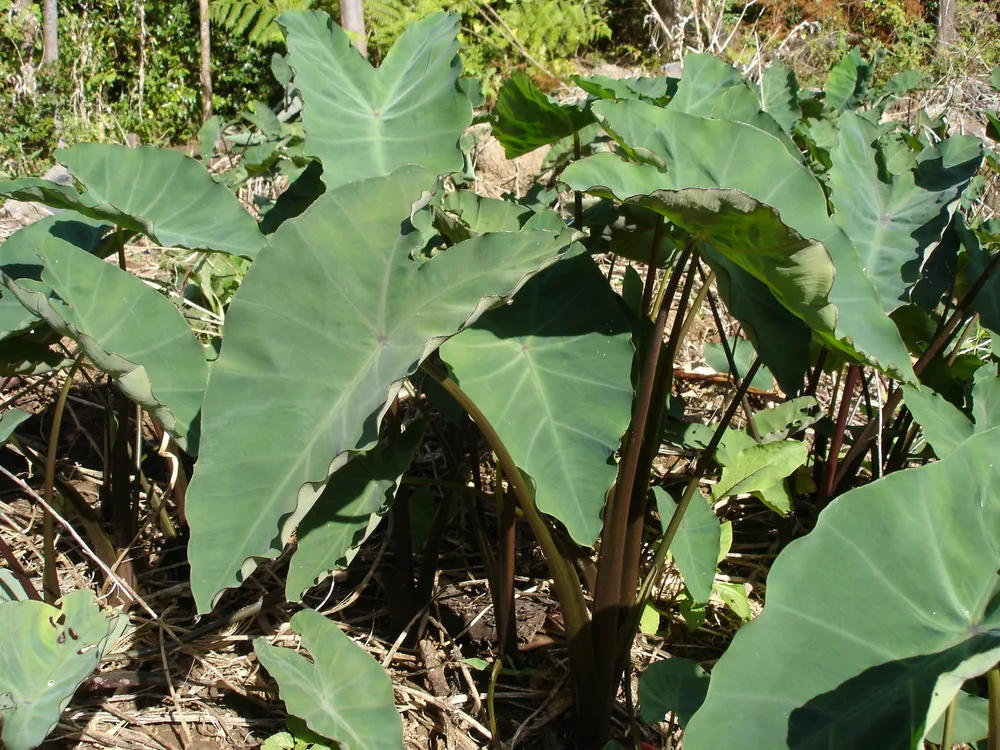
Colocasia esculenta is the same plant grown across the tropics as taro, a staple food crop whose starchy corms feed millions of people once properly cooked; grown ornamentally, it produces enormous heart-shaped leaves and thrives in boggy soil or even standing in shallow water at a pond's edge, unlike almost any other common houseplant.
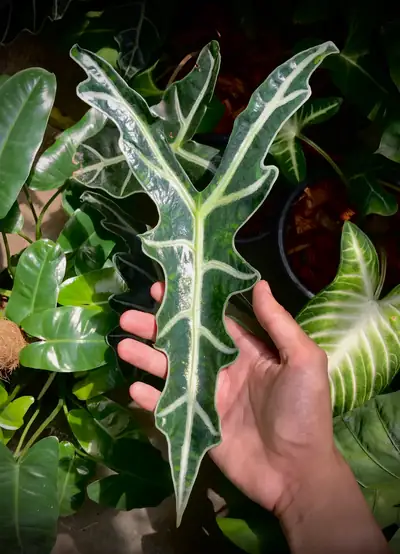
Colocasia Black MagicColocasia IllustrisColocasia Esculenta Variegata
Light
Thrives in bright light with some direct sun; tolerates medium light indoors.
Water
Loves consistently moist soil; water often enough to never let it dry out, even sitting in a saucer of water.
Humidity
Prefers high humidity and lush, warm conditions.
Soil
Rich, moisture-retentive potting mix with good organic matter.
Size
0.9-1.8m tall and wide.
Growth speed
Medium
Best position
east / south-east / south / west-facing windowanywhere up to about 2 m from the window
north / north-east / north-west-facing windowanywhere up to about 1 m from the window
south-west-facing windowabout 1 m from the window or further back
Watch for strong direct sun at south-west windows.
See every window directionHide window directions
Best position
right by the window
about 1 m
about 2 m
about 4 m
4 m or more
north
works well✓
works well✓
too dark○
too dark○
too dark○
north-east
works well✓
works well✓
too dark○
too dark○
too dark○
east
works well✓
works well✓
works well✓
too dark○
too dark○
south-east
works well✓
works well✓
works well✓
too dark○
too dark○
south
works well✓
works well✓
works well✓
too dark○
too dark○
south-west
just about~
works well✓
works well✓
too dark○
too dark○
west
works well✓
works well✓
works well✓
too dark○
too dark○
north-west
works well✓
works well✓
too dark○
too dark○
too dark○
✓works well~just about○too dark☼too much direct sun
A rough guide based on window direction and typical daylight through the year. Window size, curtains and whatever stands outside matter just as much.
?Pet safety not confirmed
As a precaution, keep it out of reach of children and pets.
Safety note
Elephant ear contains calcium oxalate crystals throughout its raw leaves, stems, and corms, which cause intense burning and irritation to the mouth, tongue, and throat if chewed or ingested raw; keep it away from pets and children, and never eat any part of an ornamental variety unless it has been properly cooked as true taro.
Care by Season
Spring
Resume regular watering and start feeding every 2-4 weeks as growth accelerates.
Summer
Water heavily and often; this plant can even grow at the edge of a pond.
Autumn
Reduce watering gradually as growth slows and cooler temperatures set in.
Winter
Allow the tuber to rest in barely moist soil if leaves die back, or keep warm and lightly watered if grown indoors year-round.
Growing & Maintenance
Soil and pot
A rich, moisture-retentive potting mix with plenty of organic matter. It must never dry out.
Fertilising
Feed every 2-4 weeks in spring and summer, when growth is fast.
Pruning
Cut yellowing leaves off at the base of the stalk.
Propagation
By dividing the corms and offsets when growth restarts in spring.
Pests & Diseases
Common problems
Drooping leaves
Most likely cause: The compost has dried out.
What to do: Water heavily. This plant can even stand in a saucer of water.
Brown, crispy leaf edges
Most likely cause: Dry air or dry compost.
What to do: Raise the humidity and keep the compost constantly moist.
Leaves dying back in winter
Most likely cause: Normal dormancy in cool, dark months.
What to do: Let the tuber rest in barely moist compost and start watering again in spring.
Small, pale leaves
Most likely cause: Too little light or too little feed.
What to do: Give it bright light with some direct sun and feed regularly in the growing season.
Torn leaves
Most likely cause: Strong wind outdoors.
What to do: Move it to a sheltered spot.
Pests & Diseases
Spider mites
Signs: Fine webbing and stippled, dull leaves in dry conditions.
Treatment: Increase humidity, rinse leaves, and apply insecticidal soap if needed. Check the undersides of the leaves and the crevices where the leaf stem meets the main stalk.
Aphids
Signs: Small clustered insects on new shoots and leaf undersides.
Treatment: Rinse off with water and apply insecticidal soap for persistent infestations.
Fungal leaf spot
Signs: Brown or black spots with yellow halos on leaves.
Treatment: Remove affected leaves, improve airflow, and avoid overhead watering.
FAQ
Is Elephant Ear the same plant as taro that people eat?
Yes, ornamental Colocasia esculenta is the same species as culinary taro, but raw corms and leaves contain calcium oxalate crystals that irritate the mouth and throat badly; taro is only safe to eat after thorough cooking, and ornamental varieties bred for looks should not be treated as a food source.
Why is my Elephant Ear's soil never drying out, and is that a problem?
It isn't a problem for this plant specifically, since unlike most houseplants it thrives in consistently moist to boggy soil and can even tolerate sitting partly in water; just make sure there's still some drainage rather than fully stagnant, airless water.
How often should I water an Elephant Ear?
Often enough that the compost never dries out. It loves constant moisture and can even grow at the edge of a pond. Water less only while it is dormant in winter.
How big does an Elephant Ear get?
Between 0.9 and 1.8m tall and wide, with very large leaves. Give it room and shelter from wind.
How do I propagate an Elephant Ear?
By division. Separate the corms or offsets from the mother plant in spring and pot them up on their own.
What do I do with an Elephant Ear in winter?
If the leaves die back, let the tuber rest in barely moist compost somewhere frost-free. If it keeps its leaves in a warm room, water it lightly.