No results. Is a plant missing? Tell uscontact@wikiplant.net
Wintercreeper Euonymus
Euonymus fortunei
Care level: Easy
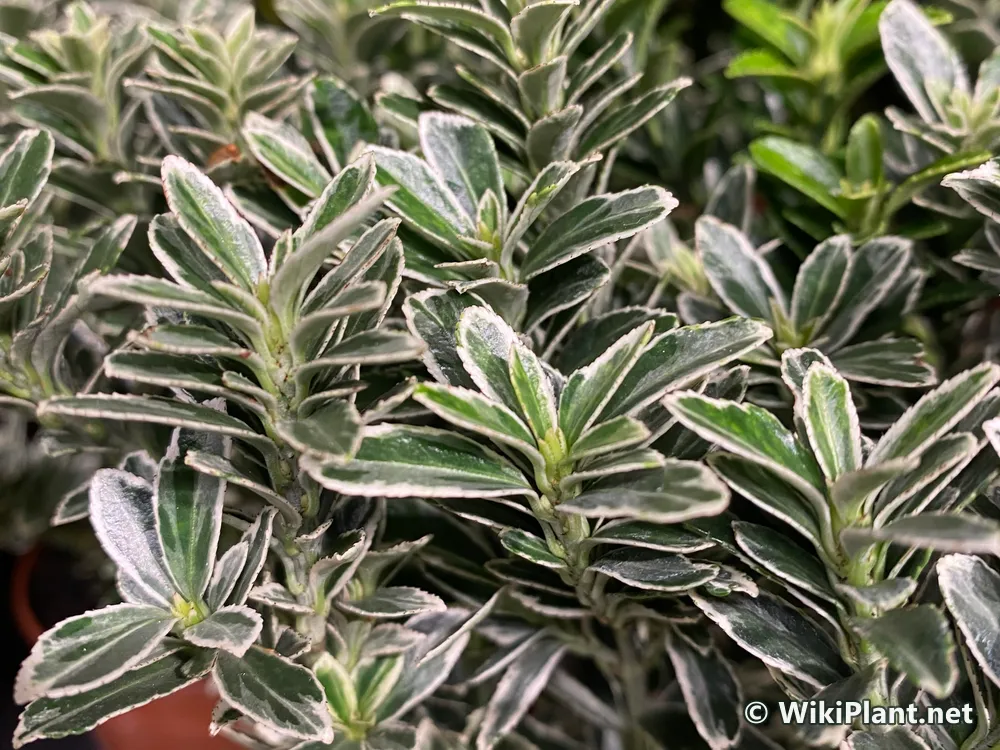
Wintercreeper is the evergreen workhorse of low-maintenance planting: a tough, spreading shrub grown almost entirely for its foliage, which in the popular varieties is edged or splashed with gold or cream. It will grow as ground cover, as a low mound, or climb a wall to two or three metres if something is there to cling to, adapting its habit to what it meets. It takes shade, wind, clipping and neglect, which explains how often it appears in car parks and front gardens.
Full sun to full shade, which is much of the appeal. The gold-variegated forms keep their colour best in sun; the white-variegated ones are better in shade, where they light up a dark corner.
Water
Water through the first season. After that it is genuinely drought-tolerant and copes with dry soil under trees, a position that defeats most evergreens.
Humidity
Not a factor outdoors. It tolerates salt-laden coastal wind better than most evergreen shrubs.
Soil
Almost any soil, acid or alkaline, heavy or light, provided it is not waterlogged.
Can cause vomiting and diarrhoea, and more rarely affects heart rhythm.
If your pet has eaten some, contact your vet.
Source: ASPCA, which lists Euonymus atropurpurea, a related species rather than this one.
Signature feature
It changes form depending on what it touches. Left on open ground it stays a low spreading mound; given a wall or a tree trunk, the same plant produces clinging aerial roots and climbs. The climbing growth also changes leaf shape and is the only growth that flowers and fruits, which is why a euonymus clipped as ground cover almost never does.
Care by Season
Spring
Clip to shape as growth starts. This is a good time to cut out reverted green shoots, which stand out clearly against the new growth.
Summer
Very little needed. A second light trim keeps a formal shape crisp. Watch for powdery mildew in a dry, still position.
Autumn
Variegated forms often take on pink tints as temperatures fall, which is a feature rather than a problem. Stop clipping so the last growth hardens.
Winter
Evergreen and hardy to around -15°C. The pink winter colouring of 'Emerald 'n' Gold' is strongest after real cold. Brush heavy snow off a wall-trained plant so the weight does not tear it away.
Growing & Maintenance
Planting
In almost any soil that is not waterlogged, in sun or full shade. Water through the first season.
Pruning
Clip to shape in spring as growth starts, and cut out any shoots that have reverted to plain green. A second light trim in summer keeps a formal shape crisp.
Support
It clings by itself. Planted against a wall or tree it climbs; on open ground it stays a low mound.
Pests & Diseases
Common problems
Variegated leaves turning plain green
Most likely cause: Reversion. Green shoots are more vigorous and take over.
What to do: Cut the green shoots right out as soon as you see them.
White or brown crust on stems and leaves, with yellowing
Most likely cause: Euonymus scale.
What to do: Prune out the worst-affected stems and treat the rest.
White, powdery coating on the leaves
Most likely cause: Powdery mildew, common in dry soil.
What to do: Mulch, water in dry spells and thin crowded growth.
Notched leaf edges, or a potted plant that suddenly wilts
Most likely cause: Vine weevil. The grubs eat the roots.
What to do: Apply nematodes to the compost.
Pink tints in winter
Most likely cause: Normal. Variegated forms colour up as it gets cold.
What to do: Nothing to do.
Pests & Diseases
Euonymus scale
Signs: Small white elongated specks on stems and leaf undersides, yellow blotching on the leaves above them, and a plant that thins and declines over a couple of seasons.
Treatment: The most serious problem this plant gets. Prune out the worst affected stems, treat with horticultural oil in late spring when the young crawlers are moving, and repeat. A badly infested plant is often best replaced.
Powdery mildew
Signs: A white dusty coating over the leaves, worst on plants in dry soil against a wall with little air movement.
Treatment: Mulch and water in dry spells, thin crowded growth, and remove the worst affected shoots.
Vine weevil
Signs: Notched leaf edges from adult beetles; in containers the grubs sever the roots and the plant collapses suddenly.
Treatment: Mainly a container problem. Apply nematodes to the compost in late summer and check the rootball of any potted plant that wilts without explanation.
FAQ
The variegated leaves on my euonymus are turning plain green. Why?
The plant is reverting. Variegated forms are mutations of a green-leaved species, and green shoots carry more chlorophyll and so grow more vigorously than the variegated ones. Left alone they take over and the whole plant returns to plain green. Cut any all-green shoot out at its point of origin as soon as you notice it, which is the only reliable remedy.
Can I use Euonymus fortunei to cover a wall?
Yes, and it is one of the few reliable evergreen self-clinging climbers for a cold or shaded wall where ivy would be the only other option. It climbs by rooting into the surface rather than by twining, so it needs a slightly rough face such as brick or render to grip. Do not plant it against soft mortar or painted wood, where the aerial roots do real damage when eventually pulled off.
Is Wintercreeper Euonymus toxic to cats and dogs?
Yes, Wintercreeper Euonymus is toxic to cats and dogs. Eaten in quantity it can affect the heart, so keep pets from chewing it.
How hardy is Wintercreeper Euonymus?
It is evergreen and hardy to around -15°C. It also tolerates salt-laden coastal wind better than most evergreen shrubs.
Does Wintercreeper Euonymus grow in shade?
Yes, it grows anywhere from full sun to full shade. The gold-variegated forms keep their colour best in sun.
When should I prune Wintercreeper Euonymus?
In spring, as growth starts. That is also the moment to cut out reverted green shoots, and a light second trim in summer keeps it neat.