No results. Is a plant missing? Tell uscontact@wikiplant.net
Red Robin Photinia
Photinia x fraseri
Care level: Easy
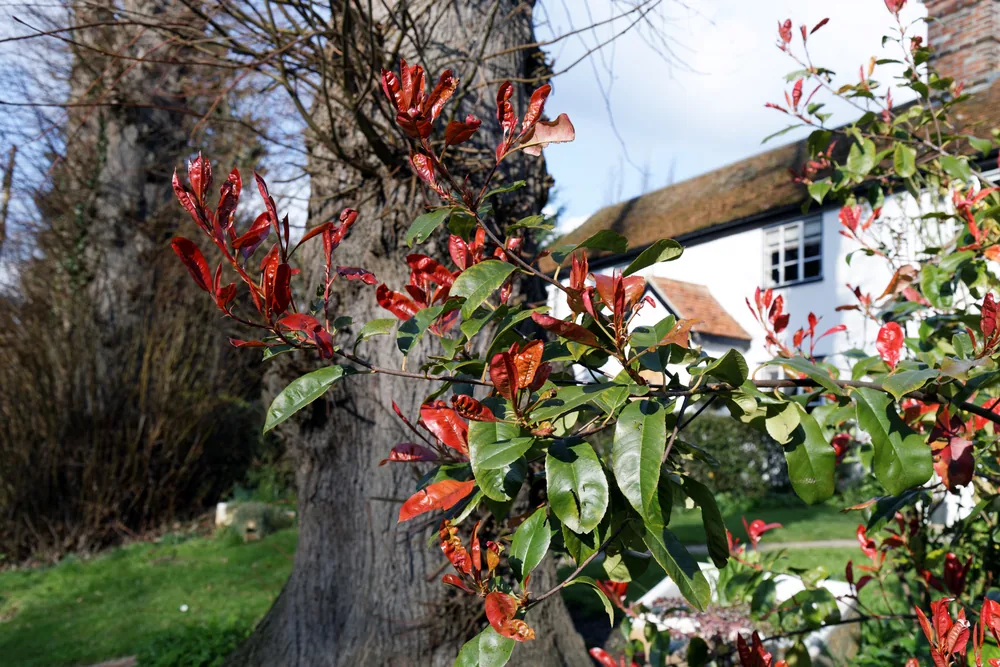
Red Robin is the evergreen hedging shrub that turns scarlet at the tips every spring. The red is new growth, not autumn colour: each flush of leaves emerges bright red, then darkens through bronze to glossy green over a few weeks. It has become one of the most planted hedges in western Europe because it is fast, evergreen and tolerates clipping, though that popularity has brought a leaf spot disease with it.
Photinia x fraseri 'Red Robin'Photinia x fraseri 'Little Red Robin'Photinia x fraseri 'Pink Marble'
Light
Full sun to light shade. The red flush is strongest and the leaf spot disease least troublesome in an open, sunny position with air moving through the plant.
Water
Water regularly through the first two years while a hedge establishes. Once settled it is fairly drought-tolerant, though a hedge in a narrow bed against a wall stays much drier than people expect.
Humidity
Not directly controllable, but it matters here more than for most shrubs: still, humid air within a dense hedge is what Entomosporium leaf spot needs. Spacing and thinning are the practical levers.
Soil
Any reasonable well-drained soil, acid or alkaline. It dislikes waterlogging, which weakens the plant and makes leaf spot worse.
Temperature
Hardy to about -15°C. Cold, drying wind scorches the leaf edges.
As a precaution, keep it out of reach of children and pets.
Signature feature
You control the red. Because the colour comes from new growth, each time you clip the hedge it responds with a fresh red flush a few weeks later. Two light trims, one after the spring growth and another in midsummer, keep a Red Robin hedge red for most of the growing season instead of just once in April.
Care by Season
Spring
The main red flush appears as growth starts. Clip once the first flush has darkened to bring on a second, and feed a hedge that is being clipped regularly.
Summer
A second light trim in midsummer produces another red flush. Do not clip in wet weather, which spreads leaf spot spores between the cut surfaces.
Autumn
Stop clipping by early autumn so the last flush hardens before frost. Clear fallen leaves from the base of the hedge rather than leaving them as a source of reinfection.
Winter
Evergreen and hardy to roughly -15°C. Cold drying wind scorches the leaves at the edges; a hedge on an exposed boundary takes this every few winters and grows out of it.
Growing & Maintenance
Planting
In any reasonable well-drained soil, acid or alkaline, in an open position in sun or light shade. Water regularly through the first two years.
Pruning
Clip once the first red flush has darkened, and again lightly in midsummer for another flush. Stop by early autumn and never clip in wet weather.
Propagation
From stem cuttings.
Pests & Diseases
Common problems
Red and black spots on the leaves, which drop
Most likely cause: Entomosporium leaf spot, worse in still, humid air.
What to do: Collect and destroy fallen leaves and thin the hedge to let air through.
Shoots that look scorched, with blackened leaves
Most likely cause: Fireblight.
What to do: Cut well back into healthy wood, at least 30cm below the damage.
Brown, scorched leaf edges
Most likely cause: Cold, drying wind.
What to do: Plant it in a more sheltered spot. The plant grows out of the damage.
Little red colour
Most likely cause: No clipping. The red is new growth.
What to do: Clip after each flush has darkened to bring on the next one.
A potted plant that suddenly wilts
Most likely cause: Vine weevil grubs eating the roots.
What to do: Drench the compost with nematodes.
Pests & Diseases
Entomosporium leaf spot
Signs: Small dark red spots on both leaf surfaces that enlarge, merge into grey-brown blotches, and cause heavy leaf fall from the base of the plant upwards.
Treatment: Collect and destroy fallen leaves, thin the hedge for airflow, water at the base only, and clip in dry weather. Badly affected plants may need replacing with something else if the position stays damp and shaded.
Fireblight
Signs: Shoots that suddenly blacken and die back as if burned, with the dead leaves staying attached; the base of an affected shoot often shows a dark sunken area.
Treatment: Cut well back into healthy wood, at least 30 cm below any visible damage, and disinfect tools between cuts. Burn the prunings.
Vine weevil
Signs: Notched leaf margins from the adults; in containers the grubs eat the roots and the plant wilts and collapses despite moist compost.
Treatment: Mainly a container problem. Drench the compost with nematodes in late summer and check the rootball of any potted plant that wilts for no clear reason.
FAQ
My Photinia has red and black spots on the leaves, which are dropping. What is it?
Almost certainly Entomosporium leaf spot, the disease that follows Red Robin around wherever it is planted densely. It shows as small dark red spots that enlarge and merge, and the affected leaves yellow and fall, sometimes stripping the lower half of a hedge. Rake up and remove fallen leaves rather than leaving them at the base, thin the hedge to move air through it, avoid watering over the foliage, and clip in dry weather. A plant in a damp, crowded, shaded position will keep getting it.
Is this the same as the Photinia grown for bonsai?
No. Photinia x fraseri is an evergreen hybrid grown for its red new foliage and used almost entirely for hedging. The species grown for bonsai is Photinia villosa, which is deciduous and valued instead for its white flowers, red autumn fruit and leaf colour. They are different plants with different uses despite sharing a genus.
How hardy is Red Robin Photinia?
It is evergreen and hardy to roughly -15°C. Cold, drying wind scorches the leaf edges, so an exposed hedge looks worse after winter.
How fast does Red Robin Photinia grow?
Fast. That is why it makes a hedge quickly, and why it needs clipping at least once a year.
When should I clip a Red Robin hedge?
After the first red flush has darkened in spring, and again lightly in midsummer. Stop by early autumn so the last growth hardens before frost.
Does Red Robin Photinia grow in shade?
It takes light shade, but full sun suits it better. In sun the red flush is strongest and leaf spot is least troublesome.