No results. Is a plant missing? Tell uscontact@wikiplant.net
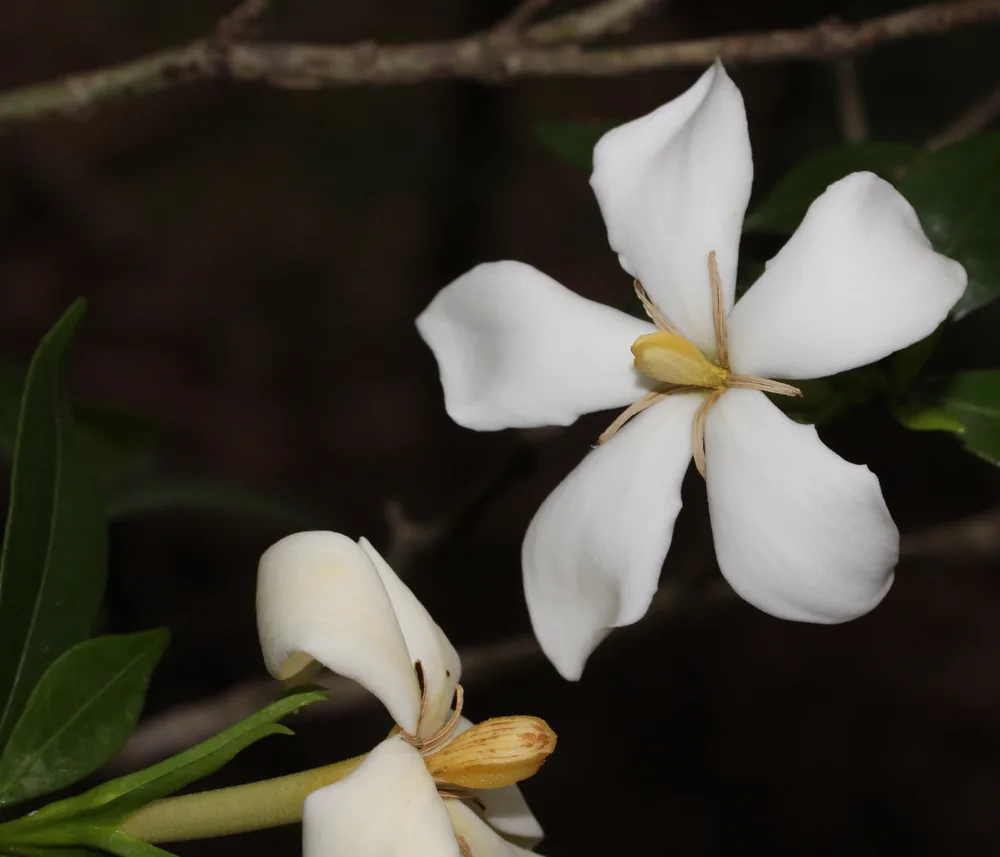
Gardenia
Gardenia jasminoides
Care level: Hard
Gardenia is grown as bonsai as much for its intensely fragrant, waxy white flowers as for its form, a rarity among bonsai species where scent is usually an afterthought. Native to China, Japan, and Southeast Asia, it's frost-tender and often grown as an indoor or patio bonsai in temperate climates, brought under cover whenever nights turn cold.
Bright light with some direct sun; too little light reduces flowering, while harsh afternoon sun can scorch the leaves.
Water
Keep the soil evenly moist; both drying out completely and staying waterlogged can trigger bud drop and leaf yellowing.
Humidity
Prefers high humidity; dry indoor air, especially from heating, is a common source of stress and bud drop.
Soil
Acidic, well-draining soil; like azaleas, Gardenia struggles in alkaline soil or with hard tap water over time.
Temperature
Frost-tender. Keep it cool but frost-free in winter, away from cold draughts.
Size
1.2-2.4m tall and wide in the ground; far smaller in a pot.
Growth speed
Medium
Best position
south-east / south-facing windowanywhere up to about 1 m from the window
east / west-facing windowright by the window
south-west-facing windowabout 1 m from the window or further back
Watch for strong direct sun at south-west windows.
See every window directionHide window directions
Best position
right by the window
about 1 m
about 2 m
about 4 m
4 m or more
north
too dark○
too dark○
too dark○
too dark○
too dark○
north-east
too dark○
too dark○
too dark○
too dark○
too dark○
east
works well✓
too dark○
too dark○
too dark○
too dark○
south-east
works well✓
works well✓
too dark○
too dark○
too dark○
south
works well✓
works well✓
too dark○
too dark○
too dark○
south-west
just about~
works well✓
too dark○
too dark○
too dark○
west
works well✓
too dark○
too dark○
too dark○
too dark○
north-west
too dark○
too dark○
too dark○
too dark○
too dark○
✓works well~just about○too dark☼too much direct sun
A rough guide based on window direction and typical daylight through the year. Window size, curtains and whatever stands outside matter just as much.
!Toxic to pets
Toxic to cats and dogs if eaten.
Eating it can cause vomiting and an upset stomach.
If your pet has eaten some, contact your vet.
Source: ASPCA
Common mistake
Gardenia is notorious for dropping its flower buds before they open, usually triggered by a sudden change: a cold draft, a move to a new spot, inconsistent watering, or a sudden swing in temperature. Keeping its conditions as stable as possible through bud formation is more important than almost anything else.
Care by Season
Spring
Flower buds begin forming; keep conditions as stable as possible, since a sudden change now is the most common cause of buds dropping before they open.
Summer
Peak flowering and the most active growth; can move outdoors to a bright, sheltered spot once nights are reliably warm.
Autumn
Growth slows; bring the plant back indoors or under cover well before the first cold nights, since it has no frost tolerance.
Winter
Needs bright light and cool but frost-free conditions indoors; avoid placing it near cold drafts, heating vents, or sudden temperature swings.
Growing & Maintenance
Soil and pot
A rich, acidic, well-drained mix, such as one made for azaleas. Hard tap water slowly makes the soil too alkaline.
Repotting
Only when it is needed, and with care. Gardenia dislikes root disturbance.
Fertilising
Feed in spring and summer with a fertiliser for acid-loving plants. Do not feed in autumn.
Pruning
Prune in spring and remove spent flowers.
Propagation
From stem cuttings, or by layering.
Pests & Diseases
Common problems
Flower buds dropping before they open
Most likely cause: A sudden change: a move, a draught, dry air or a lapse in watering.
What to do: Keep conditions as steady as you can while the plant is in bud.
Leaves yellow between the veins
Most likely cause: Soil that is too alkaline, often from hard tap water.
What to do: Water with rainwater and feed with a fertiliser for acid-loving plants.
Few flowers
Most likely cause: Too little light.
What to do: Give it bright light with some direct sun, but not harsh afternoon sun.
Scorched leaves
Most likely cause: Harsh afternoon sun.
What to do: Move it to bright light with shade in the afternoon.
Yellowing leaves that drop
Most likely cause: Compost that has dried out completely, or that stays waterlogged.
What to do: Keep the compost evenly moist and make sure the pot drains.
Pests & Diseases
Aphids
Signs: Clusters of small insects on new shoots and buds, often with sticky honeydew residue.
Treatment: Rinse off with a strong spray of water or apply insecticidal soap, repeating as needed.
Scale insects
Signs: Small brown or waxy bumps along stems, often with sticky honeydew and sooty mould nearby.
Treatment: Scrape off visible scale and treat with horticultural oil, repeating as needed.
Root rot
Signs: Wilting and yellowing leaves despite moist soil, from roots sitting in poorly draining or waterlogged soil.
Treatment: Improve drainage immediately and avoid letting the pot sit in standing water.
FAQ
Why are my Gardenia's leaves turning yellow between the veins?
That pattern, called interveinal chlorosis, usually means the soil is too alkaline for Gardenia's needs. Like azaleas, gardenias need acidic soil; watering with hard tap water over time can push the soil pH up and cause this.
Can I keep my Gardenia bonsai outdoors year-round?
Only in frost-free or near frost-free climates. Gardenia is frost-tender and needs to come indoors or into a greenhouse whenever temperatures approach freezing; in most temperate climates, it's best treated as an indoor plant that can spend summer outdoors.
Is gardenia toxic to cats and dogs?
Yes, gardenia is toxic to cats and dogs. Eating it upsets the stomach. Keep it out of reach of pets.
How often should I water a gardenia?
Often enough to keep the soil evenly moist, never dry and never waterlogged. Use rainwater if your tap water is hard, since the plant needs acidic soil.
When should I prune a gardenia?
In spring. Through the flowering season, simply remove the spent flowers.
How do I propagate a gardenia?
From stem cuttings, or by layering a low shoot. Both give a plant identical to the parent.