No results. Is a plant missing? Tell uscontact@wikiplant.net
Common Lilac
Syringa vulgaris
Care level: Easy
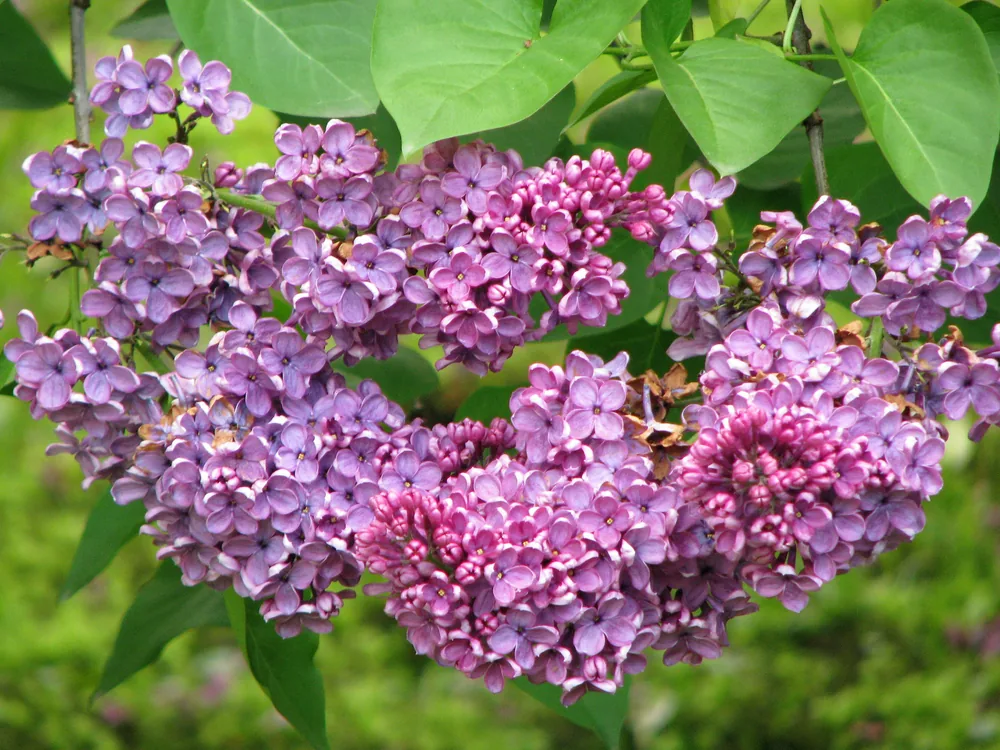
Common Lilac is a large deciduous shrub grown almost entirely for two or three weeks in late spring, when it carries heavy cones of scented flowers in lilac, purple, white or deep wine red. Native to the rocky hills of the Balkans, it is exceptionally hardy and long-lived; old plants outlive the houses they were planted beside. The rest of the year it is a plain green shrub, which is worth knowing before you give it the best spot in a small garden.
Full sun. Lilac flowers in proportion to the sun it gets, and a plant in half shade grows perfectly well while barely flowering at all.
Water
Water new plants through their first two summers. After that a lilac in open ground rarely needs watering; it is a hillside shrub and dislikes sitting wet.
Humidity
Not a factor outdoors. Good air movement around the plant does help keep powdery mildew off the leaves in late summer.
Soil
Free-draining and neutral to alkaline. Lilac is one of the few garden shrubs that genuinely prefers chalky soil, and it struggles on heavy wet clay.
Temperature
Hardy to about -20°C. It needs a cold winter to flower well.
As a precaution, keep it out of reach of children and pets.
Signature feature
The scent is the point. A single mature lilac in flower perfumes a whole garden, and the fragrance is strongest in the morning and on still, warm evenings. Cut stems last longer indoors if you split the woody base rather than cutting it flat, and strip the leaves, which otherwise drink the water before the flowers do.
Care by Season
Spring
Flowering, usually May in western Europe. Deadhead as the cones brown, and do any pruning in the fortnight after the last flowers fade.
Summer
Next year's flower buds are formed now, so leave the plant alone. Powdery mildew often appears on the leaves in late summer and looks alarming but does no real harm.
Autumn
Leaves drop without much colour. A good season to plant a new lilac, and to pull off rootstock suckers while the shape is easy to see.
Winter
Hardy to about -20°C, and it actually needs a proper cold winter to flower well. Take out one or two of the oldest stems at the base on an old, congested plant.
Growing & Maintenance
Planting
Autumn is a good time to plant. Choose full sun and free-draining, neutral to alkaline soil, and water through the first two summers.
Pruning
Deadhead and prune straight after the flowers fade, and no later. Take out one or two of the oldest stems in winter and pull off suckers from the base.
Propagation
From stem cuttings.
Pests & Diseases
Common problems
No flowers
Most likely cause: Pruning in summer or later, or too little sun.
What to do: Prune only straight after flowering and grow it in full sun.
White, powdery coating on the leaves in late summer
Most likely cause: Powdery mildew.
What to do: Thin the centre of the shrub to move air through it.
Shoots from the base with different leaves
Most likely cause: Suckers from the rootstock of a grafted plant.
What to do: Pull them off at the point where they start.
Brown, blotchy, rolled leaves
Most likely cause: Lilac leaf miner.
What to do: Pick off and destroy the affected leaves.
Blackened young shoots in spring
Most likely cause: Lilac blight.
What to do: Cut the affected shoots back into clean wood and disinfect the tools.
Pests & Diseases
Lilac leaf miner
Signs: Pale blotches inside the leaf, which later roll up at the edges and turn brown as if scorched.
Treatment: Pick off and destroy affected leaves as you see them. The damage is disfiguring rather than dangerous and an established shrub shrugs it off.
Powdery mildew
Signs: A grey-white dusty film across the leaves from midsummer onwards, worst in a still, crowded spot.
Treatment: Thin the centre of the shrub to move air through it. Late-season mildew on lilac generally needs no treatment at all.
Lilac blight
Signs: Blackened, collapsing young shoots and brown-edged leaf spots in a cold wet spring, caused by a bacterium.
Treatment: Cut affected shoots back into clean wood, disinfecting the secateurs between cuts, and avoid feeding with high-nitrogen fertiliser, which produces the soft growth it attacks.
FAQ
Why does my lilac make suckers, and should I remove them?
Most garden lilacs are grafted onto a vigorous rootstock, often a wild lilac or privet. Shoots that appear from below the graft union belong to the rootstock, not to your variety, and if left they will eventually outgrow and replace it. Pull them off at the base rather than cutting them, which only encourages more. Lilacs grown on their own roots sucker too, but those suckers are the same plant and can simply be dug up and moved.
When should I prune a lilac so it still flowers?
Immediately after the flowers fade, and no later. Lilac sets next spring's buds during the summer on the wood it has just made, so pruning in autumn, winter or spring cuts those buds off. Deadhead the spent cones, take out a couple of the oldest stems at ground level each year to keep the plant young, and leave it alone until it has flowered again.
How hardy is Lilac?
It is hardy to about -20°C. It needs a proper cold winter to flower well, though a late frost can still damage the buds.
How big does a Lilac get?
Between 2.4 and 4.9m tall and 1.8 to 3.7m wide. It grows at a medium pace and soon fills its space.
When does Lilac flower?
Usually in May in western Europe. The scented flower cones last a few weeks.
What soil does Lilac need?
Free-draining, neutral to alkaline soil. It is one of the few garden shrubs that prefers chalky ground, and it does poorly in very acid or wet soil.