No results. Is a plant missing? Tell uscontact@wikiplant.net
Guelder Rose
Viburnum opulus
Care level: Easy
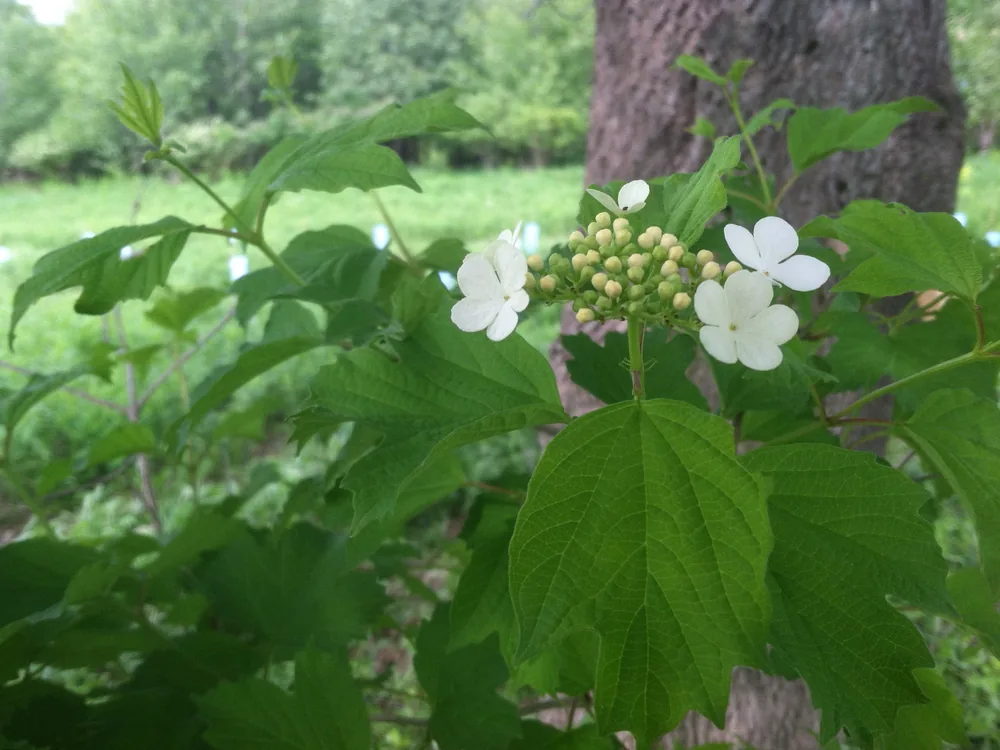
Guelder Rose is a deciduous shrub native to Britain and across Europe, grown for three distinct seasons: flat white lacecap flowers in late spring, translucent red berries through autumn, and maple-shaped leaves that turn crimson before they drop. It is one of the best shrubs for wildlife in a temperate garden, feeding pollinators in May and birds in October, and it copes with the heavy damp soils that defeat many other shrubs.
Full sun to partial shade. It flowers and fruits most heavily in sun but is one of the few berrying shrubs that still performs reasonably in half shade.
Water
Prefers soil that stays moist. Unusually among garden shrubs it tolerates ground that is wet in winter, and it is a good choice for a damp corner or a pond margin.
Humidity
Not a factor outdoors.
Soil
Tolerant of most soils including heavy clay and chalk, provided they do not dry out badly in summer.
As a precaution, keep it out of reach of children and pets.
Signature feature
The berries are the reason to plant it. They ripen to a glassy translucent red in early autumn and hang in heavy bunches well after the leaves have gone, often into December. Birds leave them until late because they need frost to become palatable, which is why the display lasts so much longer than on most berrying shrubs.
Care by Season
Spring
Flowering in May. Viburnum beetle larvae hatch now and do their damage quickly, so check the leaves as they unfold.
Summer
Little needed. Prune straight after flowering if the shrub needs shaping; pruning later removes the developing berries.
Autumn
Berries ripen and the leaves turn crimson to purple. Inspect young shoot tips for the neat rows of beetle egg pits on the undersides.
Winter
Hardy to about -20°C. The best time to cut out shoot tips carrying beetle eggs, and to take out a few of the oldest stems at the base on a congested plant.
Growing & Maintenance
Planting
In sun or partial shade, in soil that stays moist. It takes heavy clay, chalk and ground that is wet in winter.
Pruning
Shape it straight after flowering if needed. Renew an old shrub by cutting out a few of the oldest stems in winter.
Propagation
From seed or stem cuttings.
Pests & Diseases
Common problems
Leaves stripped to the veins
Most likely cause: Viburnum beetle. The larvae feed in late spring.
What to do: Check the leaves from May and prune out shoot tips carrying egg pits between autumn and spring.
No berries
Most likely cause: The plant is the cultivar 'Roseum', the snowball bush, whose flowers are sterile.
What to do: Plant the species itself if you want berries.
Curled, sticky shoot tips
Most likely cause: Aphids.
What to do: Usually cleared by ladybirds and hoverflies without help.
White, powdery coating on the leaves
Most likely cause: Powdery mildew, brought on by dry soil.
What to do: Mulch and water in dry spells.
Wilting in summer
Most likely cause: The soil has dried out badly.
What to do: Water deeply and mulch to hold the moisture.
Pests & Diseases
Viburnum beetle
Signs: Leaves reduced to a lacework of veins in late spring by cream larvae with black markings, then further ragged holes from the brown adults in late summer.
Treatment: Prune out shoot tips bearing egg pits between autumn and early spring, which is the only genuinely effective control. The shrub regrows and survives, so treatment is about appearance.
Aphids
Signs: Curled, distorted young leaves with dense colonies of black or green aphids on the undersides and shoot tips.
Treatment: Usually cleared by ladybirds and hoverflies without intervention. Rinse off heavy colonies with water on a young plant.
Powdery mildew
Signs: A white dusty coating on the leaves in a dry summer, particularly on a plant that is too dry at the root.
Treatment: Mulch and water in dry spells, since the underlying problem is drought stress rather than the fungus itself.
FAQ
Why does my snowball bush have no berries?
Almost certainly because it is not the species but the cultivar 'Roseum', sold as the snowball bush. Its flower heads are entirely made of large sterile florets, which is what creates the white ball, and sterile flowers set no fruit. The wild species has a flat lacecap head with small fertile flowers in the middle, and those are the ones that become berries. If you want fruit you need the plain species or a fruiting selection like 'Compactum'.
Something has stripped my Viburnum to the veins. What was it?
Viburnum beetle, which has become widespread across western Europe. The cream-and-black larvae feed in late spring and can skeletonise a plant within a fortnight, leaving a lace of veins; the adult beetles then take a second helping in late summer. The shrub survives repeated attacks but looks wretched. Check the undersides of the young shoots in autumn for the rows of egg pits and prune those tips out over winter, which is far more effective than spraying the larvae later.
How hardy is Guelder Rose?
It is hardy to about -20°C. It needs no winter protection in the garden.
How big does a Guelder Rose get?
Between 3.6 and 4.9m tall and 2.4 to 4.6m wide. It grows at a medium pace.
When should I prune a Guelder Rose?
Straight after flowering, if it needs shaping. Pruning later removes the berries, and the oldest stems can be cut out in winter to renew the shrub.
When does Guelder Rose flower and fruit?
It flowers in May with flat white flower heads. The glassy red berries ripen in early autumn, as the leaves turn crimson to purple.