No results. Is a plant missing? Tell uscontact@wikiplant.net
Garden Rose
Rosa 'Peace'
Care level: Moderate
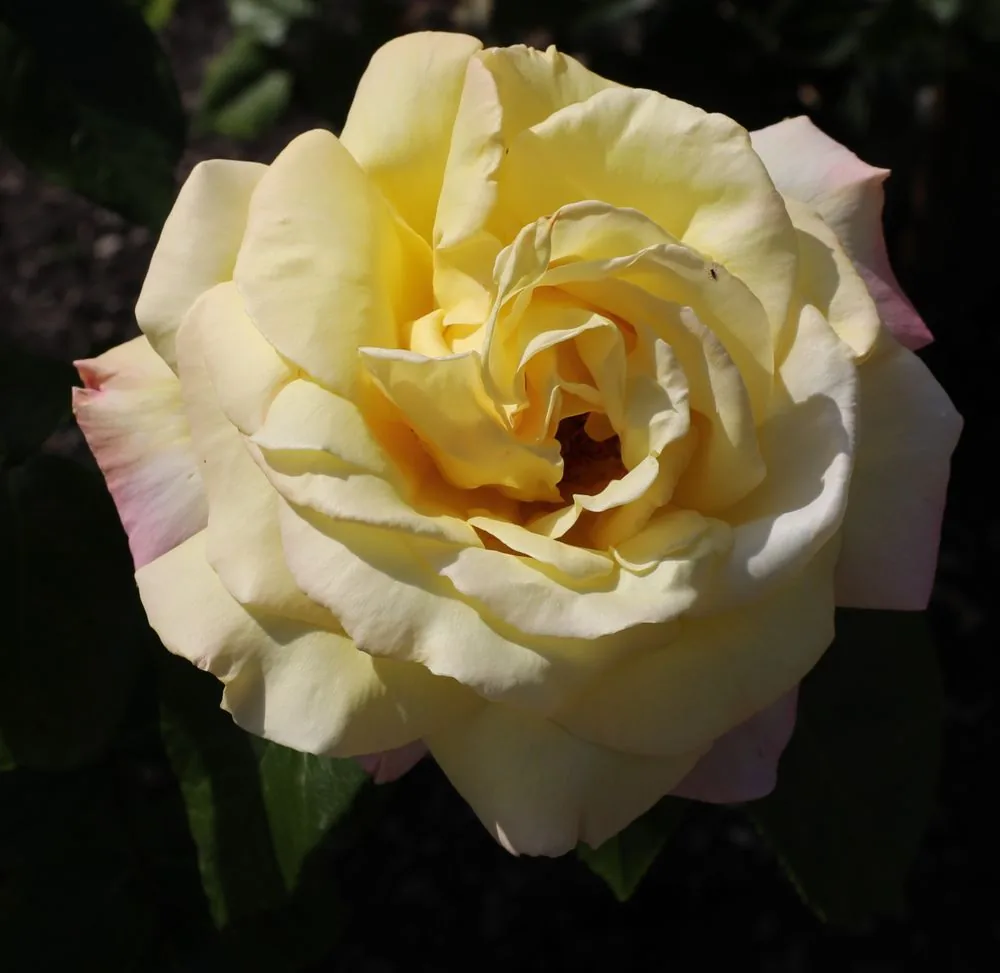
'Peace' is one of the most widely grown hybrid tea roses ever raised, and stands in here for the classic upright garden rose: a bushy shrub to around 1.2m with glossy, dark, disease-resistant foliage and large, fragrant, high-centred double blooms in creamy yellow edged with pink, flowering almost continuously from early summer into autumn. Bred in France and released in 1945, it carries the RHS Award of Garden Merit and remains a benchmark for what a well-grown hybrid tea rose can do. Most modern garden roses, whatever their colour, are grown and pruned in broadly the same way.
Full sun. At least 6 hours of direct sun a day for strong growth and good flowering; roses in heavy shade flower poorly and are more prone to disease.
Water
Water deeply during dry spells, especially in the first year or two while the root system establishes. A deep, infrequent soak is better than frequent shallow watering.
Humidity
Not a significant factor; good air movement around the plant matters far more, since still, humid conditions favour black spot and powdery mildew.
Soil
Fertile, moisture-retentive and well-drained, tolerant of chalk, clay, loam and sand. Avoid replanting a rose in soil where another rose grew recently without refreshing the soil, since roses are prone to replant disease.
Hybrid tea roses are bred for the shape and repeat flowering of the individual bloom rather than for a massed floral display, which is why they are usually grown as specimen or cutting roses rather than planted in large drifts. Regular deadheading just above an outward-facing leaf, rather than leaving spent flowers on, is what keeps this repeat flowering going through the season.
Care by Season
Spring
Main pruning time, once the worst frosts have passed. Feed with a balanced rose fertiliser as growth begins and mulch to conserve moisture and suppress weeds.
Summer
Main flowering season. Deadhead regularly just above an outward-facing leaf to encourage repeat blooms, and watch for black spot and aphids in warm, humid spells.
Autumn
Flowering continues into early autumn in mild weather. Clear fallen leaves promptly to reduce the black spot spores that overwinter in leaf litter, and stop feeding to let growth harden before winter.
Winter
Hardy down to around –20°C once established. In colder or exposed gardens, mound soil or mulch around the base to protect the graft union, and firm back any plants lifted by frost.
Growing & Maintenance
Planting
Plant in full sun in fertile, well-drained soil. Do not replant a rose where another rose has just grown.
Fertilising
Feed with a balanced rose fertiliser in spring as growth starts.
Pruning
Prune in late winter to early spring, once the worst frosts have passed. In summer, deadhead just above an outward-facing leaf, and stop at the end of summer so the plant can harden before winter.
Propagation
Garden roses are normally bought as grafted plants. Grafting is the usual method of propagation.
Pests & Diseases
Common problems
Black spots on the leaves, followed by early leaf fall
Most likely cause: Rose black spot, a fungal disease that thrives in damp summers.
What to do: Remove and destroy the fallen and infected leaves, and do not compost them.
Few flowers
Most likely cause: Too little sun. A rose needs at least six hours of direct sun a day.
What to do: Move it to a sunnier position, or remove whatever is shading it.
White powdery coating on leaves and buds
Most likely cause: Powdery mildew, encouraged by still air.
What to do: Cut out the affected shoots and improve the air flow around the plant.
Distorted young shoots and buds covered in insects
Most likely cause: Aphids.
What to do: Rinse them off with a strong jet of water or use an insecticidal soap spray.
Weak growth in a bed where roses grew before
Most likely cause: Replant problems in soil that has just held a rose.
What to do: Plant in fresh ground, or replace the soil in the planting hole.
Pests & Diseases
Rose black spot
Signs: Circular black spots with a feathered, irregular edge on leaves, followed by yellowing and early leaf drop, usually starting on lower leaves.
Treatment: Remove and destroy fallen and infected leaves rather than composting them, improve air circulation by thinning crowded growth, and choose resistant varieties for new planting. Fungicide can help on badly affected plants but will not clear it completely.
Aphids
Signs: Clusters of small green or black insects on soft new growth and flower buds, with sticky honeydew and sooty mould following.
Treatment: A strong jet of water or an insecticidal soap spray controls light infestations. Ladybirds and their larvae, if not deterred by broad-spectrum pesticide use, usually keep numbers down on an established, otherwise healthy plant.
Powdery mildew
Signs: A white, powdery coating on leaves, shoots and buds
Treatment: Remove the affected shoots, water at the base and open the plant up to air.
FAQ
When and how hard should I prune a hybrid tea rose?
Late winter to early spring, once the worst frosts have passed and before new growth gets going, is the usual time. A typical hard prune for a hybrid tea cuts each stem back to 3–5 outward-facing buds, roughly 15–25cm from the base, removing any dead, damaged or crossing wood first. Harder pruning generally gives fewer, larger blooms; lighter pruning gives more, slightly smaller ones.
My rose's leaves have black spots and are falling early. What is this and does it kill the plant?
Almost certainly rose black spot, the most common rose disease in damp European summers: circular black spots with a feathered edge, followed by yellowing and early leaf drop, working up the plant from the bottom. It rarely kills an established rose outright but weakens it over repeated bad years. Clearing fallen leaves in autumn rather than leaving them at the base, improving airflow, and choosing disease-resistant varieties for new planting all reduce the problem considerably.
Are roses safe for cats and dogs?
Yes, roses are not toxic to cats or dogs. The prickles on the stems can still scratch a curious pet.
How much sun does a rose need?
At least six hours of direct sun a day. In heavy shade a rose grows weakly, flowers poorly and is more prone to disease.
Should I deadhead roses?
Yes, deadhead through the summer to encourage more flowers. Cut just above an outward-facing leaf, and stop at the end of summer so the plant can prepare for winter.
When should I feed a rose?
In spring, as new growth starts. Use a balanced rose fertiliser.