No results. Is a plant missing? Tell uscontact@wikiplant.net
Greek Oregano
Origanum vulgare subsp. hirtum
Care level: Easy
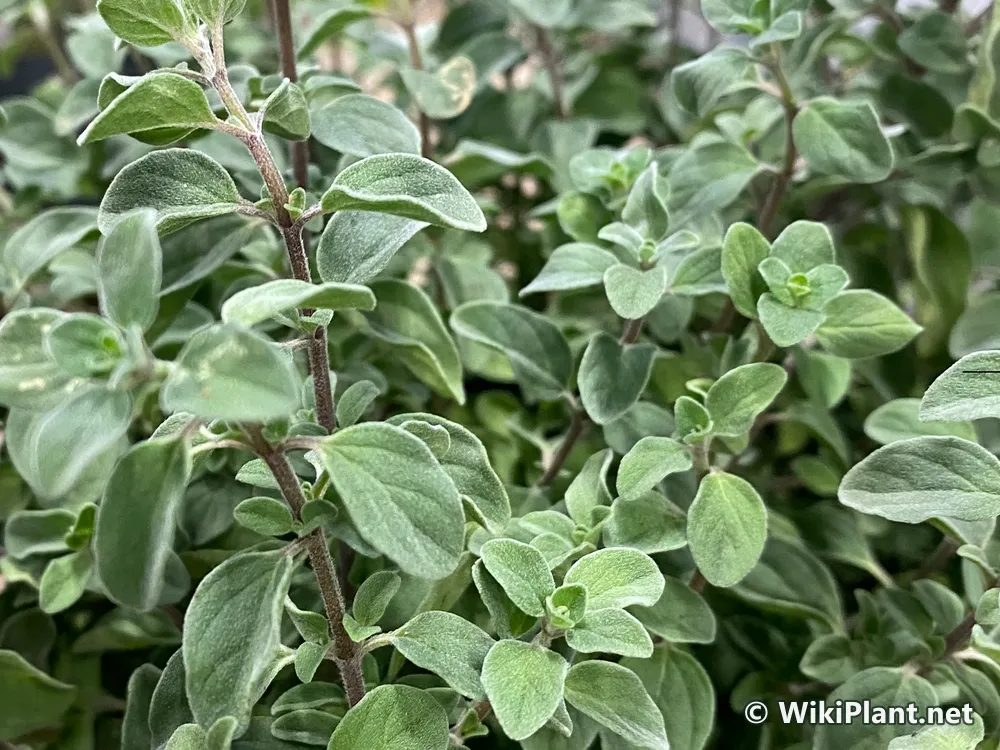
Greek oregano is the subspecies behind the flavour most people mean by the word. Where plain Origanum vulgare can be so mild it is sold as wild marjoram and used as a garden filler, subsp. hirtum carries far more of the volatile oil that gives the herb its bite. The name hirtum means hairy, and that is how you tell it apart in a pot: grey-green leaves covered in fine down, rather than the smoother, greener leaves of ordinary oregano, and white flowers instead of pink.
Full sun, and as much of it as you can give: at least six hours a day. Sun is what drives the oils that make this subspecies worth growing, so a shaded plant tastes flat however well it is fed.
Water
Let the top of the compost dry before watering again, roughly every week in summer and far less in winter. It copes with drought far better than with sitting wet.
Humidity
Dry air suits it. Crowded, still, humid conditions are the ones that bring on mildew.
Soil
Free-draining and not rich: a gritty compost cut with sand or perlite. A fed, moisture-retentive mix gives soft growth and weaker flavour.
Temperature
Winter-hardy outdoors. Indoors, keep it cool and bright in winter.
Size
15-23cm tall and 30-45cm wide.
Growth speed
Medium
Best position
south-east / south / south-west-facing windowanywhere up to about 1 m from the window
east / west-facing windowright by the window
See every window directionHide window directions
Best position
right by the window
about 1 m
about 2 m
about 4 m
4 m or more
north
too dark○
too dark○
too dark○
too dark○
too dark○
north-east
too dark○
too dark○
too dark○
too dark○
too dark○
east
works well✓
too dark○
too dark○
too dark○
too dark○
south-east
works well✓
works well✓
too dark○
too dark○
too dark○
south
works well✓
works well✓
too dark○
too dark○
too dark○
south-west
works well✓
works well✓
too dark○
too dark○
too dark○
west
works well✓
too dark○
too dark○
too dark○
too dark○
north-west
too dark○
too dark○
too dark○
too dark○
too dark○
✓works well~just about○too dark☼too much direct sun
A rough guide based on window direction and typical daylight through the year. Window size, curtains and whatever stands outside matter just as much.
!Toxic to pets
Toxic to cats and dogs if eaten.
Eating it can cause vomiting and an upset stomach.
If your pet has eaten some, contact your vet.
Source: ASPCA
Buying tip
Most plants labelled only "oregano" are the mild Origanum vulgare, and no amount of good growing will give them the flavour of subsp. hirtum. Check the label for hirtum or Greek, crush a leaf before you buy, and look for the downy grey foliage.
Care by Season
Spring
Cut back last year's woody stems to encourage fresh growth, and move the pot into the brightest spot once frosts have passed.
Summer
Harvest often, taking whole stem tips rather than single leaves. Flavour is at its strongest just before the white flowers open.
Autumn
Stop feeding, reduce watering, and take cuttings now if you want spare plants for next year.
Winter
Keep it cool and bright rather than warm and dark, and water only enough to stop the compost drying out completely.
Growing & Maintenance
Soil and pot
A free-draining, gritty compost cut with sand or perlite, in a pot with drainage holes.
Fertilising
Sparingly, if at all, and never in autumn or winter. Rich feeding gives soft growth with little flavour.
Pruning
Cut back last year's woody stems in spring. Shear the plant before it flowers, and harvest whole stem tips.
Propagation
By division, from seed, or from cuttings taken in autumn.
Pests & Diseases
Common problems
Leaves with almost no taste
Most likely cause: The mild common oregano was sold instead, or the plant gets too little sun.
What to do: Buy a plant labelled subsp. hirtum and give it at least six hours of sun a day.
Pale, soft growth
Most likely cause: Too little light, often after a winter indoors.
What to do: Move it to the brightest, coolest spot you have.
White, powdery coating on the leaves
Most likely cause: Mildew, brought on by crowded, still, humid air.
What to do: Thin the plant and give it more air.
Yellowing and collapsing stems
Most likely cause: Root rot from poor drainage.
What to do: Repot in gritty, free-draining compost and water less.
Speckled leaves with fine webbing
Most likely cause: Spider mites.
What to do: Rinse the foliage thoroughly.
Pests & Diseases
Spider mites
Signs: Fine webbing between stems and a dull, speckled look to the leaves, most often on plants kept indoors in dry warmth
Treatment: Rinse the foliage, raise the humidity around the plant for a while, and cut out the worst-affected growth. Check the undersides of the leaves and the crevices where the leaf stem meets the main stalk.
Aphids
Signs: Clusters of small green or black insects on the soft new tips, sometimes with sticky residue below them
Treatment: Wash them off with water or wipe the tips by hand; avoid feeding heavily, which produces the soft growth they prefer.
Root rot
Signs: Stems blackening at the base and a plant that wilts even though the compost is wet
Treatment: Almost always drainage rather than disease. Repot into a grittier mix, water less, and never leave the pot standing in a saucer.
FAQ
Why does my oregano taste of almost nothing?
Two reasons, and the first is usually the plant rather than the care: ordinary Origanum vulgare is naturally mild, so if the label does not say hirtum or Greek you may simply have a different plant. The second is shade and rich feeding, which both produce lush leaves with far less oil in them.
Is Greek oregano the same as marjoram?
No, though they are close relatives and the names get swapped on labels. Sweet marjoram is Origanum majorana, a softer and sweeter herb; plain Origanum vulgare is sometimes called wild marjoram, which is where most of the confusion starts. Greek oregano is the pungent one.
Can I keep it on a windowsill all year?
It will survive there, but a winter indoors usually gives you pale, soft growth with little flavour. It does far better in a pot outdoors from spring to autumn and brought somewhere bright and cool, rather than warm, for the winter.
Is Greek Oregano toxic to cats and dogs?
Yes, Greek Oregano is toxic to cats and dogs. Eating it can cause stomach upset, so keep the pot out of reach of pets.
How often should I water Greek Oregano?
About once a week in summer, when the top of the compost has dried, and far less in winter. It copes with drought much better than with wet roots.
When is the best time to harvest Greek Oregano?
Just before it flowers, when the flavour is strongest. Take whole stem tips, not single leaves.