No results. Is a plant missing? Tell uscontact@wikiplant.net
Japanese Flowering Cherry
Prunus serrulata
Care level: Moderate
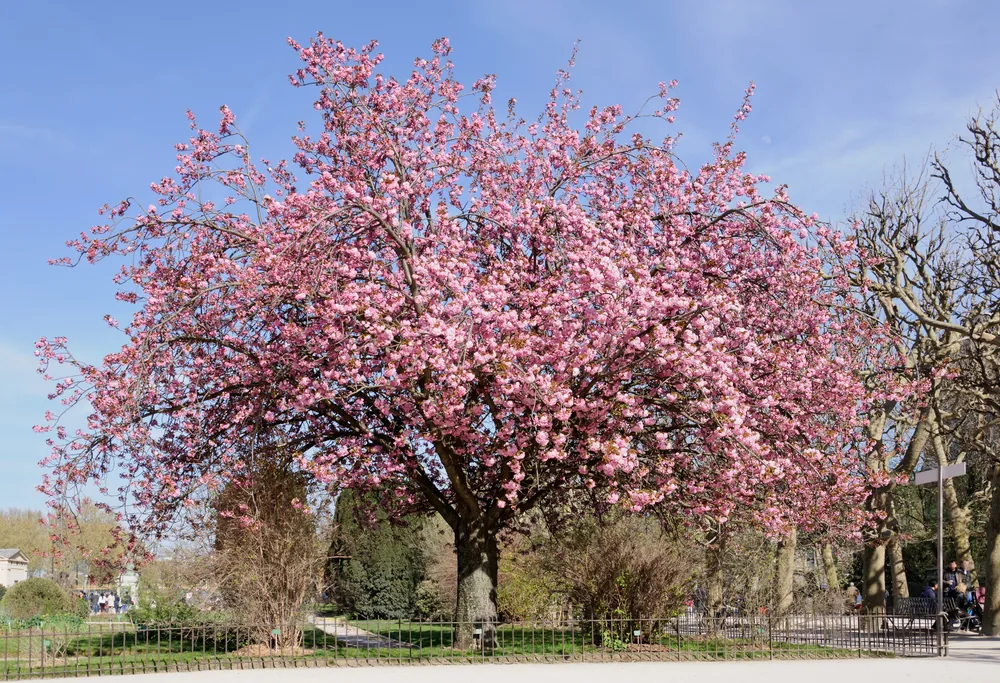
The Japanese flowering cherry is an ornamental tree grown for one spectacular fortnight, when the bare branches disappear under pink or white blossom. It is not a fruiting cherry: the varieties planted in gardens and streets are selected for flower, and most set little or no usable fruit. Trees are usually grafted, often on a clear stem, and are among the easier small ornamental trees to keep as long as their roots are left undisturbed.
Full sun. Blossom is thinner and the autumn colour duller in shade, and a tree drawn towards the light grows lopsided.
Water
Water well for the first two or three years while the root system establishes. A mature tree in open ground is largely self-sufficient except in extended drought.
Humidity
Not a factor outdoors. A long wet spell while the tree is in flower will shorten the display, which is weather rather than anything you can manage.
Soil
Moist, well-drained and neutral to slightly alkaline. Cherries dislike waterlogging above almost anything else, and a tree on a wet site rarely thrives.
Temperature
Fully hardy across western Europe.
Size
4.5-7.5m tall and wide.
Growth speed
Medium
!Toxic to pets
Toxic to cats and dogs if eaten.
Leaves, stems and seeds contain cyanide compounds; wilting leaves are the most dangerous.
If your pet has eaten some, contact your vet.
Source: ASPCA
Signature feature
The blossom opens before the leaves, which is why the effect is so complete: there is nothing green to dilute it. The trade-off is that the display depends entirely on the weather, lasting two or three weeks in a cool dry spring and sometimes only days if it turns warm and wet while the flowers are open.
Care by Season
Spring
Flowering, usually April. Do not feed heavily now; soft growth is exactly what bacterial canker exploits. Keep the base free of grass, which competes for water more than people expect.
Summer
The only safe pruning window, if any pruning is needed at all. Watch for aphids on new growth in early summer.
Autumn
Leaves turn yellow, orange and red before dropping, a genuine second season of interest on many varieties. Do not prune now.
Winter
Fully hardy across western Europe. Leave the tree alone: winter wounds are the main route in for silver leaf. Check that stakes and ties on a young tree are not cutting into the bark.
Growing & Maintenance
Planting
In full sun, in moist, well-drained, neutral to slightly alkaline soil that never waterlogs. Water well for the first two or three years.
Fertilising
Do not feed heavily in spring. Soft growth is what bacterial canker attacks.
Pruning
Only lightly, and only in midsummer. Winter wounds let disease in.
Pests & Diseases
Common problems
Sunken, oozing patches on the bark and branches dying back
Most likely cause: Bacterial canker.
What to do: Cut affected branches back well into healthy wood, in summer.
A silvery sheen on the leaves
Most likely cause: Silver leaf disease.
What to do: Remove the affected branches in summer.
Curled leaves with black aphids at the shoot tips
Most likely cause: Cherry blackfly.
What to do: Tolerate it where you can. The tree grows away from the damage.
Thin blossom and dull autumn colour
Most likely cause: Too much shade.
What to do: Plant it in full sun.
Blossom over within days
Most likely cause: A long wet spell while the tree was in flower.
What to do: Nothing to do. It is the weather, not the tree.
Pests & Diseases
Bacterial canker
Signs: Sunken, dark patches on the bark oozing amber gum, with shoots above them dying back and leaves showing small round holes as if shot.
Treatment: Cut affected branches back well into healthy wood in summer and burn the prunings. There is no cure once it reaches the trunk, so prevention through summer-only pruning matters most.
Silver leaf
Signs: A silvery sheen across the leaves of one branch at first, spreading over seasons; wood cut across shows a dark stain in the centre.
Treatment: Remove affected branches in summer, cutting back to at least 15 cm beyond any staining. It enters through wounds, which is the reason for the summer pruning rule.
Cherry blackfly
Signs: Dense black aphid colonies curling and distorting the tips of new shoots in late spring.
Treatment: Tolerate it where possible; the tree grows away from the damage and predators clear it. On a young tree, rub the colonies off by hand or use insecticidal soap.
FAQ
Does a flowering cherry produce cherries I can eat?
Generally no. Ornamental varieties such as 'Kanzan' carry double flowers whose reproductive parts have largely been converted into petals, so they set little or no fruit. Where small fruits do appear they are bitter and are best left for the birds. If you want cherries to eat you need a fruiting variety of Prunus avium or Prunus cerasus, which are different trees sold for a different purpose.
Can I prune a flowering cherry to keep it smaller?
Only lightly, and only in midsummer. Cherries are prone to silver leaf disease and bacterial canker, both of which enter through cuts, and the spores are most active in the damp months; pruning between June and August, when the tree is growing strongly and can seal a wound quickly, avoids the worst risk. Never prune one in winter. If a cherry is outgrowing its space the honest answer is usually that the wrong variety was planted, as they do not take hard reduction well.
Is Japanese Flowering Cherry toxic to cats and dogs?
Yes, Japanese Flowering Cherry is toxic to cats and dogs. The leaves, stems and seeds release cyanide when chewed, so keep pets from chewing fallen twigs and leaves.
When does a Japanese Flowering Cherry bloom?
Usually in April. The blossom opens before the leaves, which is why the display looks so complete.
How big does a Japanese Flowering Cherry get?
Between 4.5 and 7.5m tall and wide. It grows at a medium pace.
Where should I plant a Japanese Flowering Cherry?
In full sun, in moist but well-drained soil. Cherries dislike waterlogged ground more than almost anything else.