No results. Is a plant missing? Tell uscontact@wikiplant.net
Japanese Maple
Acer palmatum
Care level: Moderate
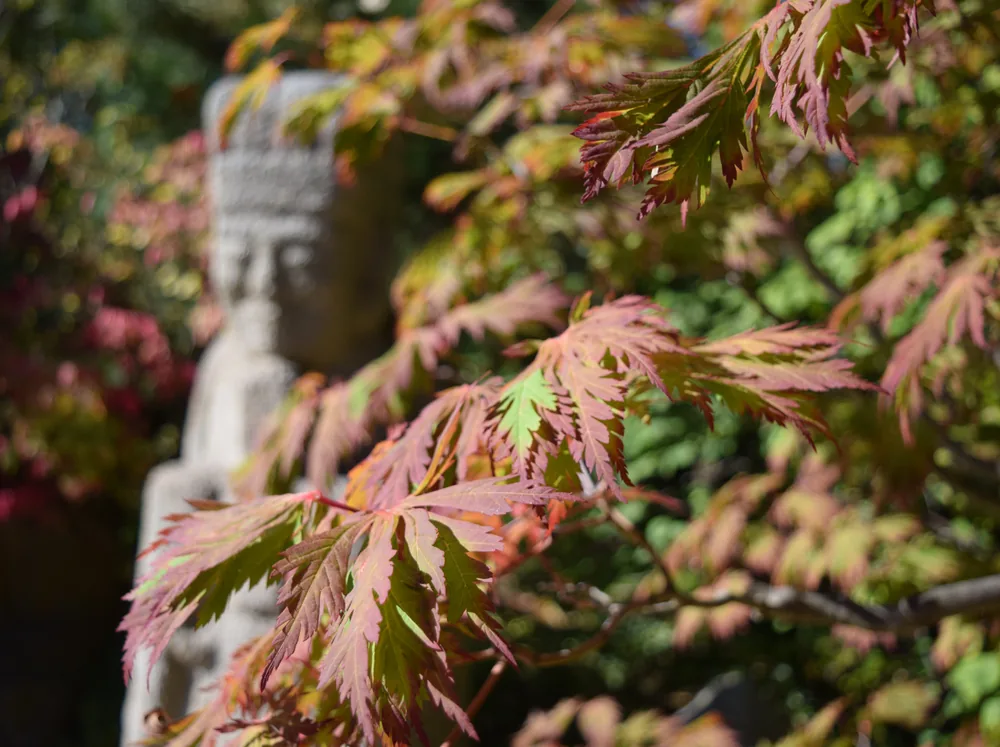
Japanese Maple is prized above almost any other tree for bonsai because of its small, deeply lobed leaves that shrink further with each year of careful pruning, and for a bark and branch structure that looks convincingly ancient even on a young tree. Its brilliant autumn color, in shades from gold to deep crimson depending on the cultivar, is often the main reason people grow it in the first place.
Acer palmatum 'Deshojo'Acer palmatum 'Kiyohime'Acer palmatum var. dissectum
Light
Full sun to partial shade outdoors; some afternoon shade prevents leaf scorch in hot climates.
Water
Keep the soil consistently moist and never let a potted specimen dry out completely, especially in summer.
Humidity
Not a controllable factor outdoors; tolerates a wide range of humidity levels.
Soil
Well-draining, slightly acidic bonsai soil mix.
Temperature
It needs winter cold outdoors. Protect the roots from hard frost and the young leaves from late frost.
Size
A small tree of 4.5-7.5m in the ground; kept small as a bonsai by pruning.
Growth speed
Slow
Did you know?
Leaf size on a Japanese Maple bonsai shrinks over years of defoliation and careful pruning, a well-trained specimen can eventually carry leaves a fraction of the size found on a young, unpruned tree, which is a big part of what makes an old bonsai look convincingly like a full-size, ancient tree in miniature.
Care by Season
Spring
New growth is soft and vulnerable to late frosts and strong sun; feed lightly once leaves have hardened off.
Summer
Water often, shallow bonsai pots dry out fast in summer heat, and provide some afternoon shade in hot climates.
Autumn
Enjoy the color change as leaves turn; this is also a good time for structural pruning once leaves drop.
Winter
Needs a real cold dormancy outdoors; protect the roots from hard freezes but don't bring it inside.
Growing & Maintenance
Soil and pot
A well-draining, slightly acidic bonsai soil mix.
Fertilising
Feed lightly in spring, once the new leaves have hardened.
Pruning
Do structural pruning in autumn, once the leaves have dropped.
Pests & Diseases
Common problems
Brown, crispy leaf edges
Most likely cause: Leaf scorch from direct sun, wind or dry soil.
What to do: Move it into afternoon shade, out of the wind, and water more often.
New leaves blackened in spring
Most likely cause: A late frost on the soft new growth.
What to do: Shelter the tree when frost is forecast.
One branch wilting suddenly
Most likely cause: Verticillium wilt.
What to do: Prune out the affected branch with sterilised tools.
Curled, sticky young leaves
Most likely cause: Aphids.
What to do: Rinse them off with water or apply insecticidal soap.
Leaves dropping in midsummer
Most likely cause: The pot dried out completely.
What to do: Water at once and never let a potted tree dry out fully.
Pests & Diseases
Aphids
Signs: Clusters of small insects on new shoots, often with sticky honeydew residue.
Treatment: Rinse off with water or apply insecticidal soap, repeating as needed.
Verticillium wilt
Signs: Sudden wilting or dieback of one section of branches.
Treatment: Prune out affected branches with sterilized tools; there's no cure, but healthy trees often outgrow mild cases.
Leaf scorch
Signs: Dry, brown, crispy leaf edges after hot or windy weather.
Treatment: Move to a spot with afternoon shade and increase watering frequency in summer.
FAQ
Can I keep a Japanese Maple bonsai indoors?
No, not long-term. Like most deciduous trees used for bonsai, it needs a real winter outdoors with cold temperatures to trigger dormancy; a Japanese Maple kept indoors year-round will weaken over a season or two and eventually die.
Why did the leaf edges on my Japanese Maple bonsai turn brown and crispy?
This is almost always leaf scorch from too much direct sun, wind, or the soil drying out, especially in a shallow bonsai pot that holds far less water than the ground; move it to a spot with some afternoon shade and check watering more often in hot weather.
How often should I water a Japanese Maple bonsai?
Often enough that the soil stays consistently moist. Shallow bonsai pots dry out fast in summer heat, and the tree is not drought tolerant.
Does a Japanese Maple need sun or shade?
Full sun to partial shade. Some afternoon shade prevents leaf scorch in hot weather.
What colour does a Japanese Maple turn in autumn?
Yellow, bronze, purple or red, depending on the variety. The leaves then drop and the tree rests for winter.
How do I overwinter a Japanese Maple bonsai?
Outdoors, because it needs a real cold dormancy. Protect the roots in the pot from hard frost, but do not bring it inside.