No results. Is a plant missing? Tell uscontact@wikiplant.net
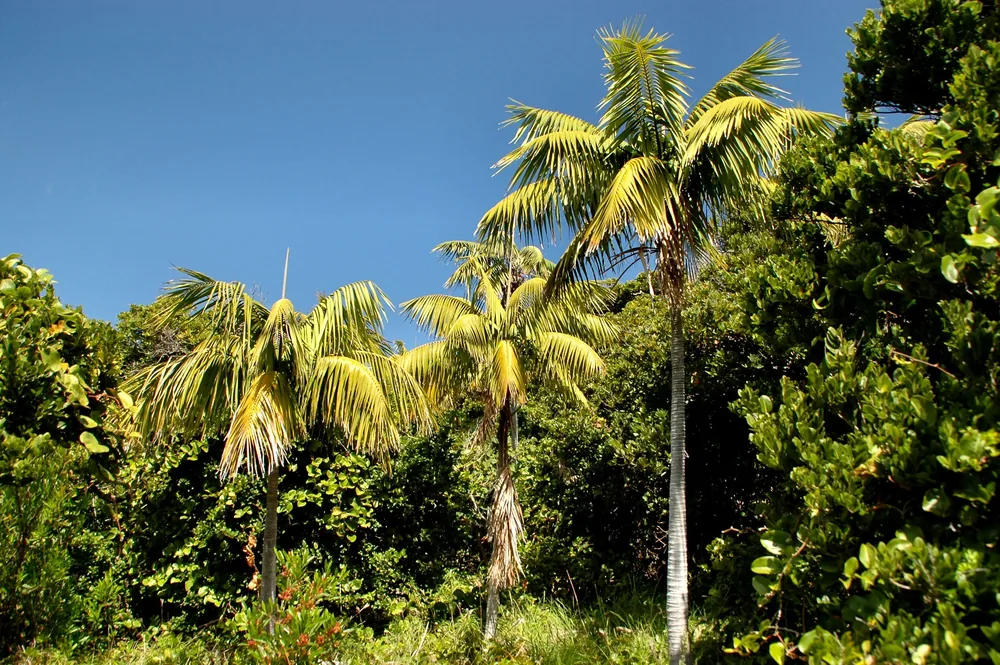
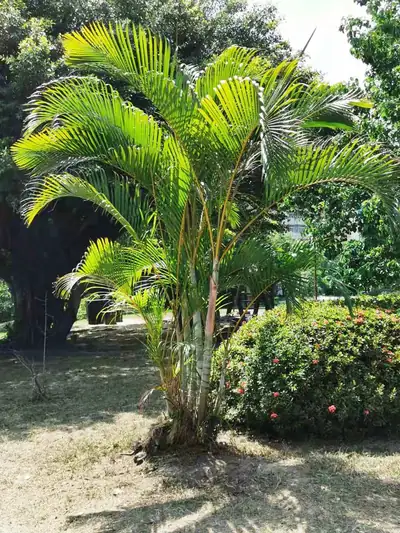
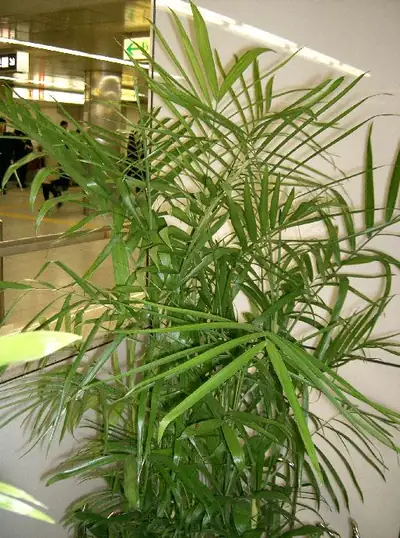
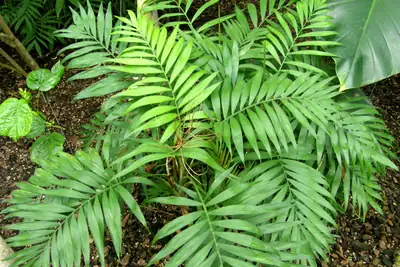
Kentia Palm
Howea forsteriana
Care level: Easy
Kentia Palms became a symbol of Victorian elegance in the 1800s, gracing the parlors of European high society and even furnishing the first-class lounges of the Titanic, largely because they were one of the only palms that could survive gaslit, poorly lit rooms. That same tolerance for dim, imperfect conditions is exactly why it remains one of the most forgiving palms for modern indoor spaces.
Tolerates low to medium light very well, making it one of the best palms for dim corners, though it also grows fine in bright indirect light.
Water
Water when the top 3-4cm of soil is dry, roughly every 1-2 weeks; quite forgiving of missed waterings.
Humidity
Tolerates average household humidity but appreciates occasional misting.
Soil
Well-draining, peat-based potting mix.
Growth speed
Slow
Best position
east / south-east-facing windowanywhere up to 4 m or more from the window
north / north-east / north-west-facing windowanywhere up to about 2 m from the window
south / west-facing windowabout 1 m from the window or further back
Watch for strong direct sun at south / west windows.
See every window directionHide window directions
Best position
right by the window
about 1 m
about 2 m
about 4 m
4 m or more
north
works well✓
works well✓
works well✓
just about~
just about~
north-east
works well✓
works well✓
works well✓
just about~
just about~
east
works well✓
works well✓
works well✓
works well✓
works well✓
south-east
works well✓
works well✓
works well✓
works well✓
works well✓
south
just about~
works well✓
works well✓
works well✓
works well✓
south-west
just about~
just about~
works well✓
works well✓
works well✓
west
just about~
works well✓
works well✓
works well✓
works well✓
north-west
works well✓
works well✓
works well✓
just about~
just about~
✓works well~just about○too dark☼too much direct sun
A rough guide based on window direction and typical daylight through the year. Window size, curtains and whatever stands outside matter just as much.
✓Non-toxic to pets
Considered non-toxic to cats and dogs.
Source: ASPCA
Did you know?
Kentia Palms grow naturally only on Lord Howe Island, a tiny volcanic island between Australia and New Zealand, yet thanks to their durability they've become one of the most widely sold indoor palms worldwide.
Care by Season
Spring
Resume light feeding as new fronds begin to emerge from the crown.
Summer
Water a bit more often in heat and keep out of intense direct sun, which can scorch fronds.
Autumn
Cut back on feeding and slightly reduce watering frequency as growth slows.
Winter
Water sparingly, keep away from cold drafts, and dust fronds occasionally to keep pores clear.
Growing & Maintenance
Soil and pot
A well-drained, humus-rich potting mix in a pot with drainage holes.
Fertilising
Feed infrequently. A slow-release houseplant fertiliser applied in spring suits it best.
Pruning
Cut off a frond only once it is completely brown, close to the trunk. Dust the fronds now and then.
Propagation
From seed only. It is a single-stemmed palm and cannot be divided.
Pests & Diseases
Common problems
Brown tips on the older leaflets
Most likely cause: A lack of potassium.
What to do: Feed with a slow-release fertiliser made for palms.
Pale or distorted new fronds
Most likely cause: A lack of trace nutrients.
What to do: Use a palm fertiliser that includes trace elements.
Scorched fronds
Most likely cause: Intense direct sun.
What to do: Move it to dappled or partial shade.
Spots on the fronds
Most likely cause: A fungal leaf spot.
What to do: Remove badly affected fronds and keep the foliage dry.
Very slow growth
Most likely cause: Normal for this palm.
What to do: Nothing to do. A new frond or two a year is typical indoors.
Pests & Diseases
Spider mites
Signs: Fine webbing and speckled fronds in dry indoor conditions
Treatment: Wipe down fronds, raise humidity, and use insecticidal soap if infestation persists. Check the undersides of the leaves and the crevices where the leaf stem meets the main stalk.
Scale insects
Signs: Small brown or tan bumps along stems and frond undersides
Treatment: Scrape off by hand and treat with horticultural oil.
Brown leaf tips
Signs: Crisping tips from low humidity, fluoride, or underwatering
Treatment: Water more consistently, raise humidity, and consider filtered water.
FAQ
Why does my Kentia Palm grow so slowly compared to other palms?
Slow growth is completely normal for this species; Kentia Palms are naturally unhurried growers even in ideal conditions, which is part of why mature specimens are more expensive than faster palms like Areca.
Can a Kentia Palm survive in a room with no direct sunlight?
Yes, it's one of the few palms that genuinely tolerates low light long-term, though growth will be slower than in bright indirect light; just avoid deep, permanently dark corners with almost no daylight at all.
Is the Kentia Palm safe for cats and dogs?
Yes, the Kentia Palm is not toxic to cats or dogs.
How often should I water a Kentia Palm?
Roughly every 1-2 weeks, when the top 3-4cm of compost is dry. Do not let the mix dry out completely, and water sparingly in winter.
Can I divide a Kentia Palm?
No. Each stem is a separate, single-stemmed palm that does not produce offsets, so it is raised from seed. A pot of several stems grows better if left together.
How should I feed a Kentia Palm?
Lightly and infrequently. A slow-release fertiliser applied in spring is ideal; brown tips on older leaflets suggest it needs potassium.