No results. Is a plant missing? Tell uscontact@wikiplant.net
Ponytail Palm
Beaucarnea recurvata
Care level: Very easy
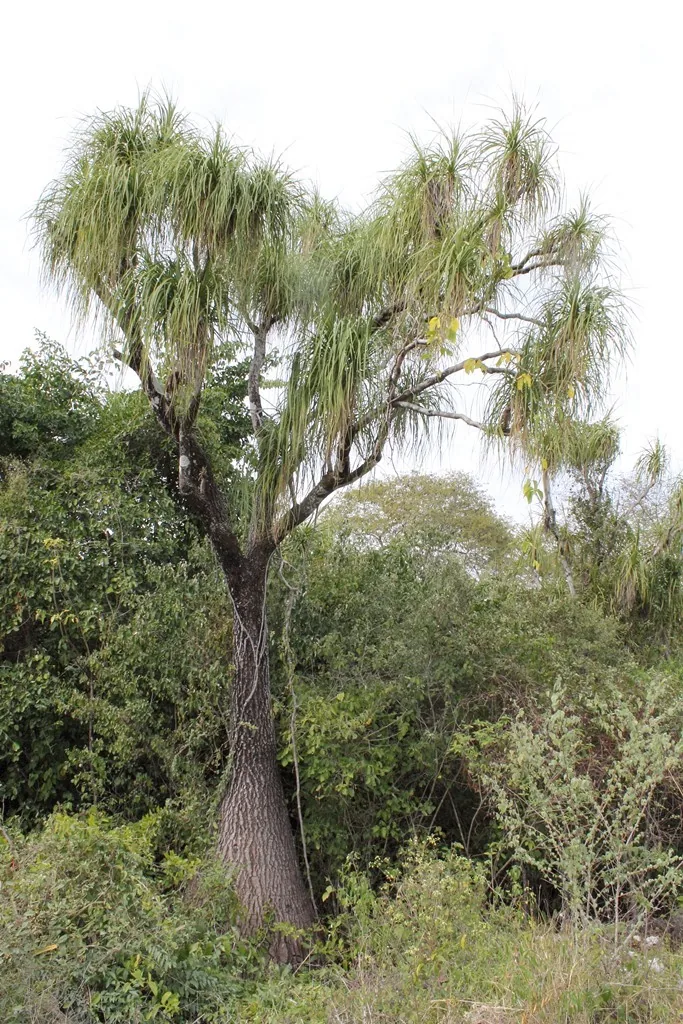
Despite its name and palm-like fountain of curling leaves, the ponytail palm is not a palm at all but a succulent relative of agaves, native to the semi-desert regions of eastern Mexico. Its most striking feature is the swollen, bulbous base called a caudex, which functions like a built-in water tank and lets the plant shrug off weeks of drought and forgetful watering.
Bright light with as much direct sun as possible; tolerates medium light but growth slows.
Water
Let soil dry out completely between waterings, roughly every 2-3 weeks, as the swollen base stores water.
Humidity
Tolerates dry indoor air very well, being adapted to arid conditions.
Soil
Fast-draining cactus or succulent mix.
Temperature
Normal room temperatures. Keep it above 10°C.
Size
1.8-2.4m indoors, with time.
Growth speed
Slow
Best position
east / south-east / south / south-west / west-facing windowanywhere up to about 2 m from the window
north / north-east / north-west-facing windowanywhere up to about 1 m from the window
See every window directionHide window directions
Best position
right by the window
about 1 m
about 2 m
about 4 m
4 m or more
north
works well✓
works well✓
too dark○
too dark○
too dark○
north-east
works well✓
works well✓
too dark○
too dark○
too dark○
east
works well✓
works well✓
works well✓
too dark○
too dark○
south-east
works well✓
works well✓
works well✓
too dark○
too dark○
south
works well✓
works well✓
works well✓
too dark○
too dark○
south-west
works well✓
works well✓
works well✓
too dark○
too dark○
west
works well✓
works well✓
works well✓
too dark○
too dark○
north-west
works well✓
works well✓
too dark○
too dark○
too dark○
✓works well~just about○too dark☼too much direct sun
A rough guide based on window direction and typical daylight through the year. Window size, curtains and whatever stands outside matter just as much.
✓Non-toxic to pets
Considered non-toxic to cats and dogs.
Source: ASPCA
Common mistake
Watering on a regular schedule instead of by feel is the most common way people accidentally rot a ponytail palm; the bulbous caudex already stores plenty of water, so frequent watering leaves it sitting wet and prone to base rot.
Care by Season
Spring
Resume light feeding and increase watering slightly as active growth resumes.
Summer
Water once soil is fully dry and give as much bright light as possible for steady growth.
Autumn
Cut back on watering and stop feeding as the plant slows down for the year.
Winter
Water only sparingly, about once a month, and keep away from cold drafts.
Growing & Maintenance
Soil and pot
A fast-draining cactus or succulent mix in a pot with drainage holes.
Fertilising
A light feed in spring and summer. None in autumn and winter.
Pruning
Trim brown leaf tips with clean scissors. Do not cut into the swollen base.
Pests & Diseases
Common problems
Soft or brown base
Most likely cause: Overwatering, which rots the water-storing base.
What to do: Stop watering, let the compost dry completely and repot in fast-draining mix if the rot continues.
Brown leaf tips
Most likely cause: Common on older leaves. Long dry spells make it worse.
What to do: Trim the tips with clean scissors and water once the compost is fully dry.
Wrinkled, shrunken base
Most likely cause: A very long time without water.
What to do: Water deeply once, then let the compost dry out completely again.
Very slow growth
Most likely cause: Too little light. It is also a slow grower by nature.
What to do: Move it to the brightest spot you have, with direct sun if possible.
Pale, limp leaves in winter
Most likely cause: Cold. It does not like temperatures below 10°C.
What to do: Move it away from cold windows and draughts.
Pests & Diseases
Spider mites
Signs: Fine webbing and speckled discoloration on leaf blades in dry air.
Treatment: Rinse leaves periodically and apply insecticidal soap if an infestation develops. Check the undersides of the leaves and the crevices where the leaf stem meets the main stalk.
Mealybugs
Signs: White cottony clumps where leaves emerge from the caudex.
Treatment: Remove with an alcohol-soaked cotton swab, repeating until fully clear. Check the undersides of the leaves and the crevices where the leaf stem meets the main stalk.
Root rot
Signs: Soft, discolored base and mushy roots from consistently wet soil.
Treatment: Stop watering, let the soil dry completely, and repot into fresh, fast-draining mix if rot has set in.
FAQ
Why is the swollen base of my ponytail palm soft or turning brown?
A soft, discolored caudex is a sign of overwatering and rot; the base should feel firm, since it's a water-storage organ, so cut back sharply on watering and check that the pot drains well.
Is the bulging base of a ponytail palm supposed to be that big?
Yes, that swollen caudex is a normal, healthy water-storing structure similar to a succulent stem, and it naturally grows wider and more pronounced as the plant matures.
Is the Ponytail Palm safe for cats and dogs?
Yes, the Ponytail Palm is not toxic to cats or dogs.
How often should I water a Ponytail Palm?
Roughly every 2-3 weeks, once the compost has dried out completely, and about once a month in winter. The swollen base stores water, so too much is the main risk.
How big does a Ponytail Palm get indoors?
Up to 1.8-2.4m, but only after many years. It grows slowly and stays a tabletop plant for a long time.
Is the Ponytail Palm a real palm?
No, it is not a true palm. It is a succulent plant that stores water in its swollen base.