No results. Is a plant missing? Tell uscontact@wikiplant.net
African Milk Tree
Euphorbia trigona
Care level: Easy
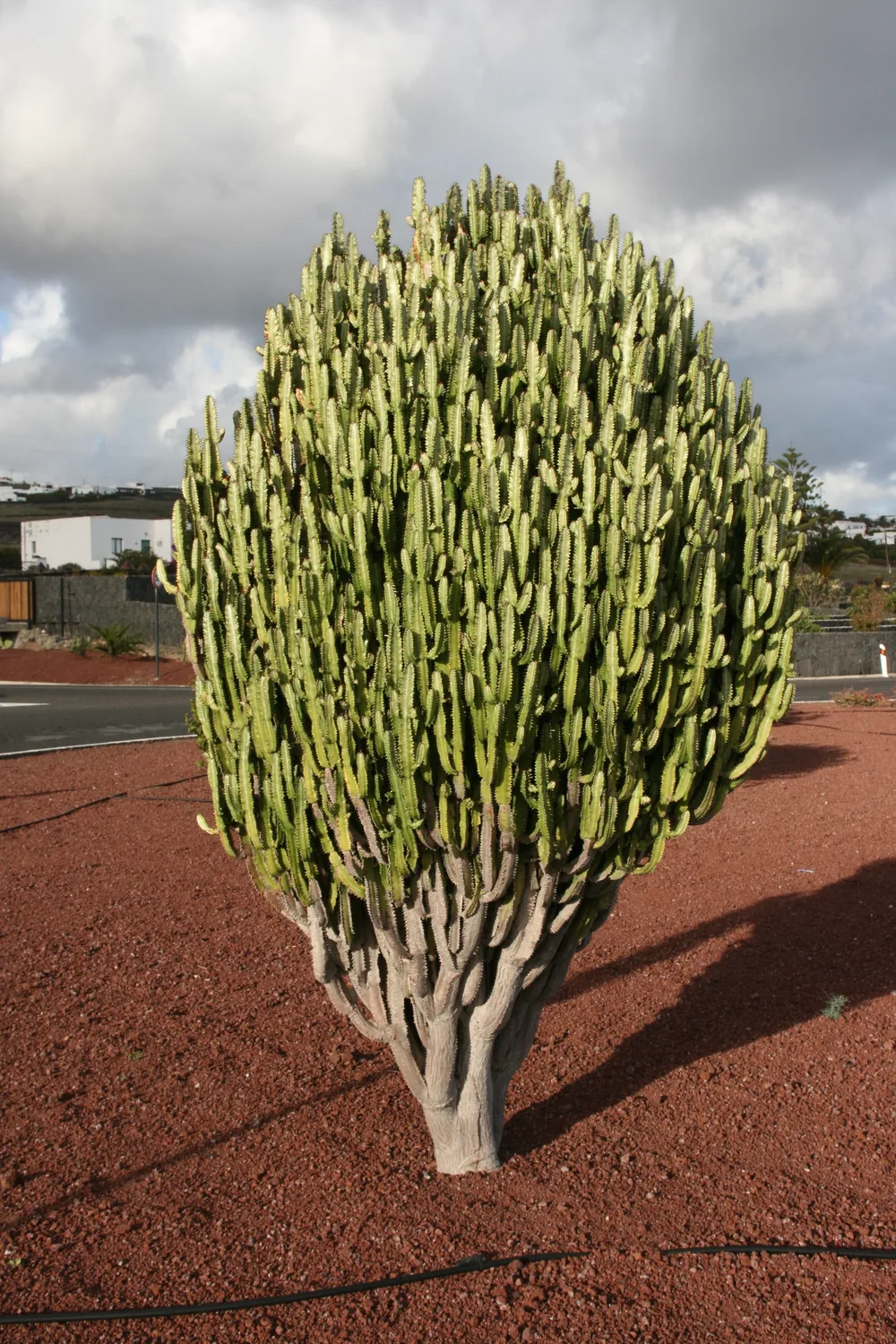
Euphorbia trigona is native to Central Africa and grows tall, triangular, cactus-like stems that closely mimic true cacti, though it is actually a succulent spurge that oozes a thick, milky white latex when cut, the source of both its common name and a reminder that despite its spiny look, it isn't a cactus at all.
Euphorbia Trigona RubraEuphorbia Trigona VariegataEuphorbia Trigona Compacta
Light
Bright light with some direct sun keeps color and growth strong; tolerates medium light too.
Water
Drought-tolerant; water when soil is fully dry, about every 2-3 weeks.
Humidity
Fine with average, low indoor humidity.
Soil
Fast-draining cactus or succulent mix.
Temperature
18-29°C. Keep it above 10°C in winter.
Size
Columnar and branching like a candelabra, up to 1.8-3.6m tall with age.
Growth speed
Fast
Best position
east / south-east / south / west-facing windowanywhere up to about 2 m from the window
north / north-east / north-west-facing windowanywhere up to about 1 m from the window
south-west-facing windowabout 1 m from the window or further back
Watch for strong direct sun at south-west windows.
See every window directionHide window directions
Best position
right by the window
about 1 m
about 2 m
about 4 m
4 m or more
north
works well✓
works well✓
too dark○
too dark○
too dark○
north-east
works well✓
works well✓
too dark○
too dark○
too dark○
east
works well✓
works well✓
works well✓
too dark○
too dark○
south-east
works well✓
works well✓
works well✓
too dark○
too dark○
south
works well✓
works well✓
works well✓
too dark○
too dark○
south-west
just about~
works well✓
works well✓
too dark○
too dark○
west
works well✓
works well✓
works well✓
too dark○
too dark○
north-west
works well✓
works well✓
too dark○
too dark○
too dark○
✓works well~just about○too dark☼too much direct sun
A rough guide based on window direction and typical daylight through the year. Window size, curtains and whatever stands outside matter just as much.
?Pet safety not confirmed
As a precaution, keep it out of reach of children and pets.
Safety note
The milky sap is toxic and can cause skin irritation, burning, or blistering on contact, and it is especially dangerous if it gets in the eyes or is ingested; always wear gloves when pruning or repotting and keep it well out of reach of pets and children.
Care by Season
Spring
Resume regular watering and start light feeding as new growth emerges.
Summer
Water when dry and provide bright light; wear gloves when handling due to irritant sap.
Autumn
Reduce watering frequency as growth slows.
Winter
Water sparingly and keep above 10°C, away from cold drafts.
Growing & Maintenance
Soil and pot
A fast-draining cactus and succulent mix in a pot with drainage holes. A heavy pot stops a tall plant from tipping over.
Fertilising
A light feed in spring and summer. None in autumn and winter.
Pruning
Cut stems back to control the height. Wear gloves and eye protection: the milky sap irritates skin and is dangerous in the eyes.
Propagation
From stem cuttings. Rinse the sap off the cut, let the cutting dry for several days until the wound has sealed, then plant it in dry cactus mix.
Pests & Diseases
Common problems
Small leaves dropping from the ridges
Most likely cause: Normal. The leaves are shed as the plant matures and during its winter rest.
What to do: Nothing to do, as long as the stems stay firm.
Soft, mushy stem base
Most likely cause: Root rot from overwatering.
What to do: Take the plant out of the wet compost, cut away the rotten tissue and repot in dry mix.
Thin, pale, stretched growth
Most likely cause: Too little light.
What to do: Move it to bright light with some direct sun.
Shrivelled, wrinkled stems
Most likely cause: The compost has been dry for too long.
What to do: Water thoroughly, then go back to watering whenever the compost is fully dry.
Pale or scorched patches
Most likely cause: A sudden move into strong sun.
What to do: Increase the sun exposure gradually over a couple of weeks.
Pests & Diseases
Mealybugs
Signs: White cottony clusters in the ridges between spines.
Treatment: Remove with an alcohol-soaked swab, wearing gloves to avoid sap contact. Check the undersides of the leaves and the crevices where the leaf stem meets the main stalk.
Spider mites
Signs: Fine webbing and dull, speckled stem surfaces.
Treatment: Wipe down stems and increase humidity slightly. Check the undersides of the leaves and the crevices where the leaf stem meets the main stalk.
Root rot
Signs: Soft, discolored stem base from overly wet soil.
Treatment: Remove from wet soil, trim rotten tissue, and repot in dry, gritty mix.
FAQ
What should I do if I get African Milk Tree sap on my skin?
Wash the area immediately with soap and plenty of water, avoid touching your eyes until you've washed your hands thoroughly, and seek medical advice if irritation persists or if sap gets in the eyes or mouth.
Why are the 'leaves' on my African Milk Tree falling off?
The small leaves along the ridges are naturally shed as the plant matures or during winter dormancy and is usually not a concern; frequent leaf drop paired with soft stems, however, points to overwatering instead.
Is the African Milk Tree a cactus?
No, it is a succulent spurge (Euphorbia). It looks like a cactus because it is spiny and fleshy, but unlike a cactus it bleeds a milky, irritant sap when cut.
How often should I water an African Milk Tree?
About every 2-3 weeks, once the compost has dried out. Water sparingly: overwatering causes root rot.
How big does an African Milk Tree get?
It can reach 1.8-3.6m tall with age. It grows fast for a succulent and forms an upright, branching candelabra.
How do I propagate an African Milk Tree?
From a stem cutting. Wear gloves, rinse off the sap, let the cut dry for several days and then plant it in dry cactus mix.