No results. Is a plant missing? Tell uscontact@wikiplant.net
Spineless Yucca
Yucca elephantipes
Care level: Easy
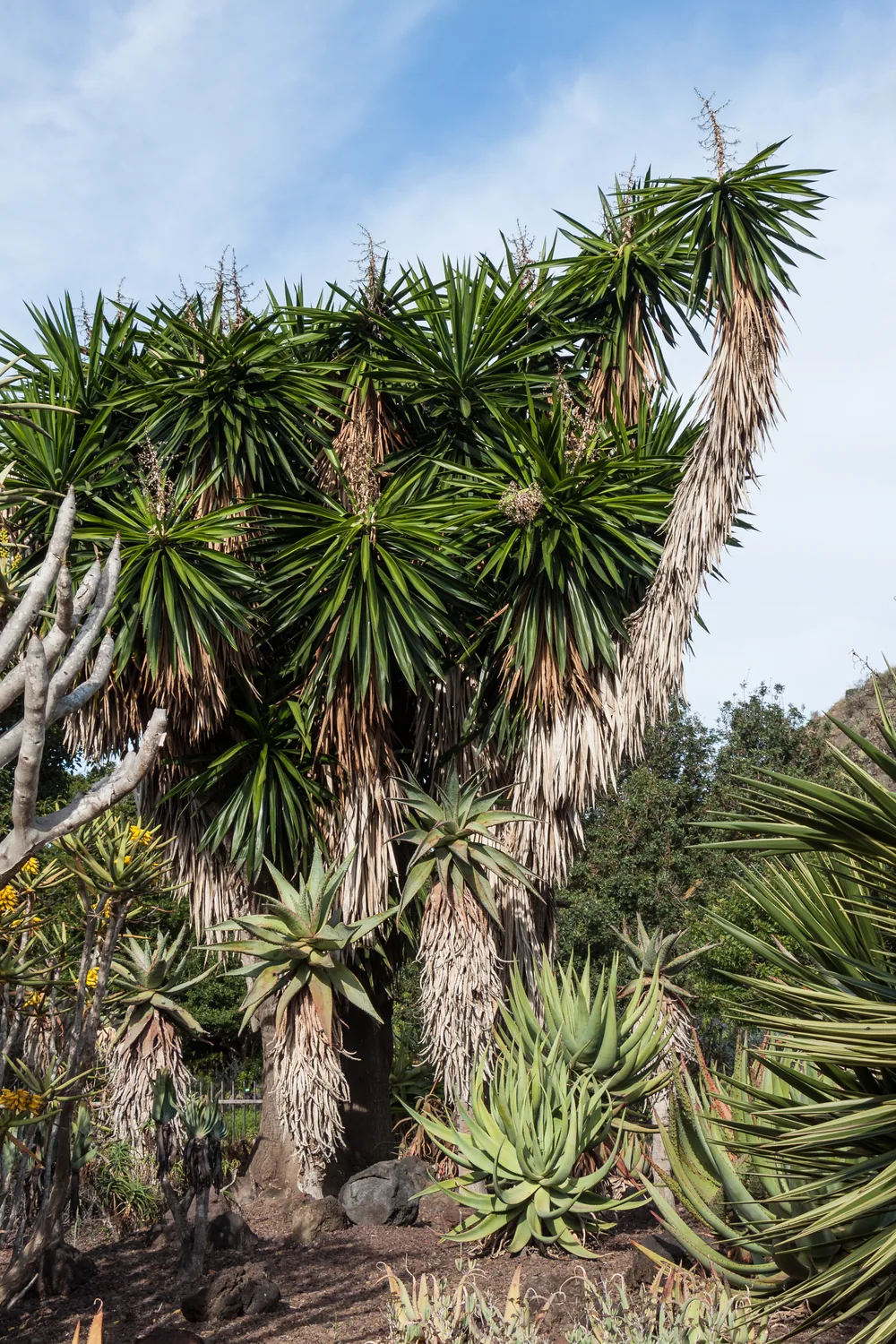
Despite the elephant-hide texture of its swollen, water-storing trunk base, Yucca elephantipes is native to the dry scrublands of Mexico and Central America, where that thick woody caudex acts as a reservoir that lets the plant shrug off long droughts, making it one of the most forgiving statement plants for neglectful indoor growers.
Does best in bright light with some direct sun but tolerates medium light indoors.
Water
Drought-tolerant; water deeply only when soil is fully dry, roughly every 2-3 weeks.
Humidity
Comfortable at normal room humidity; no misting needed.
Soil
Fast-draining, sandy or cactus-style mix to prevent waterlogging.
Temperature
Normal room temperatures. Keep it above 10°C.
Best position
east / south-east / south / west-facing windowanywhere up to about 2 m from the window
north / north-east / north-west-facing windowanywhere up to about 1 m from the window
south-west-facing windowabout 1 m from the window or further back
Watch for strong direct sun at south-west windows.
See every window directionHide window directions
Best position
right by the window
about 1 m
about 2 m
about 4 m
4 m or more
north
works well✓
works well✓
too dark○
too dark○
too dark○
north-east
works well✓
works well✓
too dark○
too dark○
too dark○
east
works well✓
works well✓
works well✓
too dark○
too dark○
south-east
works well✓
works well✓
works well✓
too dark○
too dark○
south
works well✓
works well✓
works well✓
too dark○
too dark○
south-west
just about~
works well✓
works well✓
too dark○
too dark○
west
works well✓
works well✓
works well✓
too dark○
too dark○
north-west
works well✓
works well✓
too dark○
too dark○
too dark○
✓works well~just about○too dark☼too much direct sun
A rough guide based on window direction and typical daylight through the year. Window size, curtains and whatever stands outside matter just as much.
!Toxic to pets
Toxic to cats and dogs if eaten.
It contains saponins. Eating it causes vomiting in dogs and cats.
If your pet has eaten some, contact your vet.
Source: ASPCA
Common mistake
Overwatering is by far the most common way to kill this plant; its thick trunk already stores plenty of moisture, so soil that stays damp between waterings is far more dangerous to it than letting it dry out completely.
Care by Season
Spring
Resume light feeding and increase watering slightly as growth picks up.
Summer
Water when dry and give as much sun as possible; can go outdoors in warm climates.
Autumn
Cut back on water and stop fertilizing as growth slows.
Winter
Water very sparingly, keep above 10°C, and avoid cold drafts.
Growing & Maintenance
Soil and pot
A fast-draining, sandy mix, for example one part potting mix to three parts perlite or sand.
Fertilising
A light feed in spring and summer. None in autumn and winter.
Pruning
A cane that has grown too tall can be cut to the height you want. It sprouts again below the cut.
Propagation
From stem cuttings, or from the suckers at the base.
Pests & Diseases
Common problems
Soft trunk and yellow leaves
Most likely cause: Overwatering and root rot.
What to do: Stop watering, take it out of the wet mix, trim the rotten parts and repot in sandy mix.
Lower leaves turning yellow and dropping
Most likely cause: Normal as the trunk matures. Many at once point to overwatering.
What to do: Pull the old leaves off and water only when the mix is fully dry.
Pale, stretched new leaves
Most likely cause: Too little light.
What to do: Move it to bright light with some direct sun.
Leaning cane
Most likely cause: The plant is reaching for the light.
What to do: Turn the pot regularly.
Speckled leaves with fine webbing
Most likely cause: Spider mites.
What to do: Wipe the leaves down and apply insecticidal soap.
Pests & Diseases
Spider mites
Signs: Fine webbing and dusty stippling on leaves in dry conditions.
Treatment: Wipe foliage down and apply insecticidal soap if needed. Check the undersides of the leaves and the crevices where the leaf stem meets the main stalk.
Scale insects
Signs: Small brown or tan bumps on stems and leaf bases.
Treatment: Scrape off manually and treat with horticultural oil.
Root rot
Signs: Soft, mushy stem base and yellowing leaves from overwatering.
Treatment: Remove from soggy soil, trim rotten sections, and repot in dry, gritty mix.
FAQ
Can I cut back a Spineless Yucca that has gotten too tall?
Yes, unlike many houseplants it tolerates hard pruning well; cutting the cane down to a desired height encourages new rosettes of leaves to sprout from just below the cut.
Why are the lower leaves on my Yucca turning yellow and dropping?
Some lower leaf loss over time is a normal part of the trunk maturing and is not usually a concern; if it happens rapidly alongside soft, dark stems, overwatering is the more likely culprit.
How often should I water a Spineless Yucca?
Roughly every 2-3 weeks, deeply, and only when the mix is fully dry. Water very sparingly in winter, because overwatering is the usual cause of failure.
How much light does a Spineless Yucca need?
It does best in bright light with some direct sun. It tolerates medium light indoors but grows more slowly.
How do I propagate a Spineless Yucca?
From stem cuttings or from suckers. A piece of cane, or an offshoot taken from the base, roots in a sandy mix.
Does a Spineless Yucca flower indoors?
Rarely. Outdoors it carries creamy-white, bell-shaped flowers from late spring to summer, but houseplants seldom bloom.