No results. Is a plant missing? Tell uscontact@wikiplant.net
Korean Hornbeam
Carpinus turczaninowii
Care level: Easy
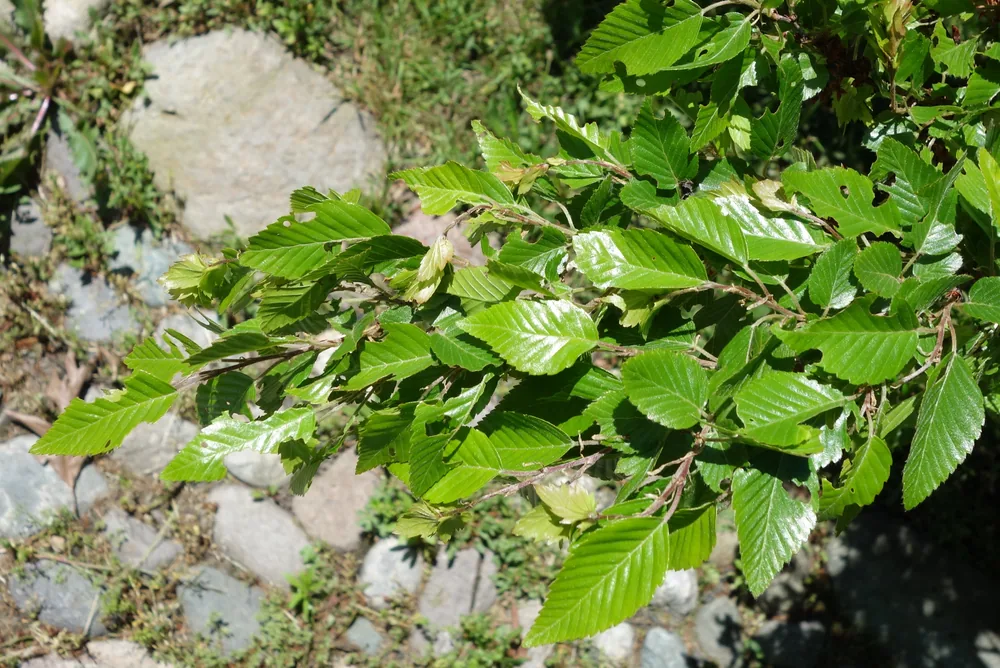
Korean Hornbeam is one of the most popular deciduous bonsai species for fine branching and naturally small leaves, prized as much for its smooth, muscle-like bark as for its foliage. Native to Korea, China, and Japan, it backbuds reliably and tolerates hard pruning well, making it a forgiving choice for building dense, refined canopies.
Full sun to light shade; more sun helps keep leaves small and growth dense.
Water
Keep the soil evenly moist during the growing season; established trees tolerate brief dryness but grow best without letting the soil fully dry out.
Humidity
Not a controllable factor outdoors; adapts well to a wide range of humidity levels.
Soil
Any well-draining bonsai soil; Korean Hornbeam isn't particular about soil pH.
Temperature
Fully hardy. Protect the roots of a potted tree from prolonged hard frost.
Size
A tree of 4.5-6m in the ground; kept small as a bonsai by pruning.
Signature feature
The fluting arrives with age. A young trunk is smooth and round, and the ridges and sinews only form as it thickens over years, so this is a feature you grow into a tree rather than buy.
Care by Season
Spring
Fresh green leaves emerge early; a good time for structural pruning before the canopy fills in, since cuts heal quickly.
Summer
Pinch and thin new shoots throughout the growing season to keep leaves small and build fine ramification.
Autumn
Leaves may take on yellow to orange tones before dropping; a good season for wiring once branches are bare.
Winter
Fully deciduous and hardy; the trunk's muscle-like bark texture is fully visible, and this is a good time for repotting and root work while dormant.
Growing & Maintenance
Soil and pot
Any well-draining bonsai soil. It is not particular about pH.
Pruning
Do structural pruning in early spring, before the canopy fills in. Pinch and thin the new shoots through the growing season, and wire in autumn.
Pests & Diseases
Common problems
Large leaves and coarse growth
Most likely cause: Too little sun, or no pinching.
What to do: Give it more sun and pinch the new shoots through the season.
Brown leaf edges
Most likely cause: The soil dried out.
What to do: Keep the soil evenly moist in the growing season.
Yellowing leaves in soil that stays wet
Most likely cause: Root rot.
What to do: Improve the drainage at once and let the soil dry slightly.
Curled, sticky leaves
Most likely cause: Aphids.
What to do: Rinse them off with a strong spray of water.
Small bumps on the twigs
Most likely cause: Scale insects.
What to do: Scrape off what you can see and treat with horticultural oil.
Pests & Diseases
Aphids
Signs: Clusters of small insects on new shoots and a sticky residue (honeydew) on leaves below.
Treatment: Rinse off with a strong spray of water or apply insecticidal soap, repeating as needed.
Scale insects
Signs: Small brown or grey bumps along stems and branches, often with sticky honeydew nearby.
Treatment: Scrape off visible scale and treat with horticultural oil, repeating as needed.
Root rot
Signs: Wilting or yellowing leaves and a soft, mushy root base from soil that stays too wet.
Treatment: Improve drainage immediately and let the soil dry out more between waterings.
FAQ
Can I keep a Korean Hornbeam bonsai indoors?
No, not long-term. It's a deciduous tree that needs real seasonal changes, including winter dormancy with a period of cold, to stay healthy; indoors it won't get the dormancy it needs and will weaken over time.
Why are my Korean Hornbeam's leaves so much smaller than a typical tree's?
That's one of the species' most prized traits for bonsai: its leaves are naturally small compared to most deciduous trees, and regular pinching and leaf-thinning through the growing season reduces them further, building the fine, dense canopy the species is known for.
How often should I water a Korean Hornbeam bonsai?
Often enough to keep the soil evenly moist in the growing season. An established tree tolerates brief dryness, but grows best without it.
How much sun does a Korean Hornbeam need?
Full sun to light shade. More sun keeps the leaves small and the growth dense.
When should I prune a Korean Hornbeam bonsai?
Do structural pruning in early spring, before the leaves fill in. It tolerates hard pruning, and new shoots are pinched all season.
Does a Korean Hornbeam colour in autumn?
Yes. The leaves take on yellow to orange tones, sometimes red, before they drop.