No results. Is a plant missing? Tell uscontact@wikiplant.net
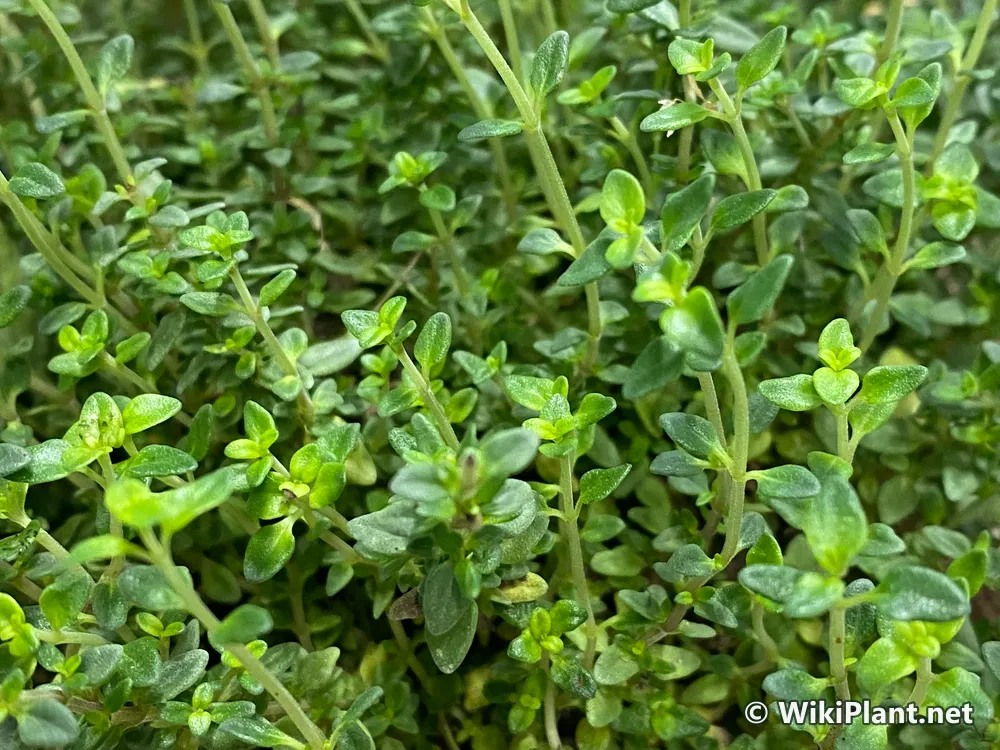
Lemon thyme is a hybrid thyme grown for its scent: crush a leaf and it smells of lemon peel rather than of the resinous, almost medicinal note of common thyme. It makes a low, bushy, evergreen sub-shrub of 10 to 50cm that is happiest in a gritty pot on a sunny sill or doorstep, and it keeps its leaves through the winter, so there is something to pick in January. It is used where thyme would overpower: fish, chicken, courgettes, a syrup for fruit. The lemon is in the oil and not in the acidity, so it adds no sourness to a dish.
I have this plantSign in to add this plant to your library
| Best position | right by the window | about 1 m | about 2 m | about 4 m | 4 m or more |
|---|---|---|---|---|---|
| north | too dark | too dark | too dark | too dark | too dark |
| north-east | too dark | too dark | too dark | too dark | too dark |
| east | works well | too dark | too dark | too dark | too dark |
| south-east | works well | works well | too dark | too dark | too dark |
| south | works well | works well | too dark | too dark | too dark |
| south-west | works well | works well | too dark | too dark | too dark |
| west | works well | too dark | too dark | too dark | too dark |
| north-west | too dark | too dark | too dark | too dark | too dark |
works well just about too dark too much direct sun
A rough guide based on window direction and typical daylight through the year. Window size, curtains and whatever stands outside matter just as much.
As a precaution, keep it out of reach of children and pets.
"Lemon thyme" is sold under at least four spellings and not all of them are the same plant. The hybrid is Thymus × citriodorus, a cross of Thymus vulgaris and Thymus pulegioides; the RHS files the plain name Thymus citriodorus as ambiguous because it has been applied to several different thymes over the years. Buy it by smell rather than by label: rub a leaf in the shop, and if it does not smell clearly of lemon, it is not what you are looking for.
Almost always too little sun and too much feeding. The scent is in the oil, and the oil is made in bright light and lean soil, so a plant kept indoors in a rich compost grows soft, green and nearly scentless. Move it into the sun, stop feeding it, and pick from it often. Old woody plants also fade: take cuttings every three or four years and start again.
You can keep it there, but it will not thrive on a dark or warm sill. It wants the brightest window you have and a cool winter rather than a heated room. Indoors it needs watching for the two problems dry warmth brings, spider mites and greenfly, and for the one that still kills more thyme than anything else: sitting in wet compost.
Trim after flowering and again lightly in spring, taking the soft top third of the growth. Never cut back into bare old wood, which is the one mistake thyme does not forgive: unlike many shrubs it very often fails to shoot again from that wood and the stem simply dies back.
Every week to ten days in summer, when the top of the compost has dried out, and far less in winter. It tolerates drought once established, but not wet roots.
Yes. It carries small pink flowers in midsummer, which pollinators visit.
It forms a mound 15-30cm tall and spreads to about 30cm. It grows at a medium pace.