No results. Is a plant missing? Tell uscontact@wikiplant.net
Lovage
Levisticum officinale
Care level: Very easy
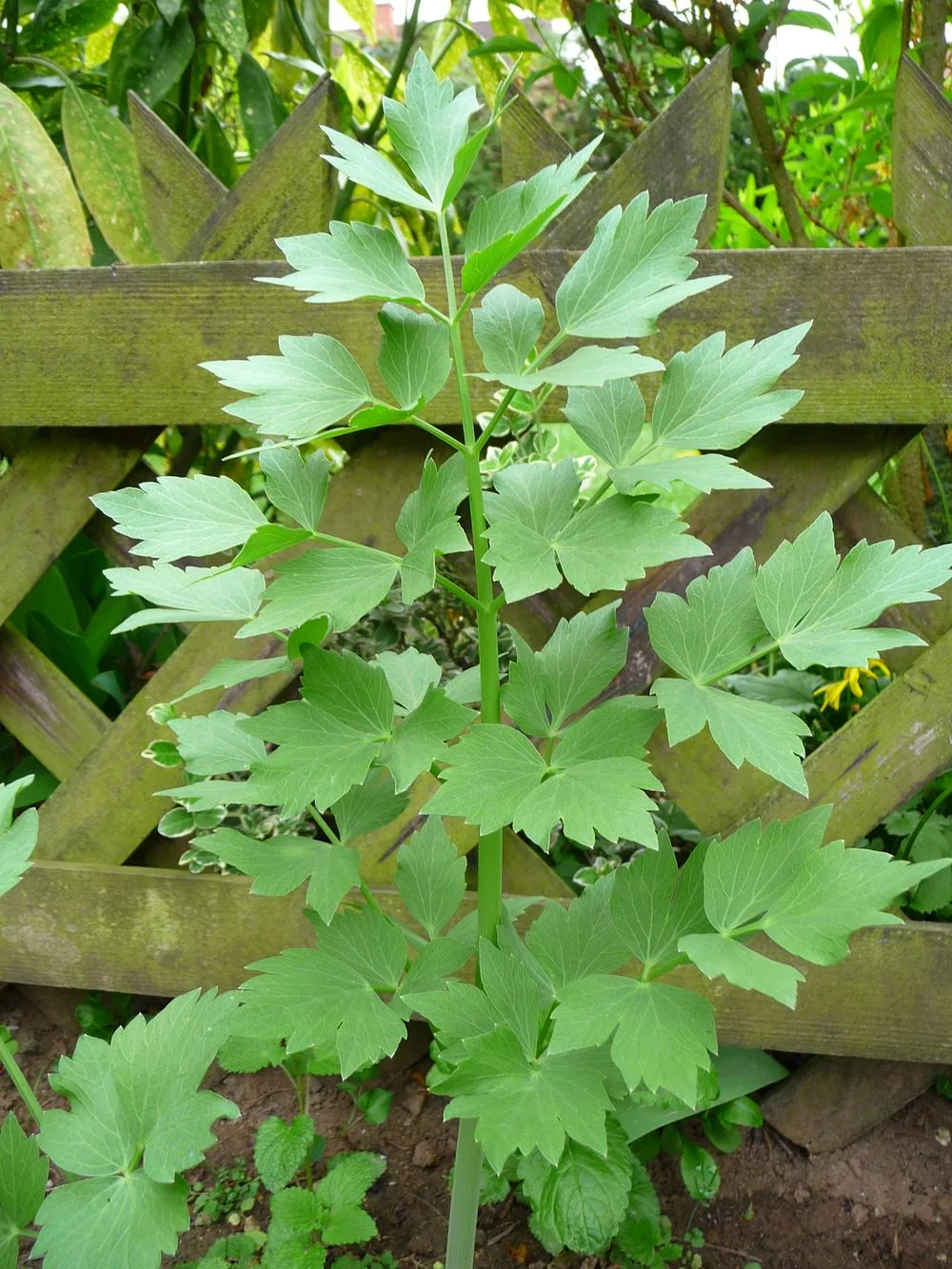
Lovage is a giant among herbs: a hardy perennial that sends up hollow stems of 2m each summer, clothed in glossy, dark green, divided leaves and topped with flat heads of small yellow-green flowers. Every part smells and tastes like strong celery with a savoury, yeasty depth, which is why it is nicknamed the Maggi plant. Leaves, stalks, seeds and roots are all used, mostly in soups, stocks and stews. It lives for many years in deep, moist soil in sun or light shade and needs almost no care.
Keep the soil moist. Water in dry spells, as drought makes the leaves tough and bitter.
Humidity
Not a factor for this outdoor plant.
Soil
Deep, fertile, moist but well-drained soil. It tolerates most soils but grows largest in rich ground.
Temperature
A fully hardy perennial. It dies back to the ground in autumn and returns in spring.
Size
1.5-2m tall and 0.6-1m wide.
Growth speed
Medium
!Toxic to pets
Toxic to cats and dogs if eaten.
It can make cats and dogs unwell, so keep it out of their reach.
If your pet has eaten some, contact your vet.
Source: NC State Extension
Beginner tip
One plant is enough, and one leaf is often enough too. The flavour is far stronger than celery, so start with a single leaf in a pot of soup. Cut the whole plant down to about 30cm in midsummer and it produces a second crop of tender young leaves.
Care by Season
Spring
Red-tinged shoots emerge. Divide clumps, sow seed and mulch with compost.
Summer
Harvest leaves. Cut the plant back in midsummer for a second flush and water in dry weather.
Autumn
Collect ripe seed. Cut the old foliage to the ground once it yellows.
Winter
Dormant below ground. Nothing to do.
Growing & Maintenance
Planting
Plant in spring or autumn in deep, enriched soil, allowing 1m of space. A single plant supplies a household.
Fertilising
Mulch with garden compost or well-rotted manure each spring.
Pruning
Cut out flower stems for more leaves, cut the plant back to about 30cm in midsummer and remove the old foliage in autumn.
Propagation
By division in spring or by fresh seed sown in autumn or spring.
Pests & Diseases
Common problems
Brown blotches in the leaves
Most likely cause: Celery leaf miner.
What to do: Remove affected leaves or cut the plant back.
Tough, bitter leaves
Most likely cause: Old growth, flowering or drought.
What to do: Cut back in midsummer and water; use the young regrowth.
The plant crowds its neighbours
Most likely cause: Its natural size.
What to do: Move it to the back of the bed in spring or grow it in a large pot.
Seedlings fail to appear
Most likely cause: Old seed.
What to do: Sow fresh seed in autumn, or divide a plant instead.
Yellow leaves in late summer
Most likely cause: The plant is finishing its season, often early after drought.
What to do: Cut down and water; it returns in spring.
Pests & Diseases
Slugs and snails
Signs: Young shoots eaten as they emerge in spring.
Treatment: Protect the crown in spring and pick slugs off in the evening.
Celery leaf miner
Signs: Dry, brown, blistered patches in the leaves, with small grubs inside.
Treatment: Pick off and destroy affected leaves, or cut the plant back for clean regrowth.
Celery leaf spot
Signs: Small brown spots on the leaves that spread in wet weather until leaves wither.
Treatment: Remove affected leaves, cut back and clear all debris in autumn.
FAQ
What does lovage taste like and how do I use it?
Like intense celery with a hint of parsley and stock cube. Add a leaf or two to soups, stews, potato dishes and stocks, use the hollow stalks as a vegetable or as drinking straws for tomato juice, and use the seeds like celery seed in bread and pickles.
How big does it get?
Up to 2m tall and 1m wide in its second or third year. Put it at the back of the herb bed, where it will not shade smaller plants, or grow it in a container of at least 40 litres to keep it smaller.
Does it come back every year?
Yes. It disappears completely in winter and shoots strongly from the crown in spring. A plant lasts ten years or more.
Should I let it flower?
For the best leaves, cut the flower stems out as they appear, or cut the whole plant back in midsummer. Let a stem or two flower if you want seed or want to feed hoverflies and other insects.
How do I propagate it?
Divide an established clump in spring with a sharp spade, making sure each piece has buds and roots, or sow fresh seed in autumn or spring. Old seed germinates poorly.
Why are there brown blotches in the leaves?
Celery leaf miner. The grubs tunnel inside the leaf and leave dry, brown, blistered patches. Pick off and destroy affected leaves, or cut the plant down and let clean new growth come through.