No results. Is a plant missing? Tell uscontact@wikiplant.net
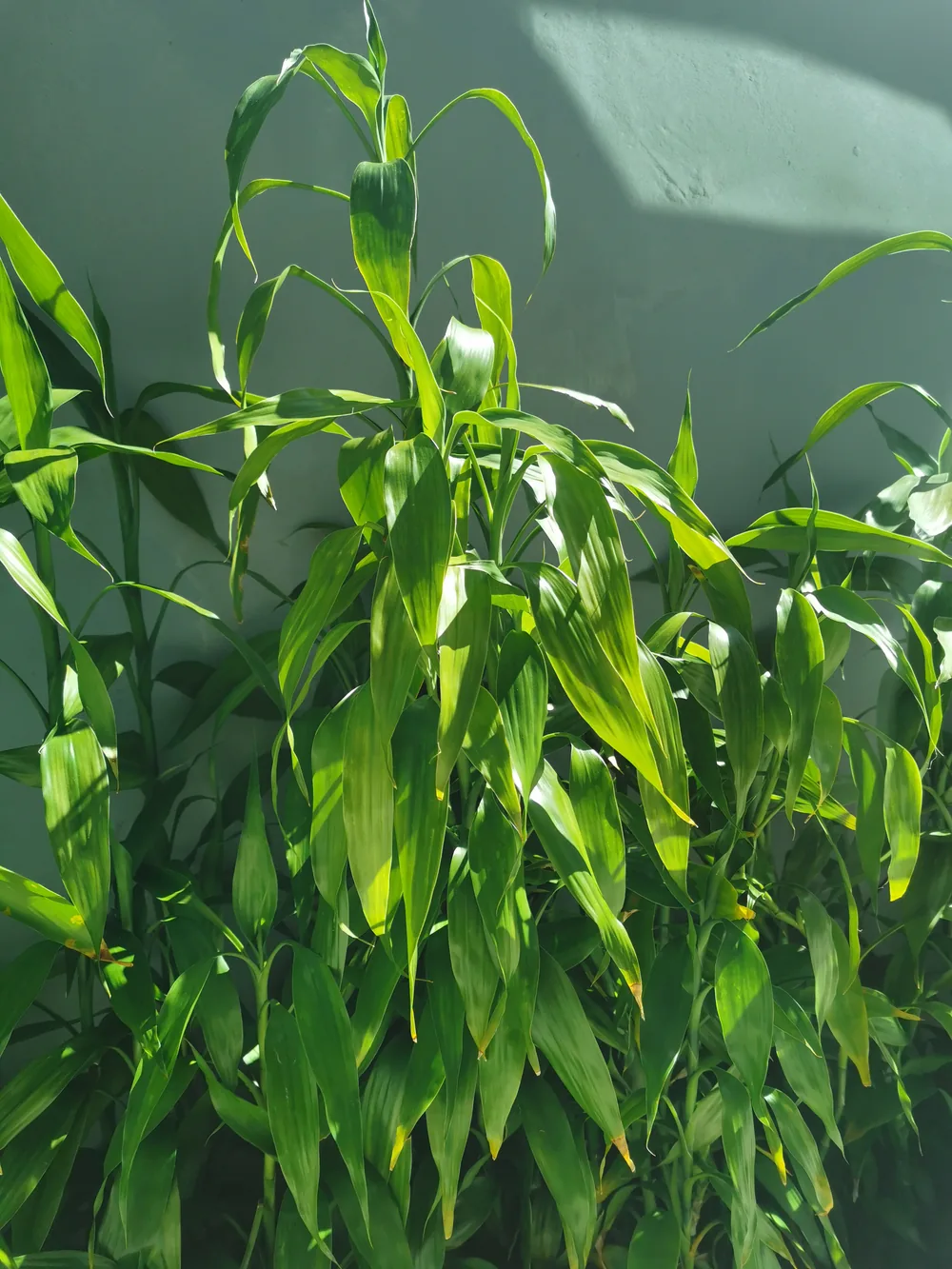
Lucky Bamboo
Dracaena sanderiana
Care level: Very easy
Lucky Bamboo isn't bamboo either; it's actually a Dracaena species from West Africa that simply resembles bamboo canes. Its popularity comes largely from Feng Shui tradition, where the number of stalks in an arrangement is thought to carry specific meaning, such as three stalks for happiness or five for wealth.
Prefers low to medium indirect light; direct sun scorches the leaves and can bleach variegation.
Water
If grown in water, change it every 1-2 weeks with filtered or distilled water; in soil, keep evenly moist without waterlogging.
Humidity
Tolerates average household humidity without issue.
Soil
If potted, use a light, well-draining mix; many growers keep it in water with pebbles for support instead.
Growth speed
Slow
Best position
north / north-east-facing windowanywhere up to about 2 m from the window
east-facing windowabout 1 m from the window or further back
west-facing windowabout 2 m from the window or further back
Watch for strong direct sun at east / west windows.
See every window directionHide window directions
Best position
right by the window
about 1 m
about 2 m
about 4 m
4 m or more
north
works well✓
works well✓
works well✓
just about~
just about~
north-east
works well✓
works well✓
works well✓
just about~
just about~
east
just about~
works well✓
works well✓
works well✓
works well✓
south-east
too much direct sun☼
just about~
just about~
works well✓
works well✓
south
too much direct sun☼
too much direct sun☼
too much direct sun☼
just about~
works well✓
south-west
too much direct sun☼
too much direct sun☼
just about~
works well✓
works well✓
west
too much direct sun☼
too much direct sun☼
works well✓
works well✓
works well✓
north-west
too much direct sun☼
just about~
works well✓
just about~
just about~
✓works well~just about○too dark☼too much direct sun
A rough guide based on window direction and typical daylight through the year. Window size, curtains and whatever stands outside matter just as much.
!Toxic to pets
Toxic to cats and dogs if eaten.
Eating it can cause vomiting and an upset stomach.
If your pet has eaten some, contact your vet.
Source: ASPCA
Common mistake
Using untreated tap water straight from the faucet is the most common way people stunt or brown their Lucky Bamboo, since it's sensitive to the chlorine and fluoride in many municipal water supplies; filtered or distilled water avoids the problem.
Care by Season
Spring
Refresh water or top-dress soil, and resume light feeding as new leaves emerge.
Summer
Change water more frequently in warmth to prevent algae and stagnation.
Autumn
Reduce feeding and keep conditions stable as growth slows.
Winter
Keep away from cold drafts and heater vents, and water or change vase water a little less often.
Growing & Maintenance
Soil and pot
In a vase of chlorine-free water with pebbles for support, or in a light, well-draining potting mix kept moist.
Fertilising
A weak liquid fertiliser now and then in spring and summer. Very little is needed.
Pruning
Trim side shoots that grow too long, cutting just above a node on the stalk.
Propagation
From stem cuttings, which root in water.
Pests & Diseases
Common problems
Yellow leaves
Most likely cause: Too much direct sun, chlorinated tap water or stale water.
What to do: Move it out of the sun and change the water every week or two, using filtered or distilled water.
Brown leaf tips
Most likely cause: Dry air, or chemicals in tap water.
What to do: Use chlorine-free water and keep it away from heater vents.
A stalk turning yellow and soft
Most likely cause: Stem rot.
What to do: Cut the stalk above the rot and re-root the healthy top in fresh water. Discard the rotten part.
Green slime in the vase
Most likely cause: Algae, encouraged by light and water that is changed too rarely.
What to do: Rinse the vase and pebbles and change the water more often in warm weather.
Bleached leaves
Most likely cause: Direct sunlight.
What to do: Give it low to medium indirect light.
Pests & Diseases
Root rot (in water culture)
Signs: Soft, brown, foul-smelling roots and yellowing stalks
Treatment: Trim away rotten roots, rinse the vase clean, and replace with fresh water.
Fungal stem rot
Signs: Soft, mushy, discolored patches on the stalk
Treatment: Cut the affected stalk above the rot line and re-root the healthy top in fresh water.
Spider mites
Signs: Fine webbing and pale speckling on leaves in dry air
Treatment: Wipe leaves down and raise humidity slightly. Check the undersides of the leaves and the crevices where the leaf stem meets the main stalk.
FAQ
Why are the leaves on my water-grown Lucky Bamboo turning yellow?
Yellowing is often caused by too much direct sun, chlorinated tap water, or water that hasn't been changed often enough; move it out of direct light, switch to filtered water, and refresh the water every 1-2 weeks.
Can I move my Lucky Bamboo from water into soil?
Yes, it can be transitioned to a well-draining potting mix, though it's best done gradually and the plant may need a period to adjust; many growers simply leave it in water indefinitely since it thrives that way with regular water changes.
Is Lucky Bamboo toxic to cats and dogs?
Yes, Lucky Bamboo is toxic to cats and dogs. Eating it upsets the stomach. Keep the vase where pets cannot chew the leaves.
Is Lucky Bamboo a real bamboo?
No, it is not a bamboo at all. It is a Dracaena, a tropical plant from the asparagus family, whose stalks only look like bamboo canes.
How often should I change the water for Lucky Bamboo?
Every week or two, and more often in warm weather. Use filtered, distilled or other chlorine-free water, since tap water browns the leaf tips.
How do I propagate Lucky Bamboo?
From stem cuttings. Cut a side shoot or a length of stalk and stand it in clean water, where it roots.