No results. Is a plant missing? Tell uscontact@wikiplant.net
Mammillaria
Mammillaria spp.
Care level: Easy
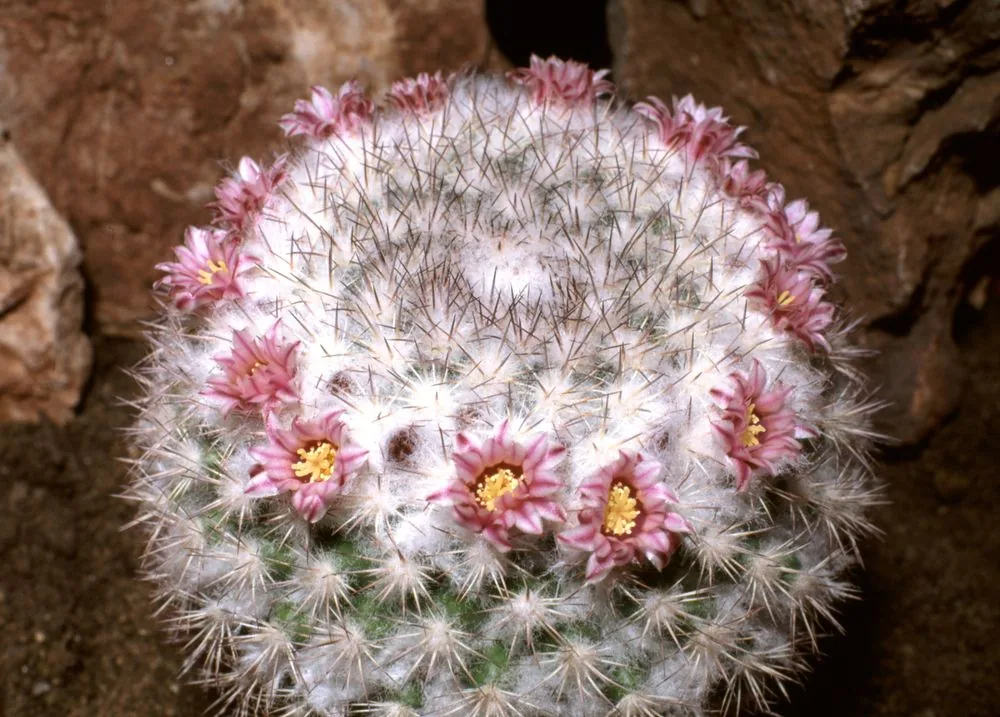
Mammillaria is one of the largest groups of cacti, with well over a hundred species from Mexico and neighbouring regions, and it supplies most of the small, round, spiny cacti sold as houseplants. The body is a globe or short cylinder covered not in ribs but in spirals of small bumps, each tipped with a cluster of spines that may be straight, hooked, hair-fine or woolly. The plants stay small, form clumps with age and are among the easiest cacti to bring into flower. They need sun, gritty compost and a cool, dry winter.
Full sun or the brightest light available, with a little afternoon shade behind glass in very hot weather.
Water
Water thoroughly in spring and summer, then let the compost dry out completely. Give no water during the winter rest.
Humidity
Dry air suits it. Never mist.
Soil
A free-draining cactus compost with added grit or coarse sand, in a pot with drainage holes.
Temperature
Keep it above about 5°C. A cool, dry winter rest at around 7-13°C brings on the flowers.
Size
From 1cm to about 40cm tall depending on the species; most pot plants stay under 15cm.
Growth speed
Slow
?Pet safety not confirmed
As a precaution, keep it out of reach of children and pets.
Signature feature
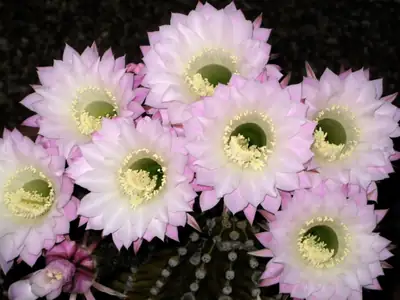
The flowers open in a ring around the crown, like a wreath, on the growth made the year before. They are followed on many species by a second ring of bright red, club-shaped fruits that last for months.
Care by Season
Spring
Resume watering as growth starts. The ring of flowers opens in spring on most species.
Summer
Water when the compost is dry and feed a few times. The plant can stand outdoors in full sun.
Autumn
Reduce watering and stop by mid-autumn. Bring the pot in before the first frost.
Winter
Keep it cool, bright and completely dry until spring.
Growing & Maintenance
Repotting
Repot every two or three years in spring into a slightly larger pot of dry cactus compost with added grit. Hold the plant with folded paper and wait a week before watering.
Fertilising
Feed two or three times in the growing season with a cactus fertiliser at half strength. Do not feed in autumn or winter.
Propagation
By offsets removed from the base and dried for a few days before potting, or by seed sown in warmth in spring.
Pests & Diseases
Common problems
No flowers
Most likely cause: A warm or watered winter, or too little sun.
What to do: Give a cool, dry, bright rest and full sun in summer.
The top grows thin and pale
Most likely cause: Too little light.
What to do: Move to full sun gradually; the narrow part will not fill out.
Soft, brown base
Most likely cause: Rot from wet compost.
What to do: Keep drier, repot in gritty mix and re-root healthy parts.
Brown, corky patches low down
Most likely cause: Natural ageing at the base, or old sun scorch.
What to do: Nothing to do if the tissue is firm.
The body shrivels in winter
Most likely cause: Normal water loss during the dry rest.
What to do: Do not water until spring; it plumps up again.
Yellow or scorched patches
Most likely cause: Sudden strong sun after winter.
What to do: Accustom the plant to sun over a week or two.
Pests & Diseases
Mealybugs
Signs: White, woolly tufts between the bumps and at the base of the plant, easily mistaken for the plant's own wool.
Treatment: Dab them off with a cotton bud dipped in alcohol and repeat weekly. Check the undersides of the leaves and the crevices where the leaf stem meets the main stalk.
Root mealybugs
Signs: A plant that stops growing and looks dull; white, powdery deposits on the roots and inside the pot.
Treatment: Wash the roots clean, let them dry and repot in fresh compost. Check the undersides of the leaves and the crevices where the leaf stem meets the main stalk.
Red spider mite
Signs: Rusty brown, corky scarring that spreads from the crown in hot, dry, still air.
Treatment: Increase ventilation and rinse the plant; the scars remain but new growth is clean. Check the undersides of the leaves and the crevices where the leaf stem meets the main stalk.
Rot
Signs: The base turns soft and brown or the body collapses, in wet compost.
Treatment: Cut away to healthy tissue if only the base is affected and re-root the top; discard a plant that is soft throughout.
FAQ
Why is my Mammillaria not flowering?
It almost always comes down to winter. The plant needs a cool, bright, completely dry rest of several months to set buds. A cactus kept warm and watered all winter grows on weakly and does not flower. It also needs full sun in summer.
How often should I water it?
In spring and summer water thoroughly, then let the compost dry out completely before watering again. Reduce watering in autumn and give none at all during the winter rest.
How much sun does it need?
As much as you can give it: a south-facing windowsill or a spot outdoors in summer. In very hot weather behind glass a little afternoon shade prevents scorch. In poor light the body stretches into a thin neck.
Are the spines dangerous?
They prick, and species with hooked spines catch on skin, clothes and fur and are awkward to detach. Wear gloves or wrap the plant in folded paper when repotting, and keep it out of reach of pets and small children.
How do I repot it?
Every two or three years in spring, into a pot only slightly larger, in dry cactus compost with added grit. Wait a week before watering so that damaged roots can heal.
How do I propagate it?
Twist or cut off one of the offsets that form around the base, let it dry for a few days and set it on gritty compost. It roots in a few weeks. Seed is easy too, but slow.