No results. Is a plant missing? Tell uscontact@wikiplant.net
Marjoram
Origanum majorana
Care level: Easy
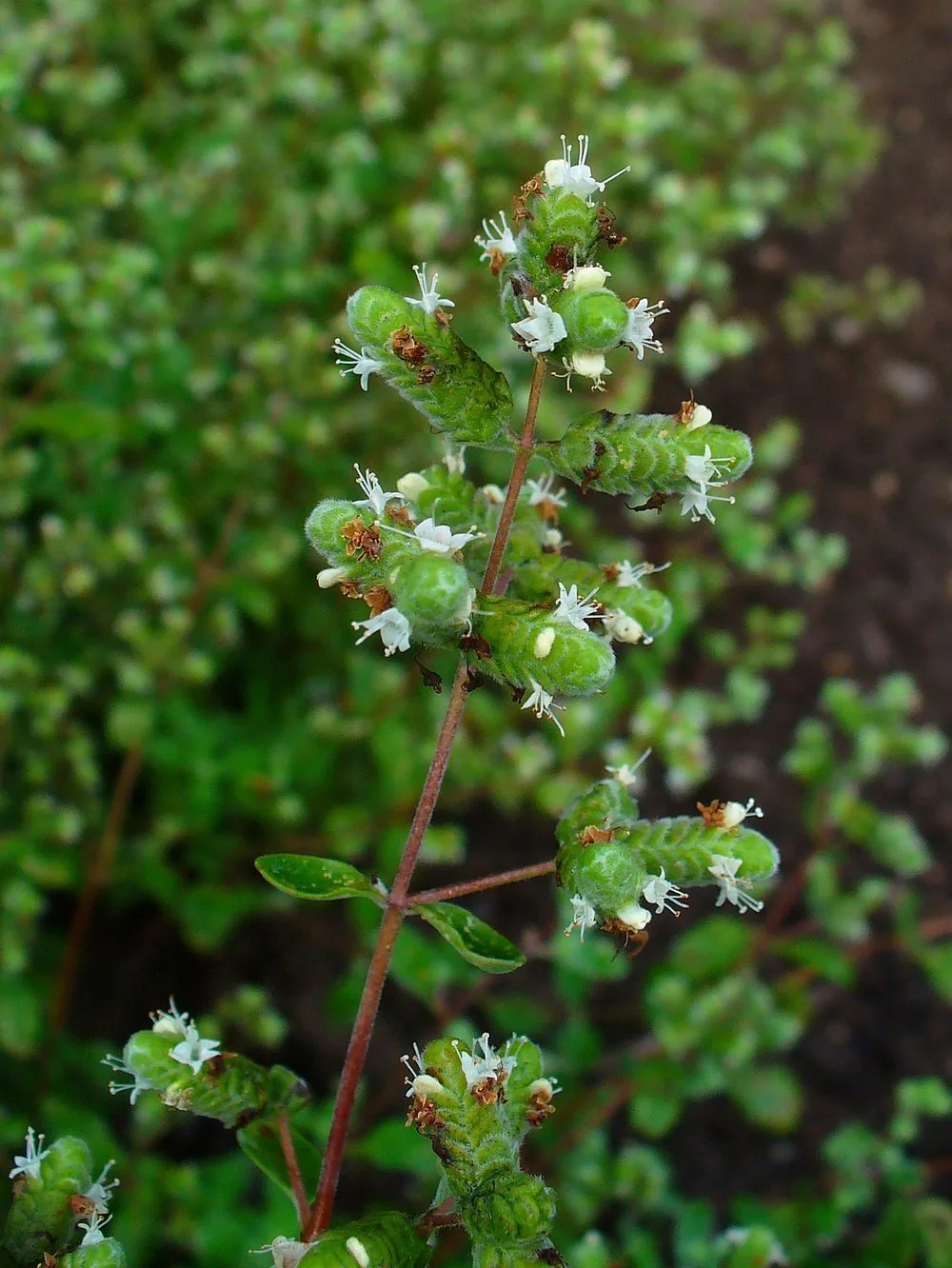
Sweet marjoram is a small, bushy Mediterranean herb with soft, grey-green, oval leaves and a warm, sweet scent, milder and more floral than its close relative oregano. In summer it carries tight green knots of bracts along the stems, from which tiny white flowers open, which is why it is also called knotted marjoram. It is a tender perennial that is usually grown as an annual in cooler climates, in a pot or a sunny, well-drained bed, and it is ready to pick within weeks of planting.
Origanum onitesOriganum vulgareOriganum x majoricum
Light
Full sun, in a warm, sheltered spot.
Water
Water when the top of the soil is dry. It tolerates short dry spells far better than wet roots.
Humidity
Not a factor outdoors. Indoors it prefers dry, moving air.
Soil
Light, well-drained soil, or potting compost with added grit.
Temperature
Frost tender. Grow it as an annual, or overwinter the pot frost free under cover.
Size
30-60cm tall and 30-50cm wide.
Growth speed
Medium
!Toxic to pets
Toxic to cats and dogs if eaten.
It can make cats and dogs unwell, so keep it out of their reach.
If your pet has eaten some, contact your vet.
Source: NC State Extension
Beginner tip
Pick just before the flower knots open, when the leaves have the most flavour, and add them at the end of cooking. Marjoram's sweet scent fades with long heat, where oregano holds up.
Care by Season
Spring
Sow indoors and plant out after the last frost.
Summer
Harvest regularly, cutting just before the flower knots open.
Autumn
Take a last harvest to dry, and bring potted plants under cover before the first frost.
Winter
Overwintering plants rest: keep them frost free, bright and almost dry.
Growing & Maintenance
Planting
Plant out after the last frost, 20-30cm apart, in a sunny, sheltered, well-drained spot, or grow in a pot with drainage holes.
Pruning
Cut stems back by a third at each harvest to keep the plant bushy. On overwintered plants, cut back the old flower stems in early spring.
Propagation
By seed in spring, by division, or by basal softwood cuttings in spring.
Pests & Diseases
Common problems
Stems blacken at the base
Most likely cause: Waterlogged soil.
What to do: Improve the drainage and water less.
Weak flavour
Most likely cause: Shade, rich soil or leaves picked after flowering.
What to do: Grow in full sun in lean soil and harvest before the flowers open.
Leggy, sparse growth
Most likely cause: Too little sun or no cutting back.
What to do: Move to full sun and cut stems back by a third.
The plant died over winter
Most likely cause: Frost or cold, wet soil.
What to do: Treat it as an annual, or overwinter a pot frost free.
Seedlings fail to appear
Most likely cause: Seed buried too deep, or kept too cold.
What to do: Sow on the surface in warmth and barely cover.
Pests & Diseases
Aphids
Signs: Clusters of small insects on the shoot tips.
Treatment: Rinse them off with water, or pinch out the affected tips.
Red spider mite
Signs: Fine pale speckling on the leaves and thin webbing, on plants kept warm and dry under cover.
Treatment: Rinse the foliage and move the plant somewhere cooler and airier. Check the undersides of the leaves and the crevices where the leaf stem meets the main stalk.
Root rot
Signs: Stems that blacken at the base and collapse in wet soil.
Treatment: Remove affected plants and replant in free-draining compost; water less.
FAQ
What is the difference between marjoram and oregano?
They are close relatives. Marjoram is sweeter and milder, with soft grey-green leaves, and it is frost tender. Oregano is more pungent and is a fully hardy perennial.
Does marjoram come back every year?
Only where winters are almost frost free. Elsewhere, sow or buy new plants each spring, or bring a pot under cover for the winter and keep it on the dry side.
When should I sow it?
Sow indoors in spring. The seed is very fine, so scatter it on the surface and barely cover it. Plant out after the last frost.
How do I harvest it?
Cut whole stems back by about a third rather than picking single leaves. The plant branches and gives a second crop.
Can I dry marjoram?
Yes, it dries well and keeps its flavour. Cut stems just before flowering, hang them in small bunches somewhere airy and shaded, and strip the leaves when crisp.
Why is my marjoram dying off at the base?
Wet soil. It rots in heavy or waterlogged ground. Grow it in gritty, free-draining compost and water only when the surface is dry.