No results. Is a plant missing? Tell uscontact@wikiplant.net
Nasturtium
Tropaeolum majus
Care level: Very easy
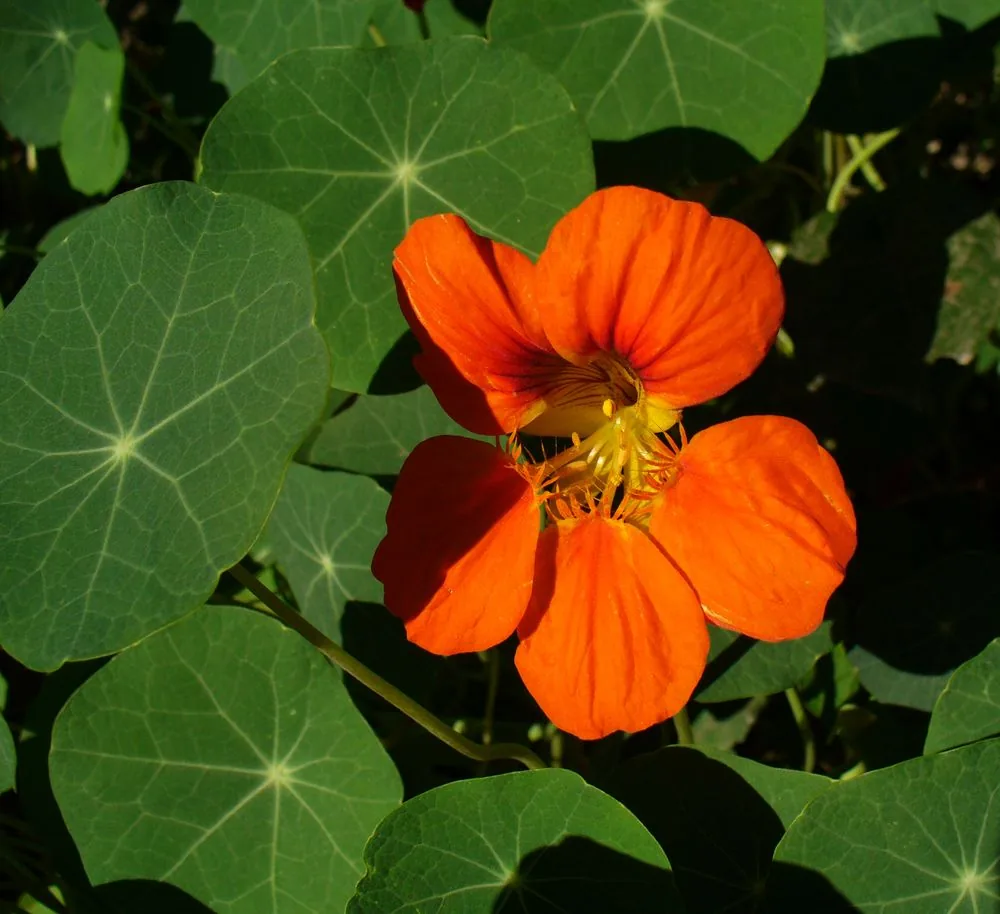
The nasturtium is a fast, frost-tender annual from South America with round leaves held like small parasols on a central stalk and spurred flowers in orange, yellow and red from summer until the first frost. Climbing and trailing types scramble 2m or more over the ground, up a fence or out of a hanging basket, while dwarf types make low mounds for pots and edging. The leaves, flowers and green seeds are all edible, with a peppery taste like watercress. It is one of the easiest plants to grow from seed, which makes it a favourite first plant for children.
Tropaeolum majus 'Empress of India'Tropaeolum majus 'Alaska'Tropaeolum peregrinum
Light
Full sun for the most flowers. It grows in light shade but flowers less.
Water
Water seedlings until established, then only in dry spells. Plants in pots need regular watering.
Humidity
Not a factor for this outdoor plant.
Soil
Poor, well-drained soil. Rich soil gives leaves at the expense of flowers.
Temperature
A frost-tender annual. Sow after the last frost; the first autumn frost kills it.
Size
Dwarf bushy types about 30cm tall; trailing and climbing types 1.5-2.5m long.
Growth speed
Fast
!Toxic to pets
Toxic to cats and dogs if eaten.
It can make cats and dogs unwell, so keep it out of their reach.
If your pet has eaten some, contact your vet.
Source: NC State Extension
Common mistake
Do not feed it or plant it in rich soil. In fertile ground a nasturtium makes a mass of large leaves that hide the few flowers it produces. Poor, dry, sunny soil gives smaller leaves and far more flowers.
Care by Season
Spring
Sow after the last frost, directly where the plants are to grow.
Summer
Flowers all summer. Pick flowers and leaves, deadhead and check for blackfly and caterpillars.
Autumn
Flowering continues until the first frost. Collect ripe seeds.
Winter
The plants are dead. Clear them away; seedlings may appear in spring.
Growing & Maintenance
Planting
Sow the seeds 2cm deep and 20-30cm apart where they are to flower, or one per small pot indoors. Seedlings appear within about two weeks.
Fertilising
None. Feeding reduces flowering.
Pruning
Deadhead to keep the flowers coming and cut back trailing stems that wander too far.
Support
Climbing types need netting, a wigwam or a fence. They do not cling by themselves at first, so tie in or guide the young shoots.
Propagation
By seed. Collect the large seeds when they fall, dry them and store them in a cool, dry place until spring.
Pests & Diseases
Common problems
Many leaves, few flowers
Most likely cause: Rich soil, feeding or shade.
What to do: Do not feed, and grow it in poor soil in full sun.
Seedlings blackened
Most likely cause: A late frost.
What to do: Sow or plant out after the last frost.
Leaves yellow in a pot
Most likely cause: Drought, or a pot that is too small.
What to do: Water regularly and move to a larger pot.
Leaves stripped
Most likely cause: Caterpillars.
What to do: Pick them off and check for eggs.
Curled, sticky shoot tips
Most likely cause: Blackfly.
What to do: Rinse off or remove the affected tips.
Plants collapse in autumn
Most likely cause: The first frost.
What to do: Normal for this annual. Save seed for next year.
Pests & Diseases
Blackfly
Signs: Dense clusters of black aphids under the leaves and on shoot tips, with curled leaves and sticky honeydew.
Treatment: Squash or rinse them off, remove badly infested leaves and encourage ladybirds and hoverflies.
Cabbage white caterpillars
Signs: Leaves eaten down to the veins by yellow and black or green caterpillars.
Treatment: Rub off the yellow eggs under the leaves and pick the caterpillars off by hand.
Virus
Signs: Leaves mottled or streaked with yellow, crumpled and stunted.
Treatment: Pull up and bin affected plants; there is no cure. Control aphids, which spread viruses.
FAQ
Which parts can I eat?
The leaves, flowers and young green seeds. Leaves and flowers add a peppery bite to salads, and the green seeds can be pickled in vinegar as a substitute for capers. Use only plants that have not been sprayed.
Why does my plant have lots of leaves but no flowers?
The soil is too rich, the plant has been fed, or it is in too much shade. Stop feeding, water less and give it full sun. Next year sow it in poorer soil.
When do I sow nasturtiums?
Outdoors from mid-spring to early summer, once frost is past, pushing each large seed about 2cm deep where the plant is to grow. For earlier flowers, sow in pots indoors a few weeks sooner and plant out after the last frost.
What are the black insects under the leaves?
Blackfly, a black aphid that clusters on the undersides of leaves and on shoot tips. Squash them, rinse them off with water or pick off the worst leaves. Gardeners often grow nasturtiums near beans to draw blackfly away from the crop.
What is stripping the leaves down to the stalks?
Caterpillars of the cabbage white butterflies, which lay their eggs on nasturtiums as readily as on cabbages. Check the undersides of the leaves for yellow egg clusters and pick the caterpillars off.
Will it come back next year?
The plant dies with the first frost, but it drops plenty of large seeds and seedlings often appear the following spring. You can also collect the ripe seeds, dry them and sow them yourself.
Can I grow it in a pot or hanging basket?
Yes. Trailing types suit baskets and window boxes, dwarf types suit pots. Use ordinary multipurpose compost without added fertiliser and water when the surface dries.