No results. Is a plant missing? Tell uscontact@wikiplant.net
Nerve Plant
Fittonia albivenis
Care level: Moderate
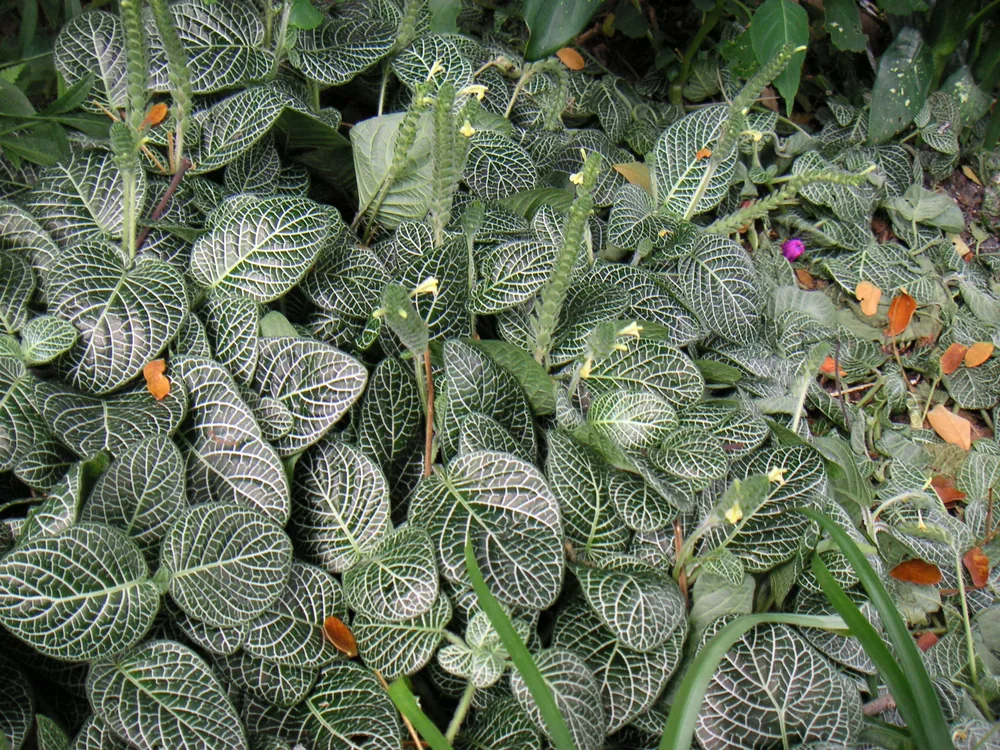
Fittonia albivenis grows naturally as a low groundcover on the floor of South American rainforests, which explains both its dramatic, almost theatrical wilting the moment soil dries out and its striking network of contrasting veins, a pattern that likely helps it stand out to pollinators in the dim, shaded understory it calls home.
Fittonia White AnneFittonia Pink AngelFittonia Red Vein
Light
Prefers low to medium indirect light; direct sun scorches the thin leaves.
Water
Keep soil consistently moist, watering as soon as the surface begins to dry, and expect dramatic wilting as a thirst signal.
Humidity
Needs high humidity (60%+); often grown well in terrariums or under a cloche.
Soil
Light, moisture-retentive potting mix with good organic content.
Temperature
Average to cool room temperatures, away from cold draughts.
Size
8-20cm tall, spreading 15-45cm.
Growth speed
Slow
Best position
north / north-east-facing windowanywhere up to about 2 m from the window
east-facing windowabout 1 m from the window or further back
west-facing windowabout 2 m from the window or further back
Watch for strong direct sun at east / west windows.
See every window directionHide window directions
Best position
right by the window
about 1 m
about 2 m
about 4 m
4 m or more
north
works well✓
works well✓
works well✓
just about~
just about~
north-east
works well✓
works well✓
works well✓
just about~
just about~
east
just about~
works well✓
works well✓
works well✓
works well✓
south-east
too much direct sun☼
just about~
just about~
works well✓
works well✓
south
too much direct sun☼
too much direct sun☼
too much direct sun☼
just about~
works well✓
south-west
too much direct sun☼
too much direct sun☼
just about~
works well✓
works well✓
west
too much direct sun☼
too much direct sun☼
works well✓
works well✓
works well✓
north-west
too much direct sun☼
just about~
works well✓
just about~
just about~
✓works well~just about○too dark☼too much direct sun
A rough guide based on window direction and typical daylight through the year. Window size, curtains and whatever stands outside matter just as much.
✓Non-toxic to pets
Considered non-toxic to cats and dogs.
Source: ASPCA
Did you know?
Nerve Plant can go completely limp and appear dead from underwatering, yet often bounces back to full health within an hour or two of a thorough watering, making it one of the few houseplants where near-total wilting doesn't necessarily mean the plant is lost.
Care by Season
Spring
Resume light feeding every 4-6 weeks and trim leggy stems to encourage bushiness.
Summer
Water frequently to prevent wilting and keep humidity high.
Autumn
Slightly reduce watering frequency as growth slows.
Winter
Keep warm, away from cold drafts, and maintain steady light moisture.
Growing & Maintenance
Soil and pot
A light, well-drained, moisture-retentive potting mix. Its shallow roots are happy in a small pot.
Fertilising
A light feed every 4-6 weeks in spring and summer.
Pruning
Pinch out the stem tips to keep the plant bushy and cut leggy stems back.
Propagation
From stem cuttings. The creeping stems root readily in moist compost.
Pests & Diseases
Common problems
The whole plant goes limp
Most likely cause: Thirst. It wilts dramatically as soon as the compost dries.
What to do: Water at once. It usually recovers fully within hours.
Shrivelled, scorched leaves
Most likely cause: Direct sun.
What to do: Move it to low or medium indirect light.
Yellow leaves
Most likely cause: Overwatering, which leads to root rot.
What to do: Keep the compost moist, not soggy, and make sure the pot drains.
Long, bare stems
Most likely cause: No pinching.
What to do: Pinch out the tips regularly and root the cuttings.
Crispy leaf edges
Most likely cause: Dry air.
What to do: Raise the humidity, or grow it in a terrarium or under a cloche.
Pests & Diseases
Spider mites
Signs: Fine webbing and stippled, dull patches on leaves.
Treatment: Raise humidity, rinse foliage, and apply insecticidal soap if needed. Check the undersides of the leaves and the crevices where the leaf stem meets the main stalk.
Mealybugs
Signs: Small white cottony spots along stems.
Treatment: Dab with an alcohol-soaked swab and repeat weekly. Check the undersides of the leaves and the crevices where the leaf stem meets the main stalk.
Root rot
Signs: Wilting despite wet soil and blackened, mushy roots.
Treatment: Remove from soggy soil, trim rotten roots, and repot in fresh, well-draining mix.
FAQ
My Nerve Plant went completely limp, is it dead?
Probably not; this species is famous for dramatic wilting the moment it gets thirsty, and most plants perk back up within an hour or two of a thorough watering, so check the soil before assuming the worst.
Why is my Nerve Plant a popular terrarium choice?
It thrives in the high humidity and stable moisture that enclosed terrariums and cloches naturally provide, conditions that closely mirror the damp rainforest floor it comes from, which is why it rarely thrives long-term in average dry room air without extra humidity.
Is the Nerve Plant safe for cats and dogs?
Yes, the Nerve Plant is not toxic to cats or dogs.
How often should I water a Nerve Plant?
About twice a week, as soon as the surface of the compost begins to dry. It wilts badly when dry but recovers quickly after watering.
How do I propagate a Nerve Plant?
From stem cuttings. Set a piece of stem with a few leaves in moist compost and keep it humid; the creeping stems root easily.
Does a Nerve Plant flower?
Rarely indoors, and the small white flowers are insignificant. It is grown for its veined leaves.