No results. Is a plant missing? Tell uscontact@wikiplant.net
Orchid Cactus
Epiphyllum oxypetalum
Care level: Moderate
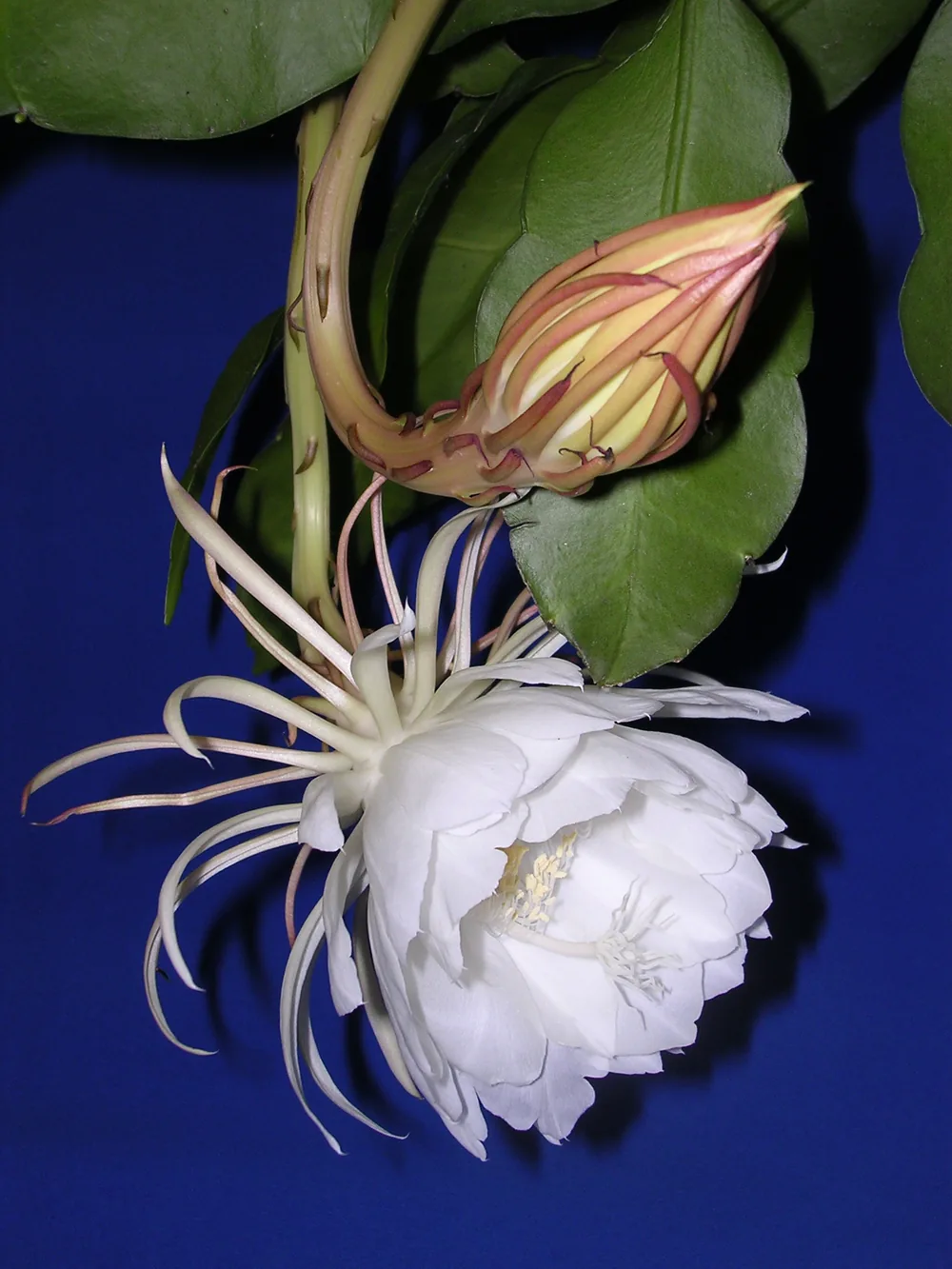
Epiphyllum oxypetalum earns its "Queen of the Night" nickname from flowers that open only after dark, fill the room with an intense fragrance, and then wilt completely by morning, often lasting just one night per bloom. In the wild it grows as an epiphyte wedged into tree bark in Central American rainforests rather than rooted in soil, which is why it prefers a chunky, fast-draining mix over dense potting soil.
Bright indirect light, as in its native habitat growing in the dappled shade of trees; too much direct sun scorches the flat leaf-like stems.
Water
Water when the top few centimeters of soil are dry, roughly every 1-2 weeks; reduce watering markedly in winter.
Humidity
Appreciates moderate to high humidity, reflecting its tropical epiphytic origin.
Soil
Well-draining, chunky mix such as orchid bark blended with regular potting soil, similar to other epiphytic cacti.
Temperature
10-27°C. Not frost-tolerant.
Size
Stems can reach 2.4-3m long.
Growth speed
Fast
Best position
north / north-east-facing windowanywhere up to about 1 m from the window
east-facing windowabout 1 m from the window or further back
west-facing windowabout 2 m from the window or further back
Watch for strong direct sun at east / west windows.
See every window directionHide window directions
Best position
right by the window
about 1 m
about 2 m
about 4 m
4 m or more
north
works well✓
works well✓
too dark○
too dark○
too dark○
north-east
works well✓
works well✓
too dark○
too dark○
too dark○
east
just about~
works well✓
works well✓
too dark○
too dark○
south-east
too much direct sun☼
just about~
just about~
too dark○
too dark○
south
too much direct sun☼
too much direct sun☼
too much direct sun☼
too dark○
too dark○
south-west
too much direct sun☼
too much direct sun☼
just about~
too dark○
too dark○
west
too much direct sun☼
too much direct sun☼
works well✓
too dark○
too dark○
north-west
too much direct sun☼
just about~
too dark○
too dark○
too dark○
✓works well~just about○too dark☼too much direct sun
A rough guide based on window direction and typical daylight through the year. Window size, curtains and whatever stands outside matter just as much.
?Pet safety not confirmed
As a precaution, keep it out of reach of children and pets.
Did you know?
A single flower typically opens for only one night; growers sometimes host "blooming parties" timed to when buds are about to open, since missing the window means waiting for the next flush of buds.
Care by Season
Spring
Resume regular watering and light feeding as new segments grow.
Summer
Keep it warm and humid; flower buds often form on mature stems during this period.
Autumn
Reduce watering and feeding as growth slows heading into cooler months.
Winter
Give it a cool, slightly drier rest period with reduced watering to encourage strong flowering the following year.
Growing & Maintenance
Soil and pot
A well-drained, chunky mix, such as cactus mix or potting soil blended with orchid bark and perlite.
Repotting
Every 2-3 years.
Fertilising
A light feed in spring and summer, as new stem segments grow. Stop in autumn.
Propagation
From stem cuttings. Let the cut end dry for a few days, then set it in barely moist mix.
Pests & Diseases
Common problems
No flowers on a healthy plant
Most likely cause: No cool, drier winter rest.
What to do: Give it a cooler spot and less water in winter, then bright, indirect light and regular watering in spring.
Scorched, bleached stems
Most likely cause: Direct sun.
What to do: Move it to bright, indirect light, away from harsh afternoon sun.
Limp, wrinkled stems
Most likely cause: Either thirst or rotted roots.
What to do: Feel the compost. Dry: soak it thoroughly. Wet: let it dry and check the roots.
Soft, rotting stem base
Most likely cause: Overwatering or poorly drained compost.
What to do: Cut away the rotten tissue and re-root healthy stems in fresh, well-drained mix.
White powdery coating on the stems
Most likely cause: Powdery mildew, in still air.
What to do: Give the plant more air and remove badly affected stems.
Pests & Diseases
Mealybugs
Signs: White cottony masses hidden at leaf segment joints
Treatment: Dab with a rubbing-alcohol swab and repeat weekly. Check the undersides of the leaves and the crevices where the leaf stem meets the main stalk.
Scale insects
Signs: Small brown bumps on the flattened stems
Treatment: Scrape off gently and treat with horticultural oil.
Root rot
Signs: Mushy, discolored stem base from overwatering or poor drainage
Treatment: Cut away rotten tissue and repot in fresh, well-draining mix, watering less afterward.
FAQ
Why won't my Orchid Cactus flower even though it looks healthy?
Flowering usually requires a cooler, slightly drier winter rest period followed by bright indirect light and regular feeding in the growing season; a plant kept in the same warm, evenly watered conditions year-round often stays vegetative without blooming.
Why do the flat, leaf-like stems on my Orchid Cactus look scorched?
This is typically sunburn from too much direct light; despite the name, it's an epiphytic cactus adapted to dappled forest shade, so it needs bright indirect light rather than harsh direct sun.
How often should I water an Orchid Cactus?
Roughly every 1-2 weeks in spring and summer, when the top few centimetres of mix are dry. Soak it thoroughly each time, and cut back markedly in autumn and winter.
When does an Orchid Cactus flower?
In late spring or summer, at night. Each large, fragrant white flower lasts only a few hours, and houseplants bloom sporadically.
How do I propagate an Orchid Cactus?
From stem cuttings. Cut a length of stem, let the cut end dry for a few days and set it in barely moist mix.
When should I repot an Orchid Cactus?
Every 2-3 years, into a chunky, free-draining mix.