No results. Is a plant missing? Tell uscontact@wikiplant.net
Parsley
Petroselinum crispum
Care level: Moderate
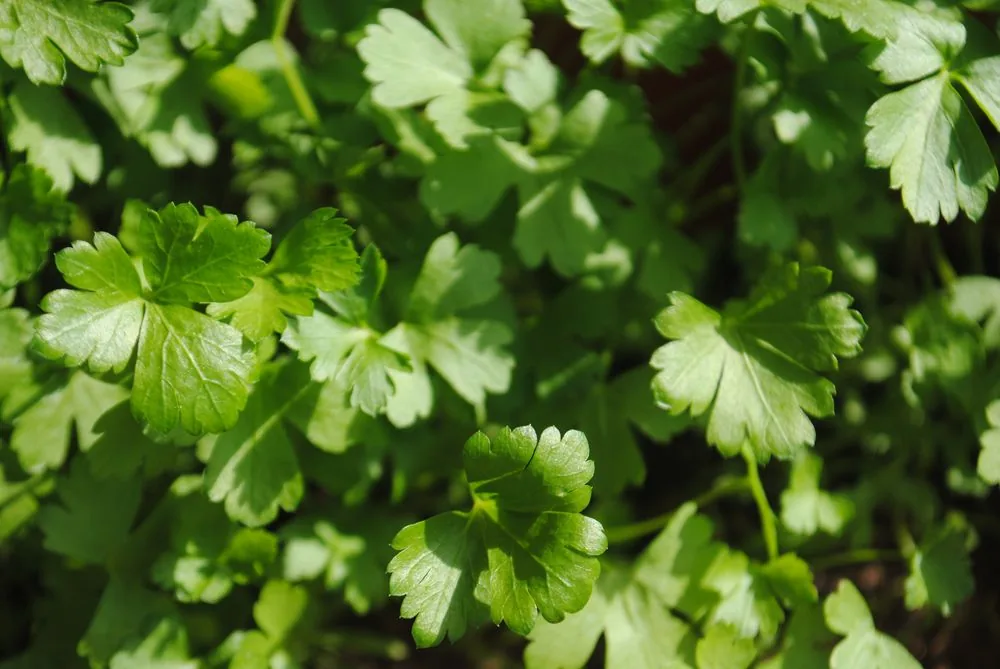
Parsley is the biennial umbellifer that sits in almost every European herb bed, grown for its fresh, slightly peppery leaf rather than for anything it does once it flowers. The curly form makes tight, ruffled foliage used as much for garnish as for flavour, while flat-leaf (Italian) parsley has a stronger, more savoury taste and is the one most cooks reach for. Sown or planted in spring, it grows fast through summer, sits through a mild winter as a rosette of leaves, and runs to flower and seed in its second year, after which the leaf quality drops and it is usually pulled and replaced.
Petroselinum crispum var. crispumPetroselinum crispum var. neapolitanumPetroselinum crispum var. tuberosum
Light
Full sun to light shade. It tolerates more shade than most kitchen herbs and often does better with some afternoon shelter in a hot summer.
Water
Keep the soil evenly moist; parsley is less drought-tolerant than woody Mediterranean herbs and bolts faster when it dries out repeatedly.
Humidity
Average humidity is fine, indoors or out; it is soil moisture rather than air moisture that matters to this plant.
Soil
Rich, moisture-retentive soil with good drainage. A thin, poor soil is the most common reason for pale, slow-growing parsley.
Size
About 30cm tall in the first year, 60-90cm when it flowers in the second.
Growth speed
Medium
!Toxic to pets
Toxic to cats and dogs if eaten.
Large amounts can cause photosensitivity, a sunburn-like skin reaction, rather than the usual digestive upset.
If your pet has eaten some, contact your vet.
Source: ASPCA
Signature feature
It is famously slow and erratic to germinate from seed, often taking three to four weeks and coming up patchily even in good conditions; an old (and only partly joking) piece of garden lore says it goes to the devil and back seven times before it sprouts. Soaking seed overnight and sowing it where it is to grow, since parsley dislikes being transplanted, both help more than anything else.
Care by Season
Spring
Sow or plant out after the last hard frost. Germination is slow; keep the seed bed consistently moist rather than watering erratically.
Summer
Main growing and harvesting season. Pick outer leaves regularly rather than shearing the whole plant, which keeps it producing new growth from the centre.
Autumn
Growth slows but continues in mild weather. A cloche or cold frame extends the harvest well into the cooler months in most of Europe.
Winter
A first-year plant often survives outdoors as a dormant or slow-growing rosette; a second-year plant will bolt to flower as soon as the weather warms in spring.
Growing & Maintenance
Planting
Sow or plant out after the last hard frost, 20-30cm apart. Seed is slow, so keep the seed bed moist, and disturb the taproot as little as possible when transplanting.
Fertilising
Feed plants in the ground twice during the growing season, and plants in pots or indoors more often.
Pruning
Harvest by snipping the outer stalks at the base, which keeps new leaves coming from the centre. Cut out a flower stem as soon as it appears.
Propagation
From seed. Germination often takes three to four weeks and comes up unevenly.
Pests & Diseases
Common problems
A tall flower stem appears
Most likely cause: Bolting. It is normal in the second year and is triggered early by dry soil or heat.
What to do: Cut the stem out at once to keep the leaves usable a little longer, and sow a new batch.
Pale, slow-growing leaves
Most likely cause: Thin, poor soil.
What to do: Grow it in rich, moisture-retentive soil and feed during the season.
Wilting in hot weather
Most likely cause: Dry soil or strong afternoon sun.
What to do: Keep the soil evenly moist and give some afternoon shade in summer.
Seed that does not come up
Most likely cause: Slow, erratic germination, which often takes three to four weeks.
What to do: Keep the seed bed moist and wait, or start with young plants.
Thin, pale growth on a windowsill in winter
Most likely cause: Too little light.
What to do: Give it the brightest window you have and expect less growth until spring.
Pests & Diseases
Carrot fly
Signs: Rusty, tunnelled damage low on the root and stem base; parsley shares this pest with carrot and other umbellifers.
Treatment: A fine insect-proof mesh over the crop in late spring and early summer, when the fly is laying eggs, is the most reliable protection. Rotating where umbellifers are grown each year helps too.
Aphids
Signs: Clusters of small green or black insects on new growth and flower stems, with leaves curling or becoming sticky.
Treatment: A strong jet of water or a soap spray clears light infestations. Parsley left to flower also draws hoverflies and parasitic wasps, which help keep aphid numbers down on nearby plants.
Septoria leaf spot
Signs: Small brown spots with a darker edge on the leaves
Treatment: Remove affected leaves, avoid wetting the foliage and give the plants more space.
FAQ
My parsley has sent up a tall flower stem. Should I cut it off, and is it still worth eating?
Cut it out as soon as you see it unless you want seed. A flowering (bolting) parsley puts its energy into the flower stalk rather than new leaves, and the leaves that remain turn coarser and more bitter. Removing the flower stem the moment it appears buys a few more weeks of decent leaf, but a plant that has bolted is nearing the end of its useful life regardless and is usually best replaced.
Can I grow parsley indoors on a windowsill year-round?
For a while, but it struggles through a full winter indoors. It wants more direct light than most windowsills give it in December and January, and will grow thin and pale without it; a bright, cool spot and turning the pot regularly helps. Most people get better winter parsley from a plant started outdoors in late summer and brought in before the first hard frost, rather than one sown indoors from scratch.
Is parsley toxic to cats and dogs?
Yes, parsley is listed as toxic to cats and dogs, in large amounts. It can make the skin sensitive to sunlight. Keep pets from grazing on the plant.
How do I harvest parsley so it keeps growing?
Snip the outer stalks at the base and leave the centre of the plant alone. New leaves grow from the middle, so the plant keeps producing.
How long does parsley seed take to germinate?
Often three to four weeks, and unevenly even in good conditions. Keep the soil consistently moist during that time.
Is parsley an annual or a perennial?
Neither: it is a biennial that is usually grown as an annual. It makes leaves in its first year, then flowers and sets seed in its second, when the leaves lose flavour.