No results. Is a plant missing? Tell uscontact@wikiplant.net
Peacock Plant
Calathea makoyana
Care level: Moderate
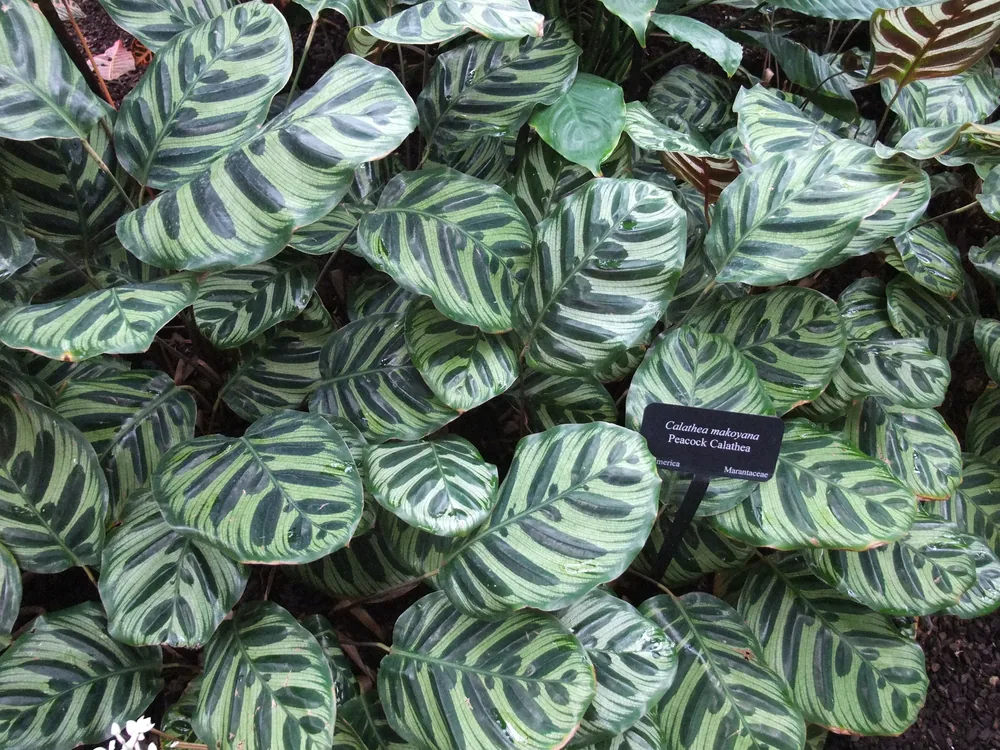
Calathea makoyana earns its Peacock Plant name from the striking pattern of dark, feather-like markings that alternate on both sides of the leaf midrib, resembling the eyespots of a peacock's tail; in its native Brazilian rainforest, this bold patterning likely helps the leaves blend into dappled, high-contrast light on the forest floor.
Thrives in low to medium indirect light; direct sun fades and burns the delicate leaf pattern.
Water
Water when the top 2cm of soil feels dry, roughly weekly, using room-temperature filtered water.
Humidity
Needs high humidity (60%+) and suffers with crispy edges in dry indoor air.
Soil
A loose, well-draining peat-based mix that retains some moisture without staying soggy.
Temperature
18-24°C. Keep it above 16°C, away from draughts.
Size
30-60cm tall and 20-30cm wide.
Best position
north / north-east-facing windowanywhere up to about 2 m from the window
east-facing windowabout 1 m from the window or further back
west-facing windowabout 2 m from the window or further back
Watch for strong direct sun at east / west windows.
See every window directionHide window directions
Best position
right by the window
about 1 m
about 2 m
about 4 m
4 m or more
north
works well✓
works well✓
works well✓
just about~
just about~
north-east
works well✓
works well✓
works well✓
just about~
just about~
east
just about~
works well✓
works well✓
works well✓
works well✓
south-east
too much direct sun☼
just about~
just about~
works well✓
works well✓
south
too much direct sun☼
too much direct sun☼
too much direct sun☼
just about~
works well✓
south-west
too much direct sun☼
too much direct sun☼
just about~
works well✓
works well✓
west
too much direct sun☼
too much direct sun☼
works well✓
works well✓
works well✓
north-west
too much direct sun☼
just about~
works well✓
just about~
just about~
✓works well~just about○too dark☼too much direct sun
A rough guide based on window direction and typical daylight through the year. Window size, curtains and whatever stands outside matter just as much.
✓Non-toxic to pets
Considered non-toxic to cats and dogs.
Source: ASPCA
Common mistake
Many owners water on a fixed schedule, but Peacock Plants are notoriously sensitive to both drought and soggy soil; check the top couple of centimeters of soil by touch before every watering rather than watering by the calendar.
Care by Season
Spring
Begin monthly light feeding and repot only if it has become root bound.
Summer
Water more frequently and run a humidifier nearby during peak growth.
Autumn
Cut back on fertilizer and watch leaves close up at dusk, a natural nyctinastic movement.
Winter
Water sparingly, keep temperatures above 16°C, and avoid cold windowsills and drafts.
Growing & Maintenance
Soil and pot
A loose, well-drained, peat-based mix with perlite and plenty of organic matter.
Repotting
In spring, only when it has become root-bound.
Fertilising
Feed lightly every four weeks in spring and summer. Cut back in autumn.
Propagation
By dividing the rhizomes in late spring, about every two years.
Pests & Diseases
Common problems
Leaves curling and losing their markings
Most likely cause: Low humidity, or minerals in tap water.
What to do: Keep the humidity at 60% or more and water with distilled or rain water.
Brown leaf edges
Most likely cause: Dry air, or fluoride in tap water.
What to do: Run a humidifier nearby and switch to rainwater.
Faded or burnt leaves
Most likely cause: Direct sun.
What to do: Move it to low or medium indirect light.
Yellow leaves
Most likely cause: Overwatering, which leads to root rot.
What to do: Keep the compost moist, not soggy, trim the affected roots and repot in fresh mix.
Leaves closing at dusk
Most likely cause: Normal for this plant.
What to do: Nothing to do.
Pests & Diseases
Spider mites
Signs: Fine webbing and stippled discoloration on leaves.
Treatment: Increase humidity, shower the foliage, and apply insecticidal soap if needed. Check the undersides of the leaves and the crevices where the leaf stem meets the main stalk.
Mealybugs
Signs: White cottony clusters at leaf bases and stems.
Treatment: Dab with rubbing-alcohol swabs and repeat every few days until clear. Check the undersides of the leaves and the crevices where the leaf stem meets the main stalk.
Root rot
Signs: Wilting despite moist soil and blackened mushy roots.
Treatment: Unpot, trim affected roots, and repot in fresh, well-draining mix.
FAQ
Why is my Peacock Plant's foliage curling and losing its markings?
Curling paired with fading pattern is usually a sign of low humidity or tap water minerals; raise humidity around the plant and switch to filtered or rainwater to help new leaves emerge with crisp, bold markings.
Why does my Peacock Plant close its leaves at night?
This is a natural nyctinastic movement common to Calatheas, where leaves fold upward at dusk and reopen with morning light; it is a normal part of the plant's daily rhythm, not a sign of stress.
Is the Peacock Plant safe for cats and dogs?
Yes, the Peacock Plant is not toxic to cats or dogs.
How often should I water a Peacock Plant?
Roughly once a week, when the top 2cm of compost feels dry. Use room-temperature rainwater or distilled water, and keep the compost moist but never soggy.
How do I propagate a Peacock Plant?
By division. Split the rhizomes in late spring, giving each piece its own roots and leaves.
What temperature does a Peacock Plant need?
Between 18 and 24°C, and never below 16°C. Keep it away from cold windowsills and draughts in winter.