No results. Is a plant missing? Tell uscontact@wikiplant.net
Emerald Ripple Peperomia
Peperomia caperata
Care level: Easy
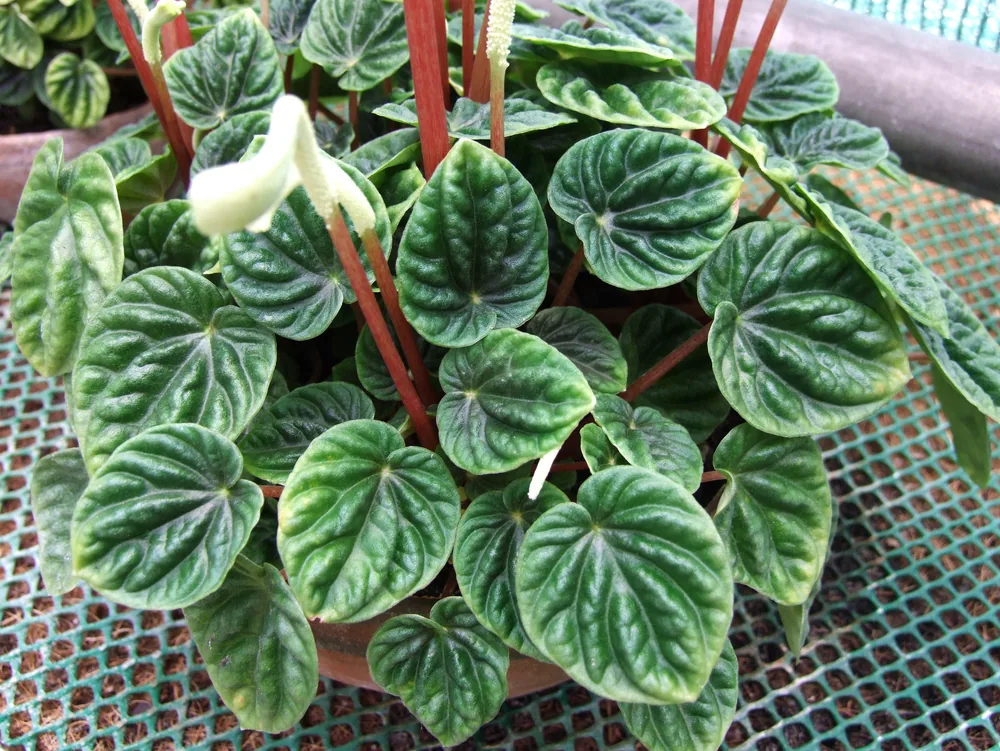
The species name caperata literally means 'wrinkled' in Latin, a nod to the deeply corrugated, heart-shaped leaves that ripple like crinkled fabric and catch light differently from every angle. Its compact, mounding habit and slow growth make it a favorite for terrariums and small dish gardens, where showier, faster-growing plants would quickly overwhelm the space.
Medium to bright indirect light; direct sun can fade or scorch the crinkled leaves.
Water
Let the top half of soil dry before watering, roughly every 10-14 days.
Humidity
Prefers moderate humidity but tolerates average indoor air reasonably well.
Soil
Light, well-draining potting mix with added perlite for good aeration.
Temperature
Normal room temperatures, away from draughts.
Size
15-20cm tall and 15-60cm wide.
Best position
north / north-east-facing windowanywhere up to about 1 m from the window
east-facing windowabout 1 m from the window or further back
west-facing windowabout 2 m from the window or further back
Watch for strong direct sun at east / west windows.
See every window directionHide window directions
Best position
right by the window
about 1 m
about 2 m
about 4 m
4 m or more
north
works well✓
works well✓
too dark○
too dark○
too dark○
north-east
works well✓
works well✓
too dark○
too dark○
too dark○
east
just about~
works well✓
works well✓
too dark○
too dark○
south-east
too much direct sun☼
just about~
just about~
too dark○
too dark○
south
too much direct sun☼
too much direct sun☼
too much direct sun☼
too dark○
too dark○
south-west
too much direct sun☼
too much direct sun☼
just about~
too dark○
too dark○
west
too much direct sun☼
too much direct sun☼
works well✓
too dark○
too dark○
north-west
too much direct sun☼
just about~
too dark○
too dark○
too dark○
✓works well~just about○too dark☼too much direct sun
A rough guide based on window direction and typical daylight through the year. Window size, curtains and whatever stands outside matter just as much.
✓Non-toxic to pets
Considered non-toxic to cats and dogs.
Source: ASPCA
Common mistake
Watering on a fixed schedule rather than checking the soil is a frequent misstep with this species; its thick, semi-succulent leaves and stems store water, so it is far more often killed by overwatering and root rot than by being left slightly dry.
Care by Season
Spring
Resume regular watering and begin light monthly feeding as fresh ripple leaves appear.
Summer
Water when the soil surface dries and keep away from intense afternoon sun.
Autumn
Reduce watering and stop feeding as growth slows with cooler, shorter days.
Winter
Water sparingly and keep in a warm spot away from cold drafts or heater vents.
Growing & Maintenance
Soil and pot
A light, porous, well-draining potting mix with added perlite, in a small pot with drainage holes.
Fertilising
A light feed with diluted fertiliser once a month in spring and summer. It is a light feeder.
Pruning
Remove damaged leaves and spent flower spikes at the base.
Propagation
From leaf or stem-tip cuttings taken in spring.
Pests & Diseases
Common problems
Stems mushy near the soil
Most likely cause: Overwatering, which causes root and stem rot.
What to do: Let the top half of the compost dry before watering, and repot in porous mix if the rot has started.
Faded or scorched leaves
Most likely cause: Direct sun.
What to do: Move it to medium or bright indirect light.
Drooping, limp leaves
Most likely cause: The compost has become very dry.
What to do: Water thoroughly and let it drain. Do not let it go bone dry again.
Leaves dropping
Most likely cause: A cold draught or a heater vent.
What to do: Move it to a warm spot away from both.
Long, sparse leaf stalks
Most likely cause: Too little light.
What to do: Give it brighter indirect light.
Pests & Diseases
Mealybugs
Signs: White cottony spots tucked into the crinkled leaf folds.
Treatment: Dab with an alcohol-soaked cotton swab and repeat every few days until gone. Check the undersides of the leaves and the crevices where the leaf stem meets the main stalk.
Fungus gnats
Signs: Small flying insects around the soil surface from consistently damp soil.
Treatment: Let the topsoil dry out more between waterings and use sticky traps to catch adults.
Root rot
Signs: Wilting despite moist soil and blackened, mushy roots.
Treatment: Cut back watering, remove rotten roots, and repot into fresh, well-draining mix.
FAQ
Why are the stems of my emerald ripple peperomia turning mushy near the soil?
Mushy stems at the base almost always signal overwatering and root or stem rot; let the soil dry out more between waterings and check whether the pot and soil mix drain well enough.
Does Peperomia caperata need feeding often to keep its ripple texture?
No, it's a light feeder, and monthly diluted fertilizer during spring and summer is plenty; overfeeding is more likely to cause leggy growth than richer color or texture.
Is Peperomia caperata safe for cats and dogs?
Yes, Peperomia caperata is not toxic to cats or dogs.
How often should I water a Peperomia caperata?
Roughly every 10-14 days, once the top half of the compost has dried. It dislikes both wet compost and very dry compost.
How do I propagate a Peperomia caperata?
From a leaf or stem-tip cutting taken in spring. Set it in barely moist, porous mix and keep it warm.
Does Peperomia caperata flower?
Yes. It sends up slender white to cream flower spikes in summer and autumn.