No results. Is a plant missing? Tell uscontact@wikiplant.net
Philodendron Xanadu
Thaumatophyllum xanadu
Care level: Easy
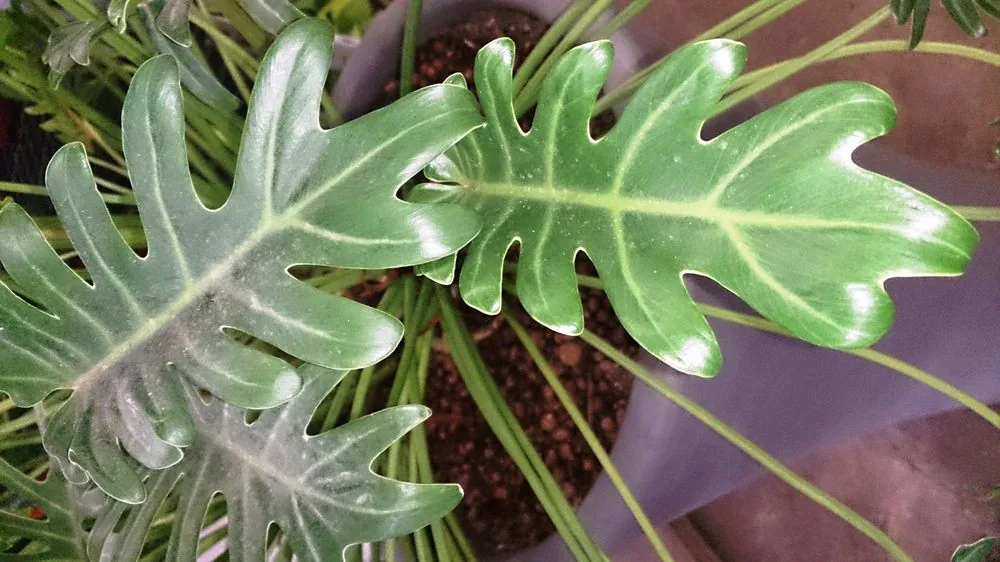
Philodendron Xanadu is the compact, non-climbing aroid grown for its deeply cut, glossy dark green leaves, which fan out from a short central stem to form a dense, rounded mound to about 60-90cm across. Unlike the climbing philodendrons most houseplant growers know, it never sends out long trailing stems and stays a self-contained clump, which is why it is used as much in office and shopping-centre planting as on a windowsill. Each new leaf emerges pale and folded, deepening in colour and splitting into more lobes as it matures.
Bright, indirect light. It tolerates lower light but grows more slowly and with less divided leaves; direct sun scorches the foliage.
Water
Water when the top 2-3cm of compost has dried, then water thoroughly. It dislikes sitting in waterlogged compost, which rots the roots quickly.
Humidity
Average to above-average humidity suits it best; dry indoor air in winter can brown the leaf edges, which occasional misting or a pebble tray helps with.
Soil
A chunky, free-draining aroid mix, similar to what a monstera or philodendron needs. Standard dense potting compost holds too much water around the roots.
Temperature
18-24°C indoors, away from cold draughts.
Size
0.9-1.5m tall and wide.
Growth speed
Medium
?Pet safety not confirmed
As a precaution, keep it out of reach of children and pets.
Signature feature
The leaf shape changes noticeably as the plant ages: young plants have simple, broadly lobed leaves, while a mature specimen's leaves become more deeply and numerously divided, almost feather-like. A plant that looks unremarkable when small is often just young rather than unhealthy, and the more dramatic foliage most people picture when they think of this plant only appears after a year or two of steady growth.
Care by Season
Spring
Growth resumes; a good time to repot if the plant has filled its container or aerial roots are circling the pot's surface.
Summer
Main growing season. Water and feed regularly, and wipe dust from the glossy leaves occasionally so they can photosynthesise efficiently.
Autumn
Growth slows as light drops; reduce watering frequency to match the slower uptake.
Winter
Rest period. Water only once the compost has dried well through, and keep it away from cold draughts and heating vents, both of which stress it.
Growing & Maintenance
Soil and pot
A chunky, free-draining aroid mix rich in organic matter, in a pot with drainage holes.
Repotting
Every 1-2 years in spring, once the plant has filled its pot.
Fertilising
Feed regularly through the main growing season in summer. None in winter.
Pruning
Cut old, yellowing leaves off at the base of the stalk. Leave the thick aerial roots alone.
Pests & Diseases
Common problems
New leaves smaller and less divided
Most likely cause: Too little light, or too little feed.
What to do: Move it to bright, indirect light and feed regularly in summer.
Yellow leaves
Most likely cause: Overwatering.
What to do: Let the top 2-3cm of compost dry before watering and never leave the pot standing in water.
Brown leaf edges
Most likely cause: Dry indoor air in winter.
What to do: Raise the humidity around the plant.
Scorched patches
Most likely cause: Direct sun.
What to do: Give it bright light without direct sun.
Spots on the leaves
Most likely cause: A fungal leaf spot.
What to do: Remove the affected leaves and keep the foliage dry.
Pests & Diseases
Spider mites
Signs: Fine pale speckling on the leaves and faint webbing in leaf joints, usually on plants kept too warm and dry.
Treatment: Increase humidity and rinse the leaves under running water to dislodge mites. A severe infestation may need an insecticidal soap, applied to both leaf surfaces. Check the undersides of the leaves and the crevices where the leaf stem meets the main stalk.
Root rot
Signs: Yellowing lower leaves, a mushy stem base, and compost that stays wet far longer than expected.
Treatment: Caused almost always by overwatering or poor drainage. Let the compost dry out fully, and repot into fresh, free-draining mix if the roots are visibly black or mushy.
Mealybugs
Signs: White, cottony clusters in the leaf joints and along the stalks
Treatment: Dab them with a cotton swab dipped in rubbing alcohol and repeat weekly. Check the undersides of the leaves and the crevices where the leaf stem meets the main stalk.
FAQ
My Xanadu's new leaves are much smaller and simpler than the older ones. Is something wrong?
Almost always a light or nutrient issue rather than a disease. New leaf size and how deeply it is lobed both reflect the conditions the plant is in right now: too little light or a pot it has outgrown typically produces smaller, less divided leaves, even though older leaves made in better conditions still look fine. Moving it to brighter indirect light and checking whether it needs repotting usually brings the next leaves back up to size.
Should I cut off the thick, fleshy roots that grow above the soil?
No, leave them. These are aerial-type roots the plant produces as it matures, and while they look untidy sitting on top of the compost, they are functional and help the plant take up moisture and nutrients. They can be gently tucked back into the pot or lightly covered with fresh compost at repotting time, but cutting them off serves no purpose and only creates a wound the plant has to heal.
How often should I water a Philodendron Xanadu?
When the top 2-3cm of compost has dried, then water thoroughly. Yellowing leaves mean it is getting too much; in winter, wait until the compost has dried well through.
How big does a Philodendron Xanadu get?
Between 0.9 and 1.5m tall and wide. It forms a dense, self-supporting clump and does not climb.
When should I repot a Philodendron Xanadu?
Every 1-2 years, in spring, when it has filled its container. Use a chunky aroid mix, not dense potting compost.
How much light does a Philodendron Xanadu need?
It needs bright, indirect light. It tolerates less, but then grows more slowly and makes smaller, less divided leaves.