No results. Is a plant missing? Tell uscontact@wikiplant.net
Polka dot plant
Hypoestes phyllostachya
Care level: Easy
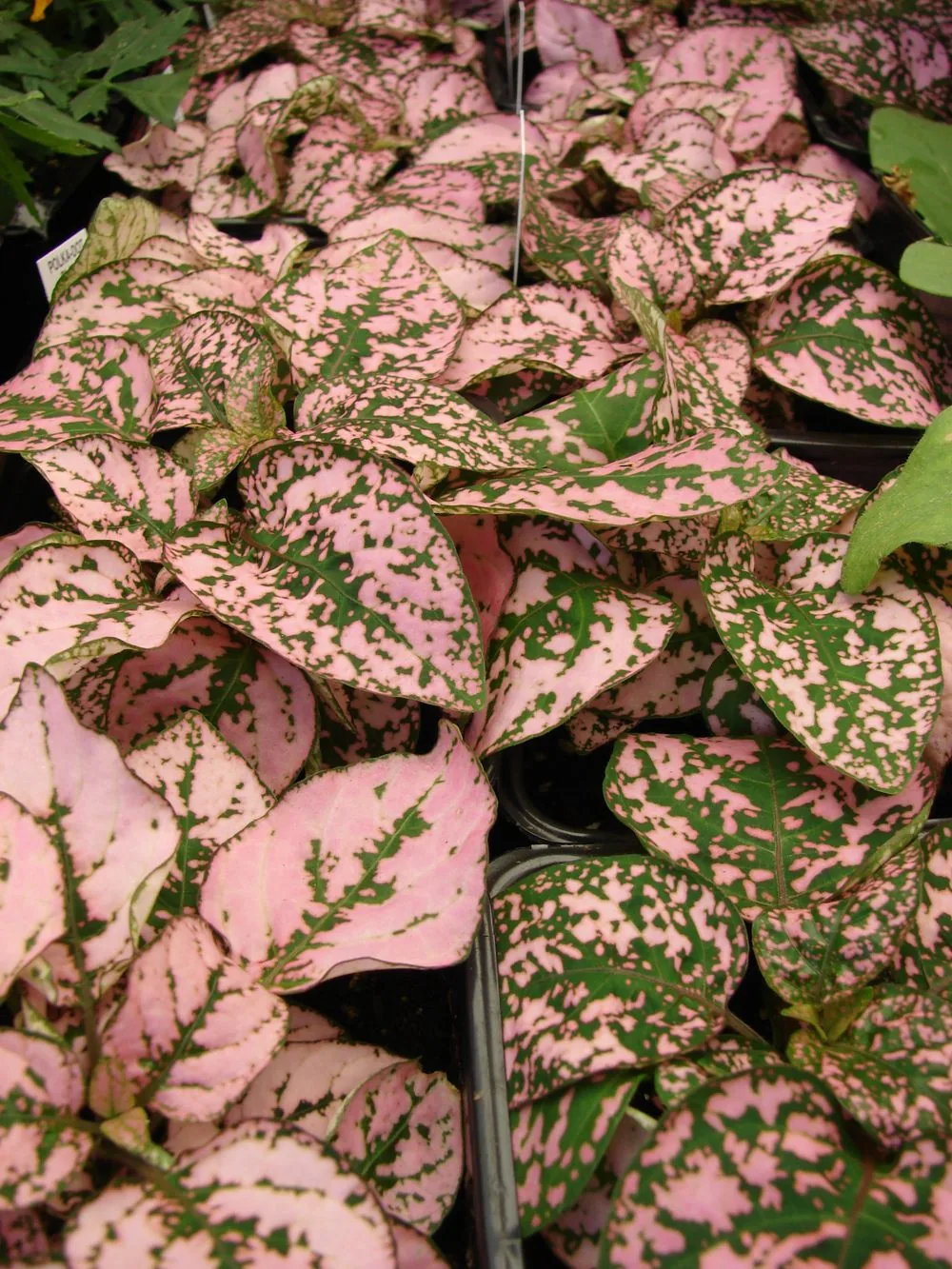
The polka dot plant is a small, bushy foliage plant from Madagascar whose thin, oval, dark green leaves look as if they have been spattered with pink, red or white paint. It grows fast, stays compact when pinched, and is a natural fit for terrariums and bottle gardens. The small lilac flowers are insignificant. Indoors it is often treated as a short-lived plant that is renewed from cuttings, and in summer it also works as a bedding plant outdoors.
Bright, filtered light. A little direct sun is tolerated, but too much makes the leaves curl.
Water
Water freely while it is growing and keep the compost evenly moist. Water sparingly in winter.
Humidity
Moderate to high, which is why it does so well in a terrarium.
Soil
A peat-free, loam-based potting compost that drains well.
Temperature
It needs a minimum of 10-15°C and is not frost hardy.
Size
30-60cm tall and 23-30cm wide.
Growth speed
Fast
?Pet safety not confirmed
As a precaution, keep it out of reach of children and pets.
Beginner tip
Pinch out the growing tips every week or two. The plant branches below each pinch and stays dense, whereas an unpinched plant quickly turns into a few long, bare stems with leaves only at the top.
Care by Season
Spring
Growth picks up. Cut back leggy stems, repot if needed and start pinching the tips.
Summer
Feed every two to three weeks, keep the compost moist and remove the flower spikes. Take cuttings.
Autumn
Bring outdoor plants in before the nights turn cold and reduce watering.
Winter
Give it the brightest spot available and water sparingly. Growth is slow and stems tend to stretch.
Growing & Maintenance
Soil and pot
Use a peat-free, loam-based compost that drains well, in a pot with drainage holes.
Fertilising
Feed with a balanced liquid fertiliser every two to three weeks in summer.
Pruning
Pinch out the growing tips regularly to keep the plant bushy, and cut leggy stems back by half.
Propagation
By softwood cuttings in late spring or semi-ripe cuttings in summer, rooted in water or compost, or by seed.
Pests & Diseases
Common problems
Long, bare stems
Most likely cause: Too little light and no pinching.
What to do: Move it to a brighter spot, cut it back and pinch the tips.
Fading spots
Most likely cause: Light that is too weak.
What to do: Give it bright, filtered light.
Crinkled, curling leaves
Most likely cause: Too much direct sun.
What to do: Move it out of the strongest sun.
Sudden wilting
Most likely cause: Dry compost.
What to do: Water thoroughly; it usually recovers within hours.
Brown, crisp leaf edges
Most likely cause: Dry air.
What to do: Raise the humidity or grow it in a terrarium.
Lower leaves yellowing and dropping
Most likely cause: Compost that stays too wet.
What to do: Let the surface dry a little between waterings.
Pests & Diseases
Powdery mildew
Signs: A white, powdery coating on the leaves.
Treatment: Remove affected leaves, give the plant more air and avoid wetting the foliage when you water.
Spider mites
Signs: Fine pale speckling on the leaves and thin webbing between them, in warm, dry air.
Treatment: Rinse the plant under a lukewarm shower and raise the humidity around it. Check the undersides of the leaves and the crevices where the leaf stem meets the main stalk.
Root rot
Signs: The plant wilts even though the compost is wet, and the stems turn soft at the base.
Treatment: Take healthy tip cuttings to start again, and water less in a free-draining compost.
FAQ
Why is my polka dot plant getting tall and leggy?
Too little light, too little pinching, or both. Stems stretch towards the light and lose their lower leaves. Move it somewhere brighter, cut the stems back and pinch the new tips regularly.
Why are the spots fading?
The colour fades when the light is too weak. Bright, filtered light gives the strongest markings. Too much direct sun has a different effect: the leaves crinkle and curl.
How often should I water a polka dot plant?
Water freely while it is growing, so the compost stays evenly moist but never soggy, and much more sparingly in winter. It wilts dramatically when dry and usually recovers within hours of watering.
Should I let it flower?
It is better not to. The small flower spikes add little, and removing them lets the plant put its energy into leaves.
How do I propagate a polka dot plant?
Take stem cuttings in late spring or summer. They root readily in water in a bright spot, or in moist compost. It also grows easily from seed.
Can a polka dot plant grow outdoors?
In summer, yes, in a pot or as bedding in a lightly shaded spot. It is not frost hardy, so bring it in or take cuttings before the nights turn cold.