No results. Is a plant missing? Tell uscontact@wikiplant.net
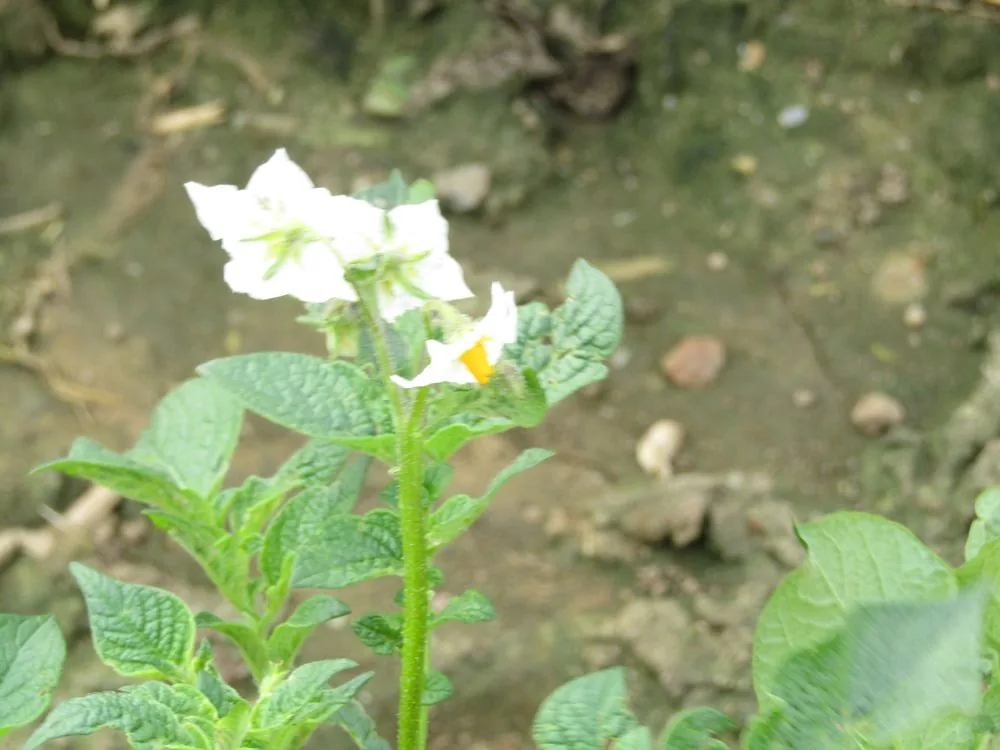
The potato is a tender perennial from South America grown as an annual for its starchy tubers, which swell underground on the buried part of the stems. Above ground it makes a bushy plant of dark green, divided leaves with white or mauve flowers in summer. It is grown from small tubers called seed potatoes, planted in spring. Varieties are grouped by how fast they mature: first earlies for small new potatoes in early summer, second earlies a few weeks later, and maincrops for large tubers that store through winter.
I have this plantSign in to add this plant to your library
Toxic to cats and dogs if eaten.
The leaves, stems, sprouts, berries and green parts of the tubers contain solanine. Eating them causes drooling, vomiting and diarrhoea, and in quantity drowsiness, weakness and slowed breathing.
If your pet has eaten some, contact your vet.
Source: NC State Extension, Pet Poison Helpline
Keep the tubers in the dark. Potatoes exposed to light turn green and build up solanine, which makes them bitter and harmful to eat. Draw soil up around the stems as they grow, a job called earthing up, and store the crop in the dark. Cut away small green patches generously and throw out any tuber that is green all through.
Chitting means standing the seed potatoes in a cool, light, frost-free place for a few weeks before planting, with the end that has the most eyes facing up, until they grow short, sturdy, dark shoots. It gives early varieties a head start. It is less important for maincrops.
Plant first earlies in early spring, second earlies a couple of weeks later and maincrops in mid-spring. Set the tubers about 12cm deep with the shoots upwards, 30cm apart in rows 60cm apart for earlies and 40cm apart in rows 75cm apart for maincrops.
First earlies are ready about ten to twelve weeks after planting, usually when the plants are in flower: feel in the soil for tubers the size of a hen's egg. Maincrops are lifted when the foliage has yellowed and died down, about twenty weeks after planting.
Yes. Put one to three seed potatoes on 15cm of compost in a large bag or a container of at least 40 litres, cover them, and keep adding compost as the shoots grow until the bag is full. Water regularly; containers dry out fast.
Probably potato blight, a disease of warm, wet weather from midsummer on. Brown, watery patches spread fast and the foliage collapses. Cut all the foliage off at ground level and bin it, leave the tubers in the soil for two weeks so the skins set, then lift them.
It is better not to. They may carry viruses and other diseases into your soil and are often treated to stop them sprouting. Certified seed potatoes are grown to be free of disease.
No. The small, green, tomato-like berries that sometimes follow the flowers are poisonous, like the leaves and stems. Pick them off if children are around.