No results. Is a plant missing? Tell uscontact@wikiplant.net
Pygmy date palm
Phoenix roebelenii
Care level: Moderate
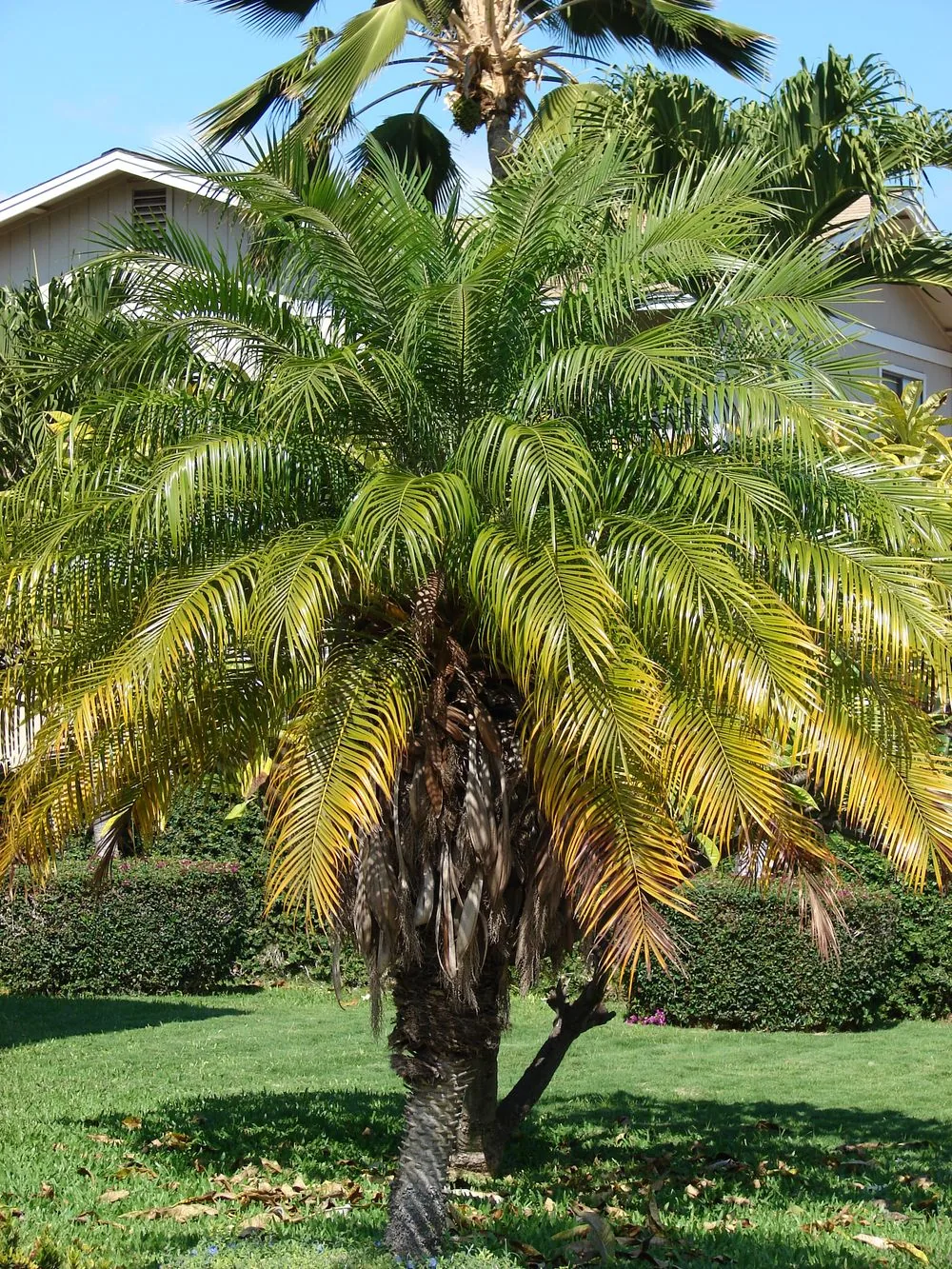
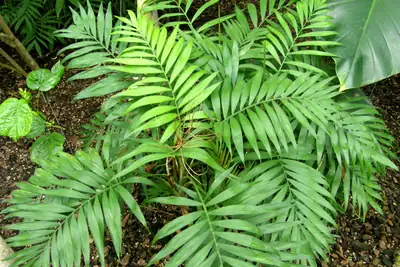
The pygmy date palm is a small, graceful palm from the river banks of Southeast Asia, and the only date palm that stays a sensible size indoors. A slender trunk, roughened by old leaf bases, carries a rounded crown of arching, feathery fronds up to a metre long, with fine, soft, glossy leaflets. It grows slowly, reaching 1.5-2.5m over many years, and suits a bright room, a conservatory or a sheltered terrace in summer. It needs good light, even watering in the growing season and warmth all year.
Bright, indirect light with some gentle direct sun. Shade it from hot midday sun behind glass.
Water
Water moderately in the growing season, whenever the top few centimetres of compost have dried. Water sparingly in winter and never leave the pot standing in water.
Humidity
Average room humidity is tolerated, but dry, heated air browns the tips. Mist the fronds or stand the pot on a tray of damp pebbles.
Soil
A loam-based, free-draining potting compost in a deep pot with drainage holes.
Temperature
Keep it above about 10°C all year. It can stand outside in summer but must come in well before the first frost.
Size
1.5-2.5m tall and 1.5-2.5m wide.
Growth speed
Slow
?Pet safety not confirmed
As a precaution, keep it out of reach of children and pets.
Did you know?
The lowest leaflets on every frond are not leaflets at all but stiff, needle-sharp spines, several centimetres long. Wear thick gloves when you trim or move the plant, and keep it out of narrow passages and away from the faces of children and pets.
Care by Season
Spring
Growth resumes. Repot if the roots fill the pot and start feeding.
Summer
Water regularly and feed once a month. It can stand outdoors in a sheltered, bright spot.
Autumn
Bring it indoors before nights turn cold and reduce watering.
Winter
Keep it bright and above 10°C, water sparingly and keep it away from radiators and cold draughts.
Growing & Maintenance
Repotting
Repot in spring only when the roots fill the pot, every few years, into a slightly larger, deep container. Disturb the roots as little as possible.
Fertilising
Feed once a month in the growing season with a balanced or palm fertiliser. Do not feed in winter.
Pruning
No pruning is needed beyond removing fronds that are completely brown.
Propagation
By seed sown in spring at about 19-24°C. It is slow. Offshoots at the base of clustered plants can be separated once they have their own roots.
Pests & Diseases
Common problems
Brown frond tips
Most likely cause: Dry air, uneven watering or salts from hard water and fertiliser.
What to do: Water evenly, raise the humidity and flush the compost with rainwater now and then.
Older fronds turn yellow
Most likely cause: Too little light, or a hungry plant.
What to do: Move it to a brighter place and feed in the growing season.
Pale, scorched patches
Most likely cause: Hot sun behind glass, or a sudden move outdoors.
What to do: Shade it at midday and get it used to outdoor sun gradually.
The base rots and fronds collapse
Most likely cause: Waterlogged compost, often in a cold room.
What to do: Let it dry out, improve the drainage and keep it warmer.
Very little new growth
Most likely cause: A slow grower, or winter.
What to do: Be patient; a few new fronds a year is normal.
Pests & Diseases
Red spider mite
Signs: Fine pale speckling on the leaflets and thin webbing in warm, dry rooms.
Treatment: Raise the humidity, rinse the fronds in the shower and repeat weekly. Check the undersides of the leaves and the crevices where the leaf stem meets the main stalk.
Scale insects
Signs: Small brown bumps along the leaf stalks and the midribs, with sticky honeydew.
Treatment: Wipe them off with a damp cloth and check again every week.
Mealybugs
Signs: White, woolly tufts deep in the crown and at the base of the fronds.
Treatment: Dab them off with a cotton bud dipped in alcohol and repeat weekly. Check the undersides of the leaves and the crevices where the leaf stem meets the main stalk.
FAQ
Why are the frond tips turning brown?
Dry air and irregular watering are the usual causes, along with hard tap water and a build-up of fertiliser salts. Water evenly, raise the humidity and trim only the dead tip, leaving a thin brown edge.
How much light does it need indoors?
As much as you can give it short of scorching: bright, indirect light with some gentle direct sun. In a dim corner the fronds stretch, thin out and the oldest turn yellow.
Can I cut off old fronds?
Only once they are fully brown. A frond that is still partly green is still feeding the plant. Cut close to the trunk with secateurs, wearing gloves against the spines.
Can it go outside in summer?
Yes. Move it out once nights stay above about 10°C, first into shade and then into more sun over a week or two, and bring it back in before autumn turns cold.
Does it produce dates?
Mature plants may carry sprays of small cream flowers followed by small, dark fruits on female plants if a male is nearby. They are thin-fleshed and not worth eating, and they are rare indoors.
Why are the new fronds pale or yellow?
Usually a lack of nutrients in an old, exhausted compost. Feed monthly in the growing season with a palm fertiliser, and repot if the roots fill the pot.