No results. Is a plant missing? Tell uscontact@wikiplant.net
Rosemary
Rosmarinus officinalis
Care level: Moderate
Rosemary's Latin name, Rosmarinus, comes from "ros marinus" (dew of the sea), a nod to the wild plants that carpet Mediterranean cliffs within reach of salt spray. That coastal, sun-baked origin explains why potted rosemary is far more likely to die from a well-meaning gardener's kindness (too much water, too little sun) than from neglect.
The periods shown are the ones published by RHS, for the species as a whole rather than one variety. For routine month-to-month care, see “Care by Season”.
Needs at least 6 hours of direct sun; a south-facing windowsill is ideal indoors.
Water
Let the soil dry out almost completely between waterings, about every 7-10 days; rosemary hates soggy roots far more than it minds dryness.
Humidity
Prefers dry to average household air; good airflow matters more than humidity.
Soil
Gritty, fast-draining mix such as cactus soil cut with perlite; never let it sit in standing water.
Temperature
Bring potted plants indoors before the first frost, and keep them cool and bright in winter.
Size
1.2-1.5m tall and 0.9-1.2m wide in the ground; smaller in a pot.
Growth speed
Medium
Best position
south-east / south / south-west-facing windowanywhere up to about 1 m from the window
east / west-facing windowright by the window
See every window directionHide window directions
Best position
right by the window
about 1 m
about 2 m
about 4 m
4 m or more
north
too dark○
too dark○
too dark○
too dark○
too dark○
north-east
too dark○
too dark○
too dark○
too dark○
too dark○
east
works well✓
too dark○
too dark○
too dark○
too dark○
south-east
works well✓
works well✓
too dark○
too dark○
too dark○
south
works well✓
works well✓
too dark○
too dark○
too dark○
south-west
works well✓
works well✓
too dark○
too dark○
too dark○
west
works well✓
too dark○
too dark○
too dark○
too dark○
north-west
too dark○
too dark○
too dark○
too dark○
too dark○
✓works well~just about○too dark☼too much direct sun
A rough guide based on window direction and typical daylight through the year. Window size, curtains and whatever stands outside matter just as much.
✓Non-toxic to pets
Considered non-toxic to cats and dogs.
Source: ASPCA
Common mistake
People treat rosemary like a typical leafy houseplant and water it on a schedule; in reality it wants to dry out almost completely between waterings, and a few days of soggy roots can kill it faster than a week of drought.
Care by Season
Spring
Move to the sunniest spot available and begin light harvesting as new growth picks up.
Summer
Water a little more often in heat, and set pots outdoors if possible for stronger sun and airflow.
Autumn
Bring outdoor plants inside before the first frost and reduce watering as growth slows.
Winter
Give it the brightest indoor window you have and water sparingly; weak winter light is the main cause of leggy, dying plants.
Growing & Maintenance
Soil and pot
A gritty, fast-draining mix, such as cactus soil cut with perlite, in a pot with drainage holes.
Pruning
Prune after flowering to keep the growth dense. Regular light harvesting helps too.
Propagation
From stem cuttings, or by layering.
Pests & Diseases
Common problems
Needles turning brown and the plant dying back
Most likely cause: Low light combined with overwatering.
What to do: Give it several hours of direct sun and let the soil dry out almost completely between waterings.
White, powdery coating on the leaves
Most likely cause: Powdery mildew, from poor air circulation and humid air.
What to do: Improve the airflow and keep the foliage dry.
Needles dropping in winter
Most likely cause: Weak winter light indoors.
What to do: Move it to your brightest, coolest window and water sparingly.
Speckled needles with fine webbing
Most likely cause: Spider mites, common indoors.
What to do: Rinse the foliage well and increase the airflow.
Wilting in wet soil
Most likely cause: Root rot.
What to do: Unpot it, trim the mushy roots and repot in fresh, very free-draining mix.
Pests & Diseases
Powdery mildew
Signs: White powdery coating on leaves, usually from poor airflow and high humidity
Treatment: Improve air circulation, avoid wetting foliage, and trim affected stems.
Spider mites
Signs: Fine webbing and stippled, dull leaves in dry indoor air
Treatment: Rinse foliage well, increase airflow, and apply insecticidal soap if needed. Check the undersides of the leaves and the crevices where the leaf stem meets the main stalk.
Treatment: Unpot, trim mushy roots, and repot in fresh, very well-draining mix; water less often afterward.
FAQ
Why does my indoor rosemary keep turning brown and dying?
It's almost always low light combined with overwatering; rosemary needs several hours of direct sun and soil that dries out between waterings, so a dim spot with a regular watering schedule is the classic combination that kills it.
Can I keep rosemary going through winter indoors?
Yes, but give it your brightest, coolest windowsill and water sparingly; weak winter light is the main reason indoor rosemary gets leggy or drops needles this time of year.
Is Rosemary safe for cats and dogs?
Yes, Rosemary is not toxic to cats or dogs.
How often should I water Rosemary?
About every 7-10 days, once the soil has dried out almost completely. It copes with drought far better than with soggy roots.
Does Rosemary flower?
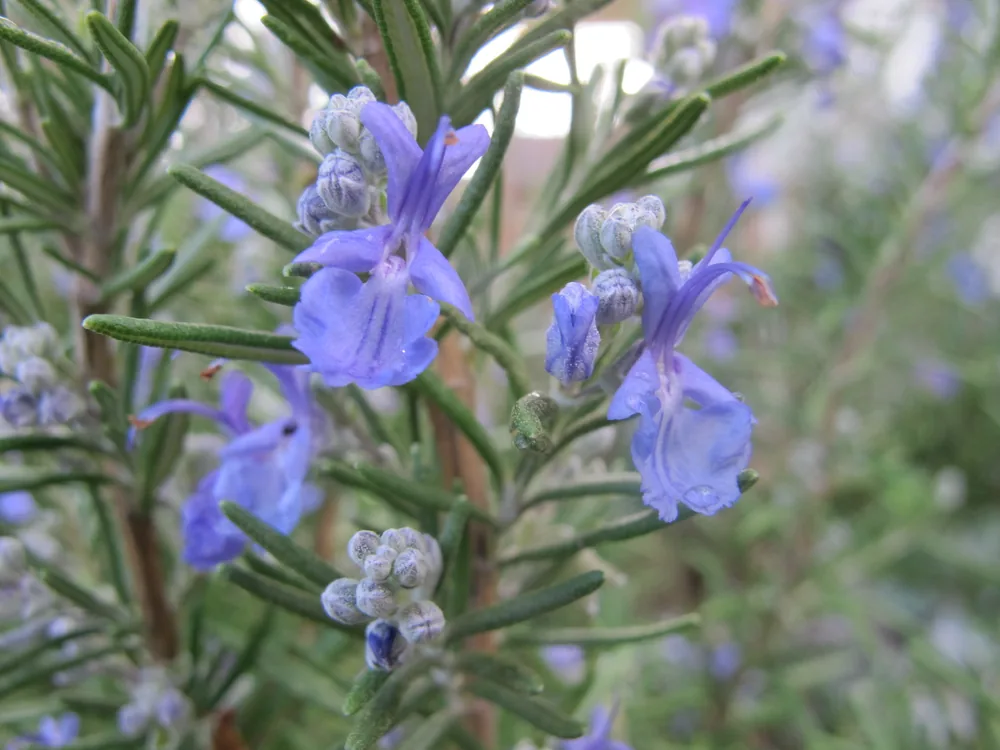
Yes. It carries tiny blue, lavender or white flowers in spring and summer.
How big does Rosemary get?
In the ground it reaches 1.2-1.5m tall and 0.9-1.2m wide. In a pot it stays much smaller.