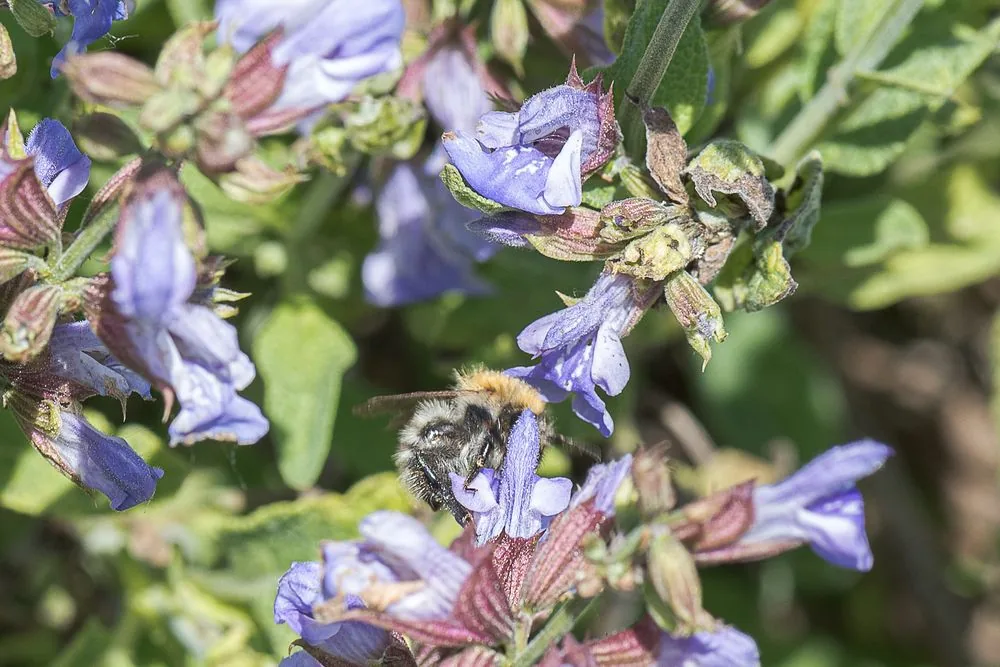
Soft grey-green sage leaves and spikes of pale blue-purple flowers, with a bumblebee visiting one bloom

Sage

Salvia officinalis
Care level: Easy

Sage is the soft-leaved Mediterranean sub-shrub whose grey-green, slightly furry leaves are one of the most distinctive scents in a kitchen garden, used fresh or dried in cooking across Europe. It forms a woody-based, spreading mound to about 60-80cm and carries spikes of blue-purple flowers in early summer that bees find readily. Like its close relative rosemary, it is a plant of dry, sunny hillsides and is at its best when slightly neglected rather than pampered.

I have this plant

Information

Varieties and related species
Salvia officinalis 'Purpurascens'Salvia officinalis 'Tricolor'Salvia officinalis 'Berggarten'

Light

Full sun. Sage grown in shade becomes leggy, flowers poorly and is more prone to mildew and rot.

Water

Let the soil or compost dry out between waterings. Established plants in open ground often need no watering at all once rooted in, and sitting wet is the main cause of a sage plant failing.

Humidity

Not a factor; good air movement around the plant matters more than ambient moisture, since still, humid air favours mildew on the felted leaves.

Soil

Poor to average, sharply drained and on the alkaline side if anything. Rich, moisture-retentive soil is the most common reason a potted sage struggles.

Temperature

Reasonably hardy. A particularly cold, wet winter can kill it.

Size

30-60cm tall and 60-90cm wide.

Growth speed

Medium

Non-toxic to pets

Considered non-toxic to cats and dogs.

Source: ASPCA

Signature feature

The grey, felted look of the leaves is a drought adaptation: the fine hairs trap a layer of still air that shades the leaf surface and slows water loss, the same trick lavender and lamb's ear use. A sage grown too wet or too shaded loses some of this felting and the leaves darken and go glossier, which is also usually the first visible sign that its position needs to be drier or sunnier.

Care by Season

Spring

New growth resumes; a good time to plant out or take cuttings from an overwintered plant once the worst frosts have passed.

Summer

Flowering, usually June. Harvest regularly, which doubles as light pruning, and trim after flowering finishes to keep the plant compact rather than woody.

Autumn

Growth slows. A light trim now, rather than a hard one, tidies the plant without leaving bare, frost-vulnerable cuts going into winter.

Winter

Reasonably hardy and semi-evergreen in most of Europe, though a particularly cold, wet winter can kill an older, woody plant outright; good drainage matters more to winter survival than cold alone.

Growing & Maintenance

Soil and pot

Poor to average, sharply drained soil or compost, on the alkaline side if anything.

Pruning

Trim in spring and again after flowering to stop it getting leggy. Do not cut into the old woody stems.

Propagation

From stem cuttings, by layering, or from seed.

Pests & Diseases

Common problems

Woody and sparse in the middle

Most likely cause: Age. It happens to nearly every sage after a few years.
What to do: Replace the plant every few years with one grown from cuttings.

Leggy growth and few flowers

Most likely cause: Shade.
What to do: Move it into full sun.

White, powdery coating on the leaves

Most likely cause: Powdery mildew, in still, humid air.
What to do: Space the plants out to let air move between them.

Wilting with a blackened base

Most likely cause: Root rot in rich, wet soil.
What to do: Improve the drainage. Sage needs sharply drained soil.

Dead stems after winter

Most likely cause: A cold, wet winter.
What to do: Trim back to live growth in spring, but not into old wood.

Pests & Diseases

Powdery mildew

Signs: A white, powdery coating on the leaves, worst in humid weather on crowded or shaded plants.
Treatment: Improve air circulation by spacing plants and avoiding overhead watering. A hard trim to open up a crowded plant after flowering usually clears it without further treatment.

Root rot

Signs: Wilting that does not recover after watering, and a blackened, mushy stem base on close inspection.
Treatment: Almost always a drainage problem rather than a pest. Lift the plant, cut away any rotten roots, and replant in gritty, free-draining soil; there is no treatment that works if the soil stays wet.

Slugs

Signs: Ragged holes in the lower leaves, with slime trails
Treatment: Pick them off by hand in the evening.

FAQ

My sage has gone woody and sparse in the middle after a few years. Is this normal?

Yes, and it happens to nearly every sage eventually: like lavender and thyme, it is a sub-shrub that becomes increasingly woody with age and does not reliably resprout from a hard cut into old wood. An annual light trim after flowering, rather than only cutting back when it looks tired, slows this considerably, but most gardeners still replace a sage plant every 4-5 years, using cuttings taken from the current plant to produce its replacement in advance.

Why does my sage taste much milder than what I buy dried at the shop?

Fresh leaves are genuinely milder than dried ones gram for gram, since drying concentrates the aromatic oils as the water leaves the leaf; this is normal and not a sign anything is wrong. A sage grown too soft and fast in rich, well-watered soil also produces weaker-tasting leaves for the same reason thyme does, so leaner soil and less frequent watering usually bring the flavour closer to what dried sage delivers.

Is Sage safe for cats and dogs?

Yes, Sage is not toxic to cats or dogs.

How often should I water Sage?

Only when the soil or compost has dried out. An established plant in open ground often needs no watering at all.

When can I harvest Sage?

In spring and summer. Regular picking doubles as light pruning, but harvest only lightly in the first year.

When does Sage flower?

Usually in June, with bluish to pinkish-lavender flower spikes. Trim the plant once the flowers have finished.

You might also like