No results. Is a plant missing? Tell uscontact@wikiplant.net
Strawberry
Fragaria × ananassa
Care level: Easy
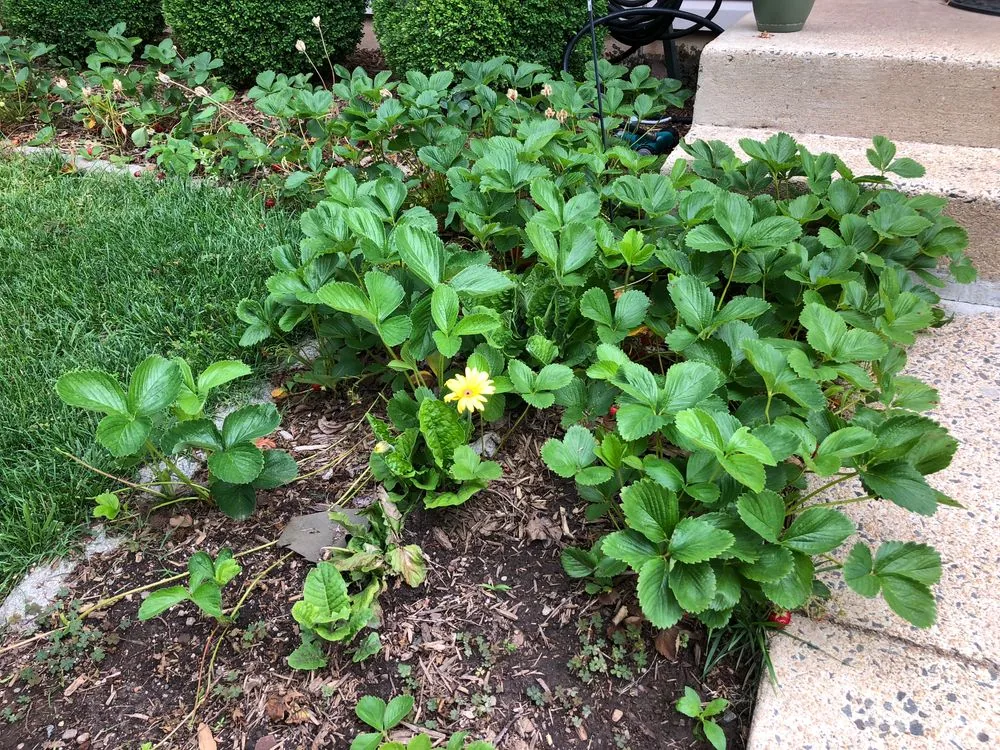
The garden strawberry is the low, spreading perennial behind almost every strawberry sold or grown in Europe, an 18th-century hybrid between a North American and a South American wild species that produces far larger fruit than either parent. It forms a rosette of three-lobed leaves close to the ground, sends up short flower stems in spring, and spreads itself by long, thin runners that root wherever they touch soil. Grown in open ground, raised beds, pots or hanging baskets, it is one of the few fruiting plants that crops within months of planting rather than years.
Fragaria × ananassa 'Elsanta'Fragaria vescaFragaria × ananassa 'Mara des Bois'
Light
Full sun. At least 6-8 hours of direct sun a day for sweet, fully ripened fruit; shade gives pale, watery berries.
Water
Keep the soil evenly moist, especially while fruit is swelling. Irregular watering, from dry to soaked, is a common cause of poor or split fruit.
Humidity
Average outdoor humidity is fine; good air movement between plants matters more, since still, humid conditions encourage grey mould on ripening fruit.
Soil
Rich, moisture-retentive and well-drained, on the slightly acidic side. A layer of straw or mulch under the fruit keeps it clean and off damp soil.
Temperature
Hardy in open ground through a normal European winter. Protect open flowers from a late frost.
Size
15-30cm tall and 30-60cm wide.
Growth speed
Medium
✓Non-toxic to pets
Considered non-toxic to cats and dogs.
Source: ASPCA
Signature feature
What looks like the fruit's skin studded with seeds is the reverse of how most fruit is built: the true botanical fruits are the tiny seed-like pips on the outside, and the red, juicy part everyone eats is a swollen stem tip (the receptacle) that carries them. This is also why strawberries keep swelling and ripening after the flower has finished and the petals have dropped, rather than developing from a single ripening ovary the way an apple or a plum does.
Care by Season
Spring
Growth resumes and flowering begins. Protect open flowers from a late frost, which can destroy the crop, and remove unwanted runners as they appear.
Summer
Main fruiting season. Harvest regularly, mulch under the fruit to keep it clean, and water consistently through dry spells.
Autumn
Cut back old foliage after fruiting finishes to tidy the plant and reduce overwintering pests and disease, and plant new runners or bought plants now for a full crop next year.
Winter
Hardy in open ground through a normal European winter; a layer of straw or fleece over the crowns in a hard frost protects plants in very exposed positions.
Growing & Maintenance
Planting
In full sun, in rich, moisture-retentive, well-drained, slightly acidic soil, with 30-75cm between plants. Lay straw or mulch under the fruit.
Pruning
Cut back the old foliage once fruiting has finished. Remove the runners if you want more fruit from the plant.
Propagation
From runners. Peg a plantlet down into soil and cut it free once it has rooted.
Pests & Diseases
Common problems
Small, pale fruit that is slow to ripen
Most likely cause: Not enough sun.
What to do: Grow the plants where they get 6-8 hours of direct sun a day.
Grey, fuzzy mould on the fruit
Most likely cause: Grey mould, in still, damp conditions.
What to do: Mulch under the fruit with straw and space the plants for airflow.
Holes eaten into ripe fruit
Most likely cause: Slugs and snails.
What to do: Check with a torch after dark and keep the fruit off the soil.
Flowers with black centres and no fruit
Most likely cause: A late frost on the open flowers.
What to do: Cover the plants with fleece when frost is forecast.
Fewer berries every year
Most likely cause: Old plants. They decline after a few seasons.
What to do: Replace the plants every 3-4 years, using rooted runners.
Pests & Diseases
Grey mould (Botrytis)
Signs: Fuzzy grey mould on ripening or ripe fruit, spreading fast in damp, humid weather and often starting on fruit touching the soil.
Treatment: Mulch under the fruit with straw to keep it off wet ground, space plants for airflow, and remove and destroy affected fruit promptly rather than leaving it to spread spores.
Slugs and snails
Signs: Irregular holes eaten into ripening fruit, usually overnight, with a silvery slime trail nearby.
Treatment: Beer traps, torchlight checks after dark, and keeping fruit up off damp soil with straw mulch all reduce damage considerably.
Aphids
Signs: Clusters of small insects on the young leaves and flower stalks
Treatment: Rinse them off with water.
FAQ
My strawberry plant is sending out lots of long runners. Should I remove them?
It depends on what you want from the plant. Runners are how strawberries spread and renew themselves, each one rooting to form a new plantlet, and left alone they will fill a bed within a season or two, which is useful for propagation but reduces fruit size on the parent plant since energy goes into runners rather than fruit. For maximum fruit on an established plant, cut runners off as they appear; to propagate new plants for free, let a few root and then sever them from the parent once established.
Why are my strawberries small, pale, or slow to ripen compared to shop-bought ones?
Several ordinary causes, rarely disease. Not enough sun is the most common, since strawberries need a genuinely sunny spot to ripen sweet and fully coloured; irregular watering, which stresses the plant during fruit swelling, and an overcrowded bed competing for light and nutrients both also reduce fruit quality. A three- or four-year-old plant naturally produces smaller fruit too, which is why most strawberry beds are renewed by rooting runners and discarding the oldest plants every few years.
Are Strawberry plants safe for cats and dogs?
Yes, Strawberry plants are not toxic to cats or dogs.
How often should I water Strawberries?
Often enough to keep the soil evenly moist, above all while the fruit is swelling. The roots are short, so the plants dry out fast.
How long do Strawberry plants last?
About 3-4 years of good cropping. After that, replace them with young plants raised from runners.
When do Strawberries fruit?
The main crop ripens in summer, after flowering in spring. Pick regularly as the fruit colours.