No results. Is a plant missing? Tell uscontact@wikiplant.net
Stromanthe Triostar
Stromanthe thalia
Care level: Moderate
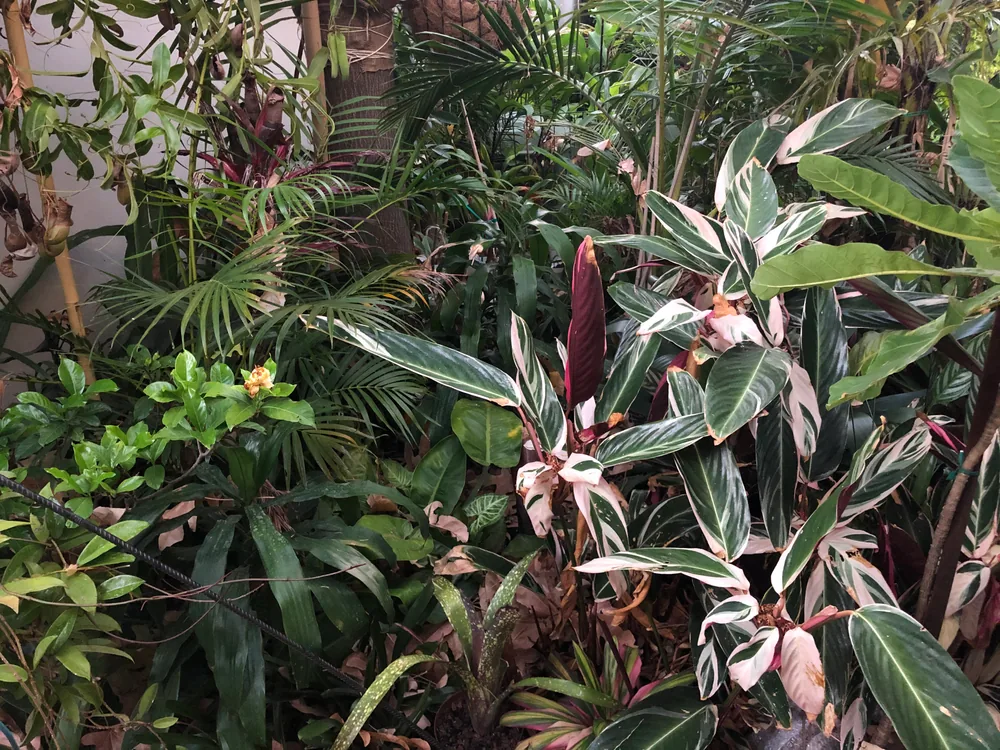
Few houseplants put on as dramatic a two-tone show as Stromanthe Triostar, whose green-and-cream splashed leaf tops flip at night to reveal an almost shocking magenta-pink underside, a member of the prayer-plant family from Brazilian rainforests, bred for a variegation pattern so bold that no two leaves ever look quite the same.
north / north-east-facing windowanywhere up to about 2 m from the window
east-facing windowabout 1 m from the window or further back
west-facing windowabout 2 m from the window or further back
Watch for strong direct sun at east / west windows.
See every window directionHide window directions
Best position
right by the window
about 1 m
about 2 m
about 4 m
4 m or more
north
works well✓
works well✓
works well✓
just about~
just about~
north-east
works well✓
works well✓
works well✓
just about~
just about~
east
just about~
works well✓
works well✓
works well✓
works well✓
south-east
too much direct sun☼
just about~
just about~
works well✓
works well✓
south
too much direct sun☼
too much direct sun☼
too much direct sun☼
just about~
works well✓
south-west
too much direct sun☼
too much direct sun☼
just about~
works well✓
works well✓
west
too much direct sun☼
too much direct sun☼
works well✓
works well✓
works well✓
north-west
too much direct sun☼
just about~
works well✓
just about~
just about~
✓works well~just about○too dark☼too much direct sun
A rough guide based on window direction and typical daylight through the year. Window size, curtains and whatever stands outside matter just as much.
?Pet safety not confirmed
As a precaution, keep it out of reach of children and pets.
Common mistake
New leaves emerging mostly plain green rather than pink-and-cream splashed usually means the plant isn't getting enough bright, indirect light, variegation in Stromanthe is light-dependent, and low light causes the plant to revert toward solid green to maximize photosynthesis.
Care by Season
Spring
Resume regular watering and light feeding as fresh, brightly colored leaves emerge.
Summer
Maintain high humidity and even moisture; avoid direct afternoon sun.
Autumn
Reduce feeding and slightly ease back on watering frequency.
Winter
Water a little less, keep away from cold drafts, and maintain humidity to prevent leaf browning.
Growing & Maintenance
Soil and pot
A rich, well-draining, moisture-retentive potting mix in a pot with drainage holes.
Fertilising
Feed lightly in spring and summer. Reduce in autumn.
Propagation
By division in spring.
Pests & Diseases
Common problems
Crisp, curling leaf edges
Most likely cause: Humidity below 60%.
What to do: Use a humidifier or stand the pot on a pebble tray.
New leaves plain green
Most likely cause: Too little light.
What to do: Move it to brighter, indirect light.
Scorched, faded patches
Most likely cause: Direct sun.
What to do: Keep it in medium, indirect light, out of the afternoon sun.
Yellow leaves and mushy stems
Most likely cause: Overwatering, which rots roots and stems.
What to do: Trim the rotten parts and repot in fresh mix. Keep it moist, not waterlogged.
Drooping, rolled leaves
Most likely cause: The compost has dried out. It does not tolerate dry soil.
What to do: Water straight away with filtered water and keep the compost evenly moist.
Pests & Diseases
Spider mites
Signs: Fine webbing and stippled, faded leaves in dry air
Treatment: Raise humidity, rinse leaves, and treat with insecticidal soap if persistent. Check the undersides of the leaves and the crevices where the leaf stem meets the main stalk.
Mealybugs
Signs: White cottony clusters at leaf bases and stems
Treatment: Dab with rubbing-alcohol soaked cotton swab and repeat weekly. Check the undersides of the leaves and the crevices where the leaf stem meets the main stalk.
Root rot
Signs: Drooping leaves and mushy, blackened roots from overwatering
Treatment: Remove from wet soil, trim rotten roots, and repot in fresh, well-draining mix.
FAQ
Why are new leaves on my Stromanthe Triostar coming in solid green?
This is reversion caused by insufficient light, the pink and cream variegation takes extra energy to produce, so in low light the plant plays it safe and grows plainer, more efficient green leaves; moving it to brighter indirect light usually restores more colorful new growth.
Why does my Stromanthe fold its leaves up at night showing the pink underside?
That's a normal nyctinastic movement shared by prayer-plant relatives, small joints at the base of each leaf lift it upright in darkness, dramatically displaying the vivid magenta leaf underside until the leaves lower again in daylight.
How often should I water a Stromanthe Triostar?
About once a week, keeping the compost evenly moist. Use filtered water, and avoid both drought and waterlogging.
How much light does a Stromanthe Triostar need?
It needs medium, indirect light. Direct sun scorches the leaves, and low light makes the new ones come in plain green.
How do I propagate a Stromanthe Triostar?
By division in spring. Split the clump so that each piece has its own roots and leaves.
Does a Stromanthe Triostar flower?
Rarely as a houseplant. When it does, it carries tiny white flowers with red bracts in spring.