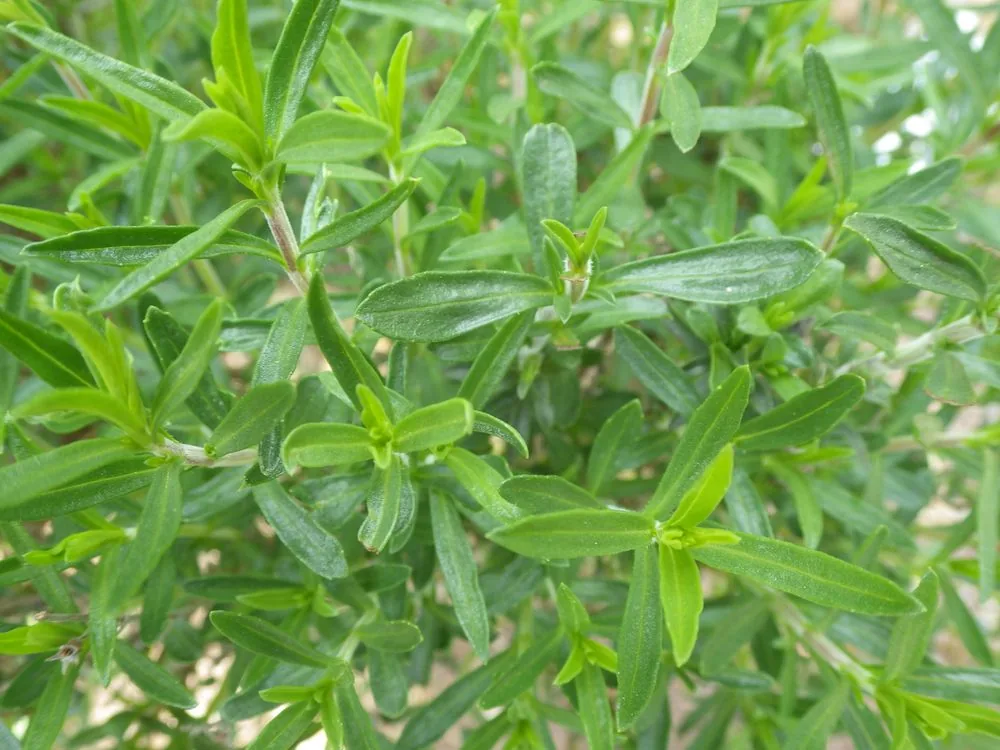
A bushy summer savory plant with thin stems densely covered in narrow green leaves

Summer savory

Satureja hortensis
Care level: Easy

Summer savory is a small, bushy annual herb with thin, branching stems, narrow aromatic leaves and tiny white to pale lilac flowers in summer. Its flavour is warm and peppery, somewhere between thyme and mint, and it is the traditional herb for cooking with beans, lentils and other pulses. It grows quickly from seed sown in spring, is ready to pick within about two months and dies with the first frosts. It needs only sun and well-drained soil and does well in a pot.

I have this plant

Information

Varieties and related species
Satureja hortensis 'Aromata'Satureja montana

Light

Full sun. In shade the plants are thin and weakly flavoured.

Water

Water seedlings until established, then only in dry spells. It tolerates dry soil better than wet.

Humidity

Not a factor for this outdoor herb.

Soil

Well-drained, moderately fertile soil, preferably neutral to alkaline. Avoid heavy, wet ground.

Temperature

A frost-tender annual. Sow outdoors once the soil has warmed in spring; frost kills it.

Size

20-40cm tall and 20-40cm wide.

Growth speed

Fast

Pet safety not confirmed

As a precaution, keep it out of reach of children and pets.

Beginner tip

Make the main harvest just before the flowers open. The leaves hold the most flavour at that point. Cut the stems a few centimetres above the ground, tie them in small bunches and hang them to dry in an airy, shaded place; savory keeps its flavour well when dried.

Care by Season

Spring

Sow once the soil has warmed, or indoors a few weeks earlier. Thin the seedlings.

Summer

Pick regularly and make the main cut just before flowering. Sow again in early summer.

Autumn

Harvest the last stems for drying before the first frost.

Winter

The plants are dead. Use dried savory and sow again in spring.

Growing & Maintenance

Planting

Sow thinly on the surface of fine soil and barely cover. Thin to 15-20cm apart, or set out pot-raised seedlings after the last frost.

Fertilising

None needed in garden soil. Feeding gives soft, floppy growth with less flavour.

Pruning

Pinch out the shoot tips when the plants are about 15cm tall, and harvest by cutting whole stems.

Propagation

By seed sown in spring. Seed keeps its vigour for only a year or two.

Pests & Diseases

Common problems

Plants flop over

Most likely cause: Thin, top-heavy stems, rich soil or rain.
What to do: Pinch the tips, earth up the stems and do not feed.

Weak flavour

Most likely cause: Shade, rich soil or leaves picked after flowering.
What to do: Grow in full sun in poorer soil and harvest before the flowers open.

Seed fails to come up

Most likely cause: Sown too deep or in cold soil.
What to do: Sow on the surface once the soil has warmed.

Plants flower and stop making leaves

Most likely cause: Natural at the end of an annual's life, earlier in heat and drought.
What to do: Pick regularly and make a second sowing in early summer.

Yellow, rotting plants

Most likely cause: Waterlogged soil.
What to do: Grow in free-draining soil or a pot.

Plants killed in autumn

Most likely cause: Frost.
What to do: Cut and dry the stems before the first frost.

Pests & Diseases

Slugs and snails

Signs: Seedlings eaten off soon after they appear.
Treatment: Hand-pick after dark and raise seedlings in pots to plant out when larger.

Aphids

Signs: Clusters of small insects on the shoot tips.
Treatment: Rinse them off with water or pinch out and bin the affected tips.

Damping off

Signs: Seedlings in trays collapse at soil level and rot.
Treatment: Sow thinly in fresh compost, water sparingly from below and ventilate.

FAQ

How do I use summer savory?

Add a sprig or a pinch of chopped leaves to beans, lentils, peas, stews, sausages and stuffings while they cook. The flavour is strong, so start with a little. It can be used fresh or dried.

How do I sow it?

Sow in spring where it is to grow, or in pots, scattering the fine seed on the surface and pressing it in or covering it only very thinly, as it germinates best with light. Thin the seedlings to 15-20cm apart. A second sowing in early summer extends the harvest.

What is the difference between summer and winter savory?

Summer savory is an annual with a milder, sweeter taste. Winter savory, Satureja montana, is a low, woody, evergreen perennial with a stronger, sharper flavour, and it can be picked all year.

Why are my plants falling over?

The thin stems become top-heavy, especially in rich soil or after rain. Pinch out the tips when the plants are about 15cm tall to make them bushier, draw a little soil up around the stems and avoid feeding.

Can I grow it in a pot?

Yes. Use a pot at least 15-20cm wide with free-draining compost, put it in a sunny place and water when the surface dries. A pot near the kitchen door is practical for regular picking.

Does it come back next year?

No. It is an annual and dies in autumn. It sometimes self-seeds in light soil, but it is safer to sow it again each spring.

When can I start picking?

Pick shoot tips as soon as the plants are about 15cm tall. Regular picking delays flowering and keeps the plants leafy.

You might also like