No results. Is a plant missing? Tell uscontact@wikiplant.net
Tomato
Solanum lycopersicum
Care level: Moderate
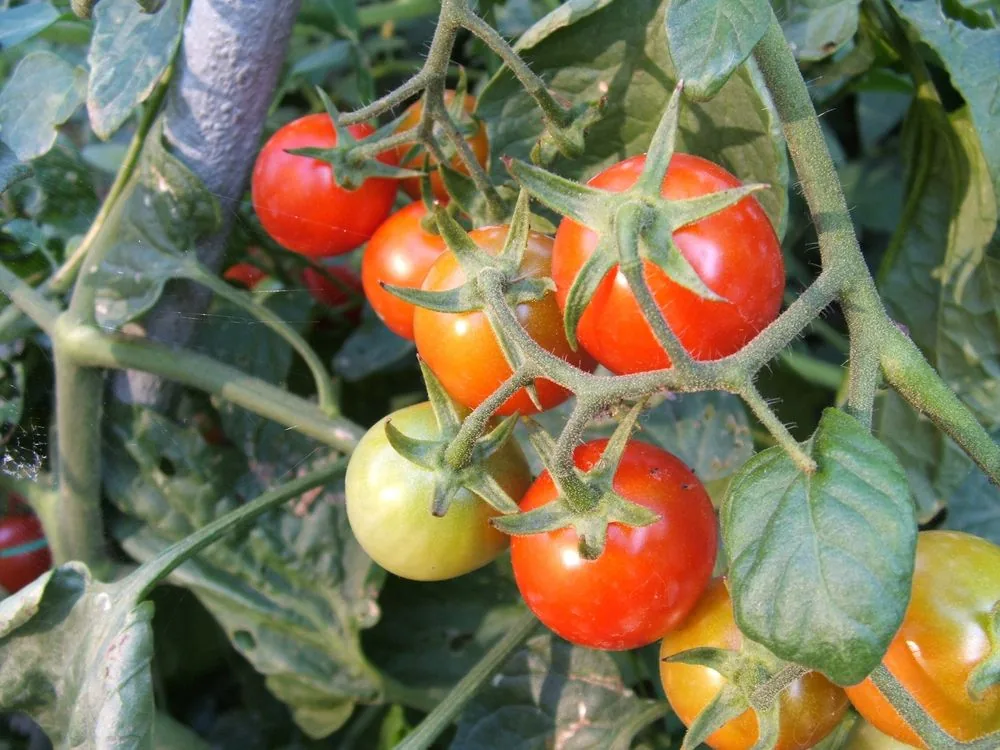
Tomato is the sprawling, sticky-leaved South American nightshade grown across Europe on balconies, in greenhouses and in open ground for one of the most popular homegrown crops there is. It ranges from tiny cherry types that crop heavily in a pot to large beefsteak varieties that need a greenhouse or a hot, sheltered spot to ripen well in a cooler climate. Grown as a tender annual everywhere outside its native range, it needs a full, warm growing season from a spring sowing or a bought young plant through to a late-summer harvest.
Solanum lycopersicum 'Gardener's Delight'Solanum lycopersicum var. cerasiformeSolanum lycopersicum 'San Marzano'
Light
Full sun. At least 6–8 hours of direct sun a day; fruit set and ripening both slow considerably in shade.
Water
Water deeply and consistently rather than little and often, keeping the soil evenly moist. Erratic watering is the main cause of split fruit and blossom end rot.
Humidity
Average outdoor humidity is fine; in a greenhouse, ventilate well in warm weather, since still, humid air encourages blight and grey mould.
Soil
Rich, moisture-retentive and well-drained, with a steady supply of potassium-rich feed once flowering starts. A pot-grown plant exhausts the nutrients in its compost within weeks without feeding.
Temperature
Prefers 21-24°C. Not frost-hardy.
Size
30cm to 3m tall, depending on the type.
Growth speed
Fast
!Toxic to pets
Toxic to cats and dogs if eaten.
The leaves, stems and unripe green fruit contain solanine. Eating them causes vomiting, drooling and a slowed heart rate, and in quantity more serious effects. The ripe red fruit itself is not toxic.
If your pet has eaten some, contact your vet.
Source: ASPCA
Signature feature
Most tomatoes need their side shoots removed to crop well. 'Cordon' or indeterminate varieties, which make up most of what is grown in gardens, produce a new shoot in every leaf joint; left on, the plant turns into a sprawling bush that puts its energy into leaf rather than fruit. Pinching these side shoots out weekly while small, by hand, keeps the plant to a single productive stem.
Care by Season
Spring
Sow indoors in early spring or buy young plants, and plant out only after the last frost once nights are reliably above about 10°C. Support cordon varieties with a cane or string from planting.
Summer
Main growing season. Remove side shoots weekly on cordon types, feed regularly once flowering begins, and water consistently to prevent splitting and blossom end rot.
Autumn
Ripening continues into early autumn in a mild year. Remove any remaining leaves below the lowest truss to help air circulation, and pick green fruit before the first frost to ripen indoors.
Winter
Not frost-hardy and does not overwinter outdoors in Europe; the plant is cleared away at the end of the season and started fresh from seed or a new plant the following spring.
Growing & Maintenance
Planting
Plant out only after the last frost, in full sun and rich, moist, slightly acidic soil.
Fertilising
Start a potassium-rich feed once flowering begins. Too much nitrogen gives plenty of leaves and little fruit.
Pruning
Remove the side shoots every week on cordon types. In autumn, take off the leaves below the lowest truss.
Support
Stake or cage the plants so the stems do not break or sag under the weight of the fruit.
Propagation
From seed sown indoors in early spring.
Pests & Diseases
Common problems
Brown-black blotches on the leaves and fast collapse
Most likely cause: Tomato blight, which spreads in warm, humid weather.
What to do: There is no cure. Remove and destroy the affected plants and do not compost them.
Fruit splitting as it ripens
Most likely cause: Irregular watering: a dry spell followed by a lot of water.
What to do: Water deeply and consistently so the soil stays evenly moist.
Dark, sunken patch at the base of the fruit
Most likely cause: Blossom end rot, brought on by uneven watering.
What to do: Keep the soil consistently moist. Later fruit is usually fine.
Plenty of leaves but little fruit
Most likely cause: Too much fertiliser, especially nitrogen.
What to do: Switch to a potassium-rich tomato feed and feed only once flowering has started.
Fruit slow to set and ripen
Most likely cause: Too little sun.
What to do: Grow it where it gets at least six to eight hours of direct sun a day.
Stems bending or breaking
Most likely cause: The weight of the fruit on an unsupported plant.
What to do: Tie the stems to stakes or grow the plant in a cage.
Pests & Diseases
Tomato blight
Signs: Brown-black blotches on leaves and stems, often with pale fungal growth on the leaf underside in damp weather, spreading fast to collapse the whole plant and rot the fruit.
Treatment: No cure once established; remove and destroy affected plants to limit spread. Choose blight-resistant varieties, avoid wetting the foliage when watering, and space plants well for airflow.
Whitefly
Signs: Tiny white insects that rise in a cloud when the plant is disturbed, with sticky honeydew and sooty mould on the leaves beneath, common under glass.
Treatment: Yellow sticky traps catch adults; a soap or horticultural oil spray on leaf undersides controls nymphs. Good ventilation in a greenhouse reduces the still, warm conditions whitefly favour.
Aphids
Signs: Clusters of small insects on the shoot tips and under young leaves, with sticky honeydew
Treatment: Rinse them off with a strong jet of water or use an insecticidal soap spray.
FAQ
My tomato leaves have dark patches and the plant is collapsing fast. Is this blight?
Tomato blight (the same disease as potato blight) spreads fast in warm, humid weather: look for brown-black blotches on leaves, often with a pale fuzzy edge on the underside in damp conditions, spreading within days to blackened stems and rotting fruit. There is no cure once it takes hold; remove and destroy affected plants promptly to protect any still healthy, and next season choose a resistant variety and avoid overhead watering, which splashes spores onto the leaves.
Why do my tomatoes split just as they start to ripen?
Irregular watering is the usual cause: a dry spell followed by heavy watering or rain makes the fruit swell faster than the skin can stretch, and it splits. Watering consistently, rather than letting the plant dry out between waterings, and mulching to even out soil moisture, reduces splitting considerably, though a sudden downpour after a dry patch will still catch out even a well-watered plant.
Are tomato plants toxic to cats and dogs?
Yes, the leaves and stems of a tomato plant are toxic to cats and dogs. The ripe fruit is not the problem. Keep pets away from the green parts of the plant.
Should I remove the side shoots on a tomato plant?
Yes, on cordon varieties. Pinch them out every week so the plant puts its energy into fruit. Bush varieties are left alone.
How often should I water tomatoes?
Deeply and regularly, so the soil never swings between dry and soaked. Even watering prevents both split fruit and blossom end rot.
When can I plant tomatoes outside?
Only after the last frost. Tomatoes are not frost-hardy and grow best once the days are warm.