No results. Is a plant missing? Tell uscontact@wikiplant.net
Watermelon Peperomia
Peperomia argyreia
Care level: Easy
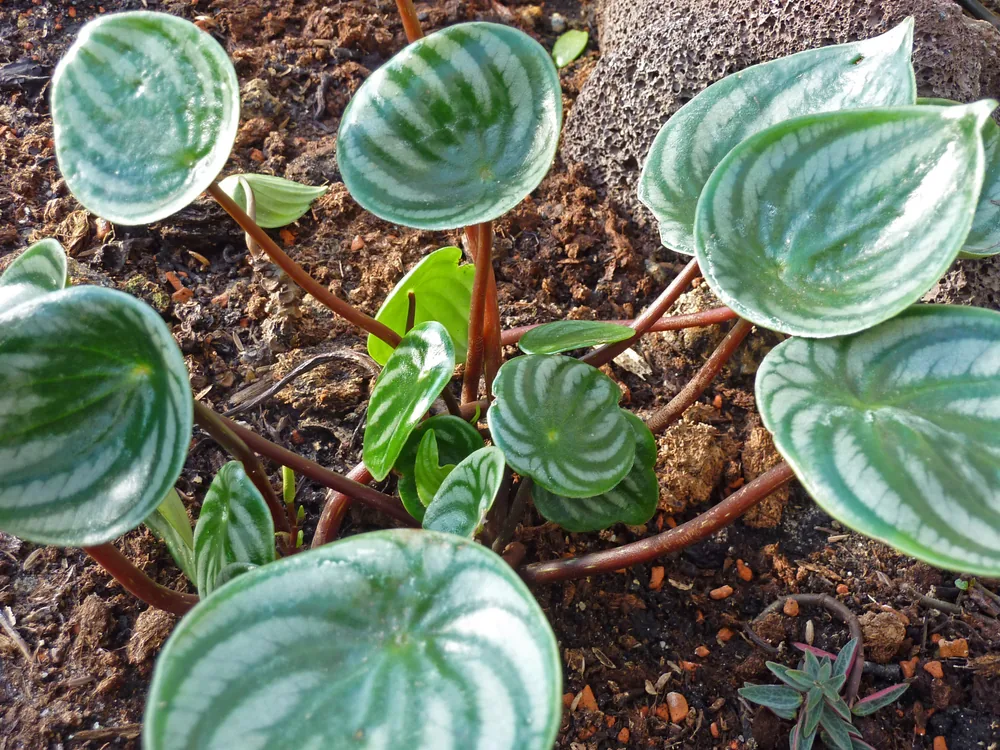
The bold silver-and-green striping on each round leaf mimics a watermelon rind so closely that the plant is instantly recognizable, yet it is a semi-succulent from Brazilian forest floors rather than anything related to actual melons. Its short, clumping growth habit and thick, water-storing leaves and petioles make it easy to mistake for a succulent at first glance, even though it prefers more shade than typical desert succulents.
Medium to bright indirect light; low light dulls the striped watermelon pattern.
Water
Let the top half of soil dry before watering, roughly every 10-14 days, as thick leaves store moisture.
Humidity
Appreciates moderate humidity but adapts fine to typical home levels.
Soil
Light, well-draining mix such as African violet soil or potting mix with added perlite.
Temperature
Normal room temperatures, away from cold draughts.
Size
Up to about 20cm tall.
Growth speed
Slow
Best position
east / south-east-facing windowanywhere up to about 2 m from the window
north / north-east / north-west-facing windowanywhere up to about 1 m from the window
south / west-facing windowabout 1 m from the window or further back
Watch for strong direct sun at south / west windows.
See every window directionHide window directions
Best position
right by the window
about 1 m
about 2 m
about 4 m
4 m or more
north
works well✓
works well✓
too dark○
too dark○
too dark○
north-east
works well✓
works well✓
too dark○
too dark○
too dark○
east
works well✓
works well✓
works well✓
too dark○
too dark○
south-east
works well✓
works well✓
works well✓
too dark○
too dark○
south
just about~
works well✓
works well✓
too dark○
too dark○
south-west
just about~
just about~
works well✓
too dark○
too dark○
west
just about~
works well✓
works well✓
too dark○
too dark○
north-west
works well✓
works well✓
too dark○
too dark○
too dark○
✓works well~just about○too dark☼too much direct sun
A rough guide based on window direction and typical daylight through the year. Window size, curtains and whatever stands outside matter just as much.
✓Non-toxic to pets
Considered non-toxic to cats and dogs.
Source: ASPCA
Propagation tip
A single healthy leaf with a bit of petiole attached can be planted in moist soil or water and will often root and eventually form a new little plant, similar to how African violets are propagated.
Care by Season
Spring
Resume regular watering and begin light feeding as new patterned leaves emerge.
Summer
Water when soil dries and keep out of harsh midday sun to prevent leaf scorch.
Autumn
Cut back on watering frequency and stop fertilizing as growth slows.
Winter
Water sparingly, allowing soil to dry well between waterings, and keep away from cold drafts.
Growing & Maintenance
Soil and pot
A light, well-draining mix, such as potting mix with added perlite, in a small pot with drainage holes.
Repotting
Rarely needed. It grows well when pot-bound.
Fertilising
A light feed in spring and summer. None in autumn and winter.
Propagation
From leaf cuttings, or by division.
Pests & Diseases
Common problems
Stripes turning dull green
Most likely cause: Too little light.
What to do: Move it to medium or bright indirect light.
Limp, wilting leaves
Most likely cause: The compost has dried out too far.
What to do: Water thoroughly and let it drain.
Yellow leaves and mushy stalks
Most likely cause: Overwatering and root rot.
What to do: Let the top half of the compost dry before watering and trim away the rotten parts.
Scorched leaves
Most likely cause: Harsh midday sun.
What to do: Keep it in bright light out of direct sun.
Leaves dropping
Most likely cause: A cold draught.
What to do: Move it to a warmer, sheltered spot.
Pests & Diseases
Mealybugs
Signs: White cottony clusters at leaf bases and along the short stems.
Treatment: Remove with an alcohol-soaked cotton swab and repeat weekly. Check the undersides of the leaves and the crevices where the leaf stem meets the main stalk.
Spider mites
Signs: Fine webbing and speckled discoloration on leaves in dry air.
Treatment: Rinse leaves, raise humidity slightly, and treat with insecticidal soap if needed. Check the undersides of the leaves and the crevices where the leaf stem meets the main stalk.
Root rot
Signs: Soft, blackened stem base and drooping, mushy leaves from overwatering.
Treatment: Reduce watering, improve drainage, and trim away any rotten roots or stem tissue.
FAQ
Can I grow a new watermelon peperomia from just a leaf?
Yes, take a leaf with a short piece of stem attached, let the cut end callous slightly, then place it in moist soil or water; roots and eventually a new plantlet can form at the base over several weeks.
Why are the leaves on my watermelon peperomia losing their stripes and turning dull green?
Fading or dulling of the watermelon pattern is typically caused by insufficient light; move it to a brighter, indirectly lit spot to help new leaves come in with stronger contrast.
Is Watermelon Peperomia safe for cats and dogs?
Yes, Watermelon Peperomia is not toxic to cats or dogs.
How often should I water a Watermelon Peperomia?
Roughly every 10-14 days, when the top half of the compost has dried. It dislikes both wet compost and very dry compost.
How big does a Watermelon Peperomia get?
Up to about 20cm tall. It grows slowly and rarely needs a bigger pot.
Does a Watermelon Peperomia flower?
Yes. In summer it sends up slender cream-white spikes above the leaves.