No results. Is a plant missing? Tell uscontact@wikiplant.net
Amaryllis
Hippeastrum x hybridum
Care level: Easy
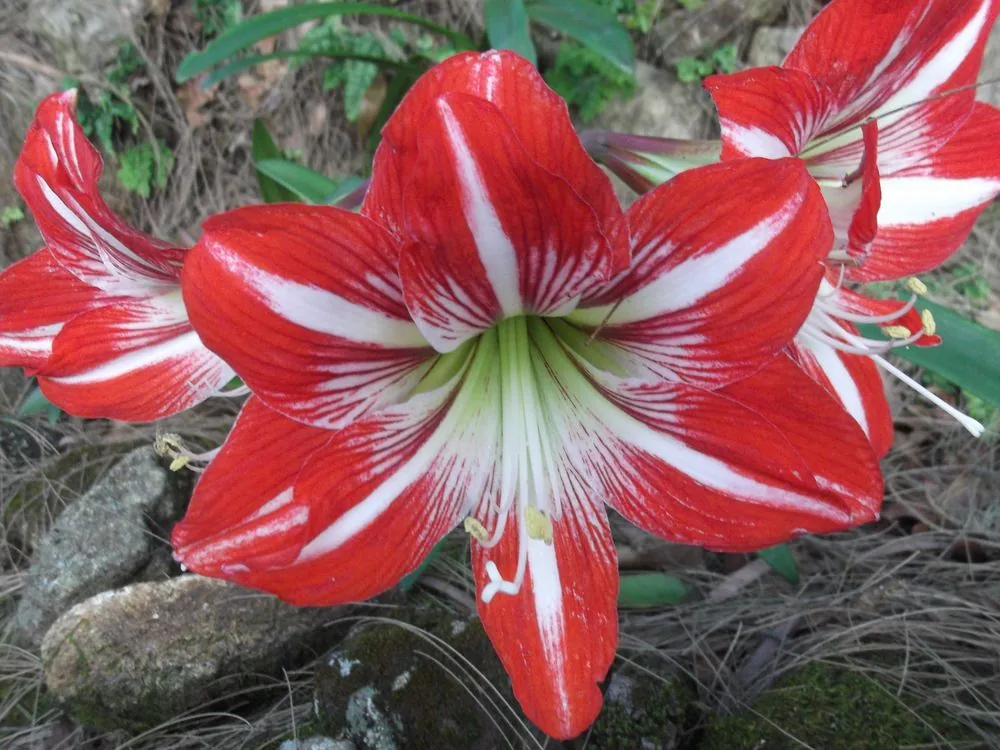
The amaryllis sold for winter flowering is a Hippeastrum, a large bulb from Central and South America that sends up a thick, hollow stem topped with two to six huge trumpet flowers in red, pink, white, salmon or stripes. It flowers indoors about six to eight weeks after planting, usually before the strap-shaped leaves have grown. With a summer of feeding and an autumn rest the same bulb flowers again year after year. It is not the true Amaryllis, a different plant from South Africa.
Bright light. Full sun is fine in winter; give light shade from hot summer sun.
Water
Water sparingly until growth starts, then regularly while it is in leaf. Stop watering during the autumn rest.
Humidity
Average room humidity is enough.
Soil
A free-draining potting compost, in a heavy pot only slightly wider than the bulb.
Temperature
Normal room temperature while growing; a cool rest at about 13°C in autumn. Not frost hardy.
Size
30-90cm tall and 23-30cm wide.
Growth speed
Fast
!Toxic to pets
Toxic to cats and dogs if eaten.
Can cause vomiting and diarrhoea, and more rarely affects heart rhythm.
If your pet has eaten some, contact your vet.
Source: NC State Extension, Pet Poison Helpline
Beginner tip
Do not throw the bulb away after flowering. Cut off the faded flower stem, keep the leaves growing and feed the plant all summer: the leaves rebuild the bulb, and a bulb that has been well fed is the one that flowers again.
Care by Season
Spring
Flowering ends. Cut off the stem, keep the leaves and start feeding.
Summer
Water and feed regularly. The pot can stand outdoors in a sheltered, bright spot.
Autumn
Bring it in before frost, stop watering and rest the bulb in a cool place for eight to ten weeks.
Winter
Bring the bulb into warmth, refresh the top of the compost and water sparingly. The flower stem appears within weeks.
Growing & Maintenance
Planting
Plant in a pot a little wider than the bulb, with the top third of the bulb above the compost. Water sparingly until growth appears.
Repotting
Repot only every few years, after the rest period. In other years replace the top few centimetres of compost.
Fertilising
Feed every one to two weeks with a balanced liquid fertiliser from the end of flowering until late summer.
Propagation
By separating offsets from the mother bulb when repotting. Seed is slow and the seedlings differ from the parent.
Pests & Diseases
Common problems
Leaves but no flower
Most likely cause: A bulb that was not fed in summer or had no rest.
What to do: Feed and water all summer, then rest it cool and dry in autumn.
A leaning flower stem
Most likely cause: Light from one side and heavy flowers.
What to do: Turn the pot daily and stake the stem.
A soft bulb
Most likely cause: Overwatering before growth started.
What to do: Water sparingly until the stem or leaves are growing.
Long, floppy leaves
Most likely cause: Too little light.
What to do: Move it to the brightest spot you have.
Flowers that fade within days
Most likely cause: A hot room.
What to do: Move it somewhere cooler once the buds open.
Pests & Diseases
Mealybugs
Signs: White, cottony tufts between the leaf bases and under the papery skin at the neck of the bulb.
Treatment: Wipe them off with a cotton bud dipped in rubbing alcohol and repeat weekly. Check the undersides of the leaves and the crevices where the leaf stem meets the main stalk.
Red blotch
Signs: Red spots and streaks on the leaves, flower stem and bulb scales, with stems that bend at the marks.
Treatment: Remove badly marked leaves, keep water off the bulb and leaves, and give the plant more air and light.
Bulb rot
Signs: The bulb turns soft at the base and the leaves yellow and collapse, in compost that stays wet.
Treatment: Cut away soft tissue, let the bulb dry for a few days and repot in fresh, free-draining compost. Discard a bulb that is soft throughout.
FAQ
How do I plant an amaryllis bulb?
Use a pot only a little wider than the bulb, with drainage holes, and set the bulb so that its top third stays above the compost. Water once, then sparingly until growth appears, and stand it in a bright, warm place.
How do I get my amaryllis to flower again?
After flowering, cut the stem off but keep the leaves. Water and feed regularly through spring and summer, outdoors if you like. In early autumn stop watering and give the bulb a cool rest of eight to ten weeks at about 13°C, then bring it back into warmth and start watering again.
Is amaryllis toxic to cats and dogs?
Yes. All parts contain lycorine and related alkaloids, and the bulb holds the most. Eating it causes vomiting, drooling and diarrhoea, and a large amount can lead to low blood pressure, tremors and heart rhythm problems. Keep bulbs and plants out of reach.
Why did my bulb produce leaves but no flower?
The bulb did not store enough food the previous summer, or it had no rest period. Feed and water it well while it is in leaf, give it full light, and rest it in autumn.
Why is the flower stem leaning?
It is growing towards the light, and the flowers are heavy. Turn the pot a little every day, and support the stem with a cane if needed.
Should I repot it every year?
No. It flowers best when it is tight in its pot. Replace the top few centimetres of compost each year and repot only every few years, after the rest period.