No results. Is a plant missing? Tell uscontact@wikiplant.net
Bearded iris
Iris germanica
Care level: Easy
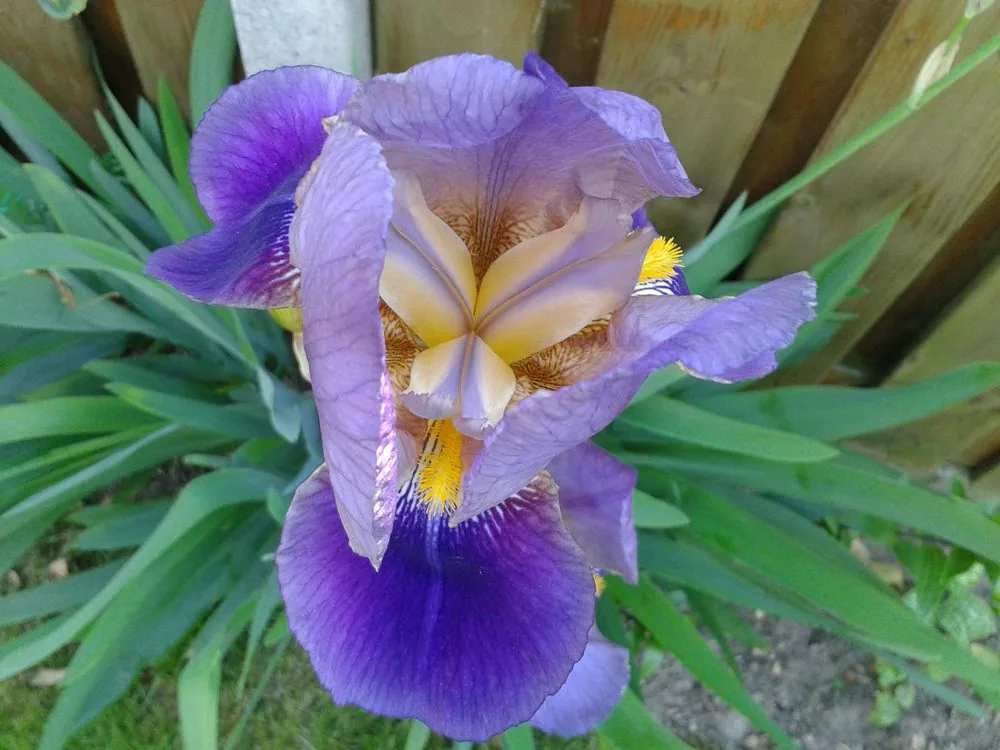
The bearded iris is an old garden perennial that grows from fat rhizomes lying on the soil surface. Fans of sword-shaped, grey-green leaves stand all year in mild winters, and in late spring each fan sends up a branched stem of large, scented flowers: three upright petals, the standards, above three hanging ones, the falls, each with a furry beard along its centre. Colours run from white and yellow through every blue and purple to near black. It needs full sun, sharp drainage and rhizomes that can bake in summer.
Eating it can cause vomiting and an upset stomach.
If your pet has eaten some, contact your vet.
Source: RHS, NC State Extension, Pet Poison Helpline
Beginner tip
Plant the rhizome so its top sits at the surface, in full sun, and keep other plants from shading it. The rhizome needs to be baked by the summer sun to form next year's flower buds. Buried or shaded, it gives leaves and no flowers.
Care by Season
Spring
Remove dead leaves and winter debris from around the rhizomes. Flower stems rise in late spring.
Summer
Flowering ends in early summer. Cut down the spent stems, then lift and divide congested clumps from midsummer.
Autumn
Finish dividing by early autumn so that new roots form before the cold. Trim the leaf fans.
Winter
Fully hardy. Keep the rhizomes clear of fallen leaves.
Growing & Maintenance
Planting
Plant from midsummer to early autumn, 30cm apart. Spread the roots either side of a low ridge of soil, firm them in and leave the top of the rhizome exposed, with the leaf fan pointing away from the sun's path so that it does not shade the rhizome.
Fertilising
Apply a low-nitrogen fertiliser in early spring and again after flowering. Avoid manure and rich feeds, which give soft growth and rot.
Pruning
Cut flowered stems to the base and pull off dead leaves. Trim the fans by half when dividing or in autumn.
Propagation
By division of the rhizomes from midsummer to early autumn, replanted at once in their flowering positions.
Pests & Diseases
Common problems
Leaves but no flowers
Most likely cause: Shaded, buried or congested rhizomes.
What to do: Divide and replant in full sun with the rhizome tops exposed.
Rhizome soft and smelly
Most likely cause: Bacterial soft rot in wet soil.
What to do: Cut out the rot, dry the wound and improve the drainage.
Leaf tips brown with spots
Most likely cause: Leaf spot after wet weather.
What to do: Remove affected leaves and tidy up in autumn.
Fans rock loose in the wind
Most likely cause: Newly planted rhizomes not yet rooted.
What to do: Shorten the leaves by half and firm the roots in.
Fewer flowers each year
Most likely cause: An old, crowded clump.
What to do: Lift and divide every three or four years.
Flower stems fall over
Most likely cause: Tall varieties in wind, or too much nitrogen.
What to do: Stake individual stems and feed less.
Pests & Diseases
Slugs and snails
Signs: Ragged holes in the leaves and flowers, and gnawed rhizomes, through which rot enters.
Treatment: Clear dead leaves from around the rhizomes and pick slugs off in the evening.
Bacterial soft rot
Signs: The base of a leaf fan collapses and the rhizome turns to a soft, foul-smelling mush.
Treatment: Cut back to firm tissue, let the wound dry in the sun, improve the drainage and destroy badly affected rhizomes.
Iris leaf spot
Signs: Small brown spots with a yellow halo that merge until the leaves die back from the tips, in wet seasons.
Treatment: Cut off and remove affected leaves and clear all dead foliage in autumn.
Aphids and virus
Signs: Aphids on the leaves and buds; yellow streaks on the leaves and broken colour in the flowers can follow.
Treatment: Rinse aphids off early and remove plants that are badly streaked.
FAQ
Why is my bearded iris not flowering?
The rhizomes are probably shaded, buried too deep or crowded. Other causes are too much nitrogen and division at the wrong time. Lift and divide a congested clump after flowering and replant in full sun with the rhizome tops exposed.
When and how do I divide it?
From about six weeks after flowering, in midsummer to early autumn, every three or four years. Lift the clump, cut the young outer rhizomes into pieces each with a fan of leaves and healthy roots, discard the old centre, shorten the leaves to about 15cm and replant at once.
Is bearded iris toxic to dogs and cats?
Yes. It is harmful if eaten and the rhizome is the most irritating part. It causes drooling, vomiting, diarrhoea and lethargy. Keep dogs from digging up and chewing the rhizomes.
Should I cut it back after flowering?
Cut the flowered stem down to the base. Leave the leaves, which feed the rhizome, and remove only those that turn brown. In autumn you can trim the fans to reduce disease and wind rock.
What soil does it need?
Well-drained or sharply drained soil, neutral or slightly alkaline. Heavy, wet soil rots the rhizomes; add grit or plant on a low ridge.
Should I mulch it?
Not over the rhizomes. A mulch keeps them damp and shaded, which leads to rot and fewer flowers. Keep them clear of leaves and weeds.
Why is the rhizome soft and foul-smelling?
Bacterial soft rot. Cut away all the mushy tissue back to firm, clean flesh, let the cut dry in the sun and improve the drainage. Destroy badly affected rhizomes.