No results. Is a plant missing? Tell uscontact@wikiplant.net
Baby Tears
Soleirolia soleirolii
Care level: Moderate
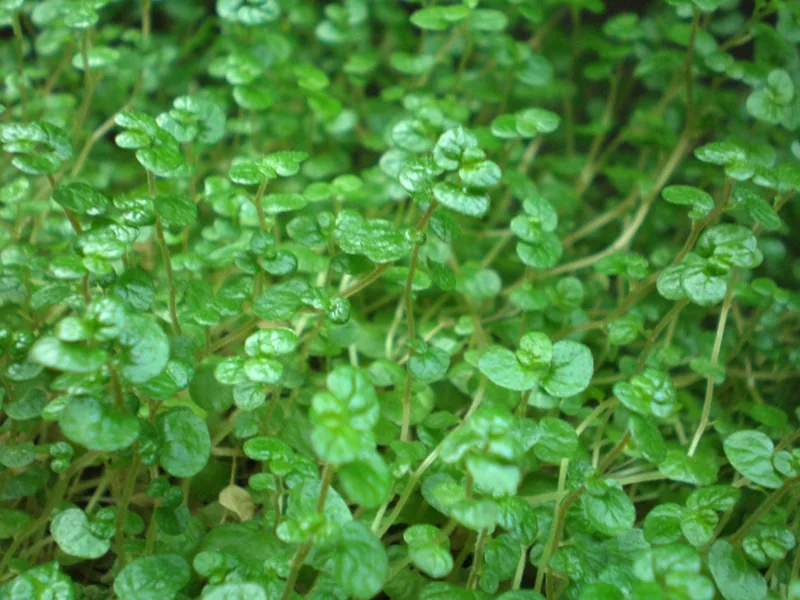
Soleirolia soleirolii comes from just a handful of Mediterranean islands, most famously Corsica, where its dense mossy carpets of tiny round leaves are so vigorous that it's grown as a lawn substitute in shady, damp gardens, a trait that makes it equally happy forming a living carpet in a terrarium or fairy garden indoors.
Bright, indirect light or partial shade; avoid direct sun, which scorches the tiny leaves.
Water
Keep soil consistently moist; water as soon as the surface starts to feel dry, often every few days.
Humidity
Needs high humidity to prevent crisping leaf edges; excellent for terrariums.
Soil
Light, moisture-retentive potting mix with good organic content.
Temperature
Moderate room temperatures, away from cold draughts.
Size
8-15cm tall, spreading into a wide mat.
Growth speed
Fast
Best position
north / north-east-facing windowanywhere up to about 2 m from the window
east-facing windowabout 1 m from the window or further back
west-facing windowabout 2 m from the window or further back
Watch for strong direct sun at east / west windows.
See every window directionHide window directions
Best position
right by the window
about 1 m
about 2 m
about 4 m
4 m or more
north
works well✓
works well✓
works well✓
just about~
just about~
north-east
works well✓
works well✓
works well✓
just about~
just about~
east
just about~
works well✓
works well✓
works well✓
works well✓
south-east
too much direct sun☼
just about~
just about~
works well✓
works well✓
south
too much direct sun☼
too much direct sun☼
too much direct sun☼
just about~
works well✓
south-west
too much direct sun☼
too much direct sun☼
just about~
works well✓
works well✓
west
too much direct sun☼
too much direct sun☼
works well✓
works well✓
works well✓
north-west
too much direct sun☼
just about~
works well✓
just about~
just about~
✓works well~just about○too dark☼too much direct sun
A rough guide based on window direction and typical daylight through the year. Window size, curtains and whatever stands outside matter just as much.
?Pet safety not confirmed
As a precaution, keep it out of reach of children and pets.
Common mistake
People often treat Baby Tears like a typical houseplant and let the soil dry between waterings, but its shallow, thread-fine roots and tiny leaves have almost no water storage, so even a single dry-out can cause the whole mat to collapse and brown within hours.
Care by Season
Spring
Keep evenly moist as the mat of foliage spreads with active growth.
Summer
Water frequently and mist often to prevent drying in warm weather.
Autumn
Maintain consistent moisture as growth slows gradually.
Winter
Water slightly less but never allow it to dry out fully; keep away from cold drafts.
Growing & Maintenance
Soil and pot
A light, fertile, moisture-retentive mix that still drains. A wide, shallow pot suits its shallow roots.
Pruning
Trim the mat with scissors whenever it spreads too far or grows untidy.
Propagation
By division. Lift a piece of the mat with its roots and press it onto moist compost.
Pests & Diseases
Common problems
The whole plant collapses
Most likely cause: The compost dried out, even briefly.
What to do: Water thoroughly at once. It usually revives; cut away the parts that stay brown.
Crispy leaf edges
Most likely cause: Low humidity.
What to do: Raise the humidity, or grow it in a terrarium.
Scorched patches
Most likely cause: Direct sun on the tiny leaves.
What to do: Move it to bright, indirect light or partial shade.
Brown, mushy patches in the mat
Most likely cause: Waterlogged compost with poor drainage.
What to do: Improve the drainage, cut out the rotten sections and keep the compost moist, not soaked.
Thin, straggly growth
Most likely cause: Too little light.
What to do: Give it bright, indirect light.
Pests & Diseases
Fungus gnats
Signs: Small hovering flies around damp soil
Treatment: Allow the surface to dry briefly between waterings and use sticky traps.
Root rot
Signs: Collapsing, mushy patches and a sour smell from waterlogging
Treatment: Improve drainage, trim away rotten sections, and reduce watering.
Spider mites
Signs: Fine webbing and dry, browning patches in low humidity
Treatment: Raise humidity and mist regularly; treat with insecticidal soap if needed. Check the undersides of the leaves and the crevices where the leaf stem meets the main stalk.
FAQ
My Baby Tears collapsed and looks dead, can it recover?
If the soil dried out even briefly, the fine foliage often wilts dramatically; a thorough watering usually revives it within a day if the roots are still alive, but repeated dry-outs will eventually kill sections of the mat permanently.
Is Baby Tears a true moss?
No, despite the mossy look, it's a flowering member of the nettle family (Urticaceae) with true tiny leaves and stems, it just grows so densely and low that it's often mistaken for moss.
How often should I water Baby Tears?
As soon as the surface of the compost starts to feel dry, which is often every few days. Its shallow roots cannot cope with drying out.
Can Baby Tears grow in a terrarium?
Yes, it does very well in one. A terrarium provides the high humidity it needs and stops the fine leaves from crisping.
How do I propagate Baby Tears?
By division. Lift a piece of the mat with its roots, press it onto moist compost and keep it humid until it starts to spread.
What kind of pot is best for Baby Tears?
A wide, shallow one. The plant is shallow-rooted and spreads sideways as a mat, so depth is wasted on it.