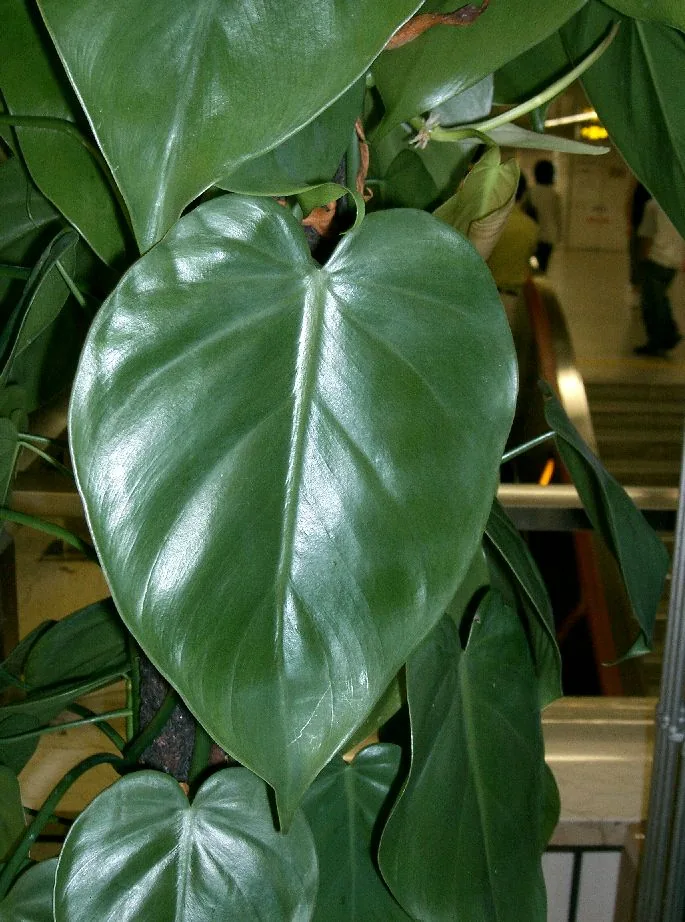
Heartleaf Philodendron (Philodendron hederaceum)

Heartleaf Philodendron

Philodendron hederaceum
Care level: Very easy

Heartleaf philodendron has been a staple houseplant since Victorian times thanks to its ability to thrive in the dim corners and gaslit rooms where few other plants survived, and its vining stems can stretch several meters long if left untrimmed.

I have this plant

Information

Varieties and related species
Philodendron hederaceum 'Brasil'Philodendron hederaceum 'Micans'Philodendron hederaceum 'Lemon Lime'

Light

Tolerates low light but grows fuller and faster in bright, indirect light.

Water

Water when the top 2-3cm of soil is dry, typically every 1-2 weeks.

Humidity

Adapts to average home humidity but appreciates occasional misting.

Soil

Well-draining, peat-based potting mix.

Temperature

Average room temperatures.

Size

Trailing or climbing stems up to 4m long.

Growth speed

Fast

Best position

  • east / south-east-facing windowanywhere up to 4 m or more from the window
  • north / north-east / north-west-facing windowanywhere up to about 2 m from the window
  • south / west-facing windowabout 1 m from the window or further back

Watch for strong direct sun at south / west windows.

See every window direction Hide window directions
Best positionright by the windowabout 1 mabout 2 mabout 4 m4 m or more
northworks wellworks wellworks welljust aboutjust about
north-eastworks wellworks wellworks welljust aboutjust about
eastworks wellworks wellworks wellworks wellworks well
south-eastworks wellworks wellworks wellworks wellworks well
southjust aboutworks wellworks wellworks wellworks well
south-westjust aboutjust aboutworks wellworks wellworks well
westjust aboutworks wellworks wellworks wellworks well
north-westworks wellworks wellworks welljust aboutjust about

works well just about too dark too much direct sun

A rough guide based on window direction and typical daylight through the year. Window size, curtains and whatever stands outside matter just as much.

Toxic to pets

Toxic to cats and dogs if eaten.

Chewing it can irritate the mouth, causing drooling and trouble swallowing.

If your pet has eaten some, contact your vet.

Source: ASPCA

Propagation tip

A cutting with at least one node placed in a jar of water will usually grow roots within two to three weeks, making this one of the easiest houseplants to propagate and share with friends.

Care by Season

Spring

Resume regular watering and light feeding as vines put out new leaves.

Summer

Water consistently and trim leggy vines to encourage bushier growth.

Autumn

Reduce watering slightly and stop feeding by late autumn.

Winter

Water sparingly and keep away from cold drafts and heating vents.

Growing & Maintenance

Soil and pot

A free-draining, peat-based potting mix in a pot with drainage holes.

Repotting

In spring, when roots fill the pot. Move up one pot size.

Fertilising

A light liquid feed in spring and summer. Stop by late autumn.

Pruning

Trim long, leggy stems just above a leaf at any time in the growing season. The stem branches below the cut and the plant fills out.

Support

It trails from a shelf or basket, or climbs a moss pole. Climbing stems make larger leaves than trailing ones.

Propagation

Stem cuttings with at least one node root in a jar of water, usually within two to three weeks. Pot them up once the roots are a few centimetres long.

Pests & Diseases

Common problems

New leaves getting smaller

Most likely cause: Too little light.
What to do: Move it closer to a bright window, out of direct sun. Leaf size recovers on new growth.

Long, bare stems

Most likely cause: Low light and a lack of pruning.
What to do: Cut the stems back just above a leaf and give the plant more light. Root the cuttings and plant them back into the pot.

Yellow leaves and blackened, mushy stems

Most likely cause: Overwatering. Root rot sets in when the compost is too wet.
What to do: Cut away affected stems, let the compost dry and repot healthy parts in fresh mix. Water less in winter.

Spots on the leaves

Most likely cause: A leaf spot disease.
What to do: Remove the spotted leaves and keep the foliage dry when you water.

Papery brown sheaths on the stems

Most likely cause: Normal. Each new leaf emerges from a sheath that dries and falls off.
What to do: Nothing to do. Pick them off if you find them untidy.

Pests & Diseases

Aphids

Signs: Small clustered insects on new growth and sticky residue on leaves.
Treatment: Rinse off with water and apply insecticidal soap.

Mealybugs

Signs: White cottony clumps at leaf joints and stems.
Treatment: Dab with an alcohol-soaked cotton swab weekly until gone. Check the undersides of the leaves and the crevices where the leaf stem meets the main stalk.

Root rot

Signs: Yellowing leaves and blackened, mushy stems from overwatering.
Treatment: Cut away affected stems and repot healthy sections in fresh, dry mix.

FAQ

Why are the leaves of my heartleaf philodendron getting smaller?

Usually because the plant is not getting enough light. Move it closer to a bright window, out of direct sun, and the new leaves will be larger again.

Is it okay to let my philodendron trail instead of climb?

Yes, it grows well either way. Trailing stems make smaller leaves, while stems climbing a moss pole or stake produce larger ones.

What is the difference between a heartleaf philodendron and a pothos?

The philodendron has a papery sheath on its new growth and a smooth, ungrooved leaf stalk. A pothos has no sheath and its leaf stalk is grooved. Philodendron leaves are also thinner and more heart-shaped.

How often should I water a heartleaf philodendron?

Typically every 1-2 weeks, when the top 2-3cm of compost is dry. Keep the compost slightly moist in the growing season and water less in winter.

Is the heartleaf philodendron toxic to cats and dogs?

Yes, the heartleaf philodendron is toxic to cats and dogs. Chewing it irritates the mouth. Hang it where pets cannot reach the stems.

How do I propagate a heartleaf philodendron?

Take a stem cutting with at least one node and stand it in water. Roots usually appear within two to three weeks, after which you can pot it up.

You might also like