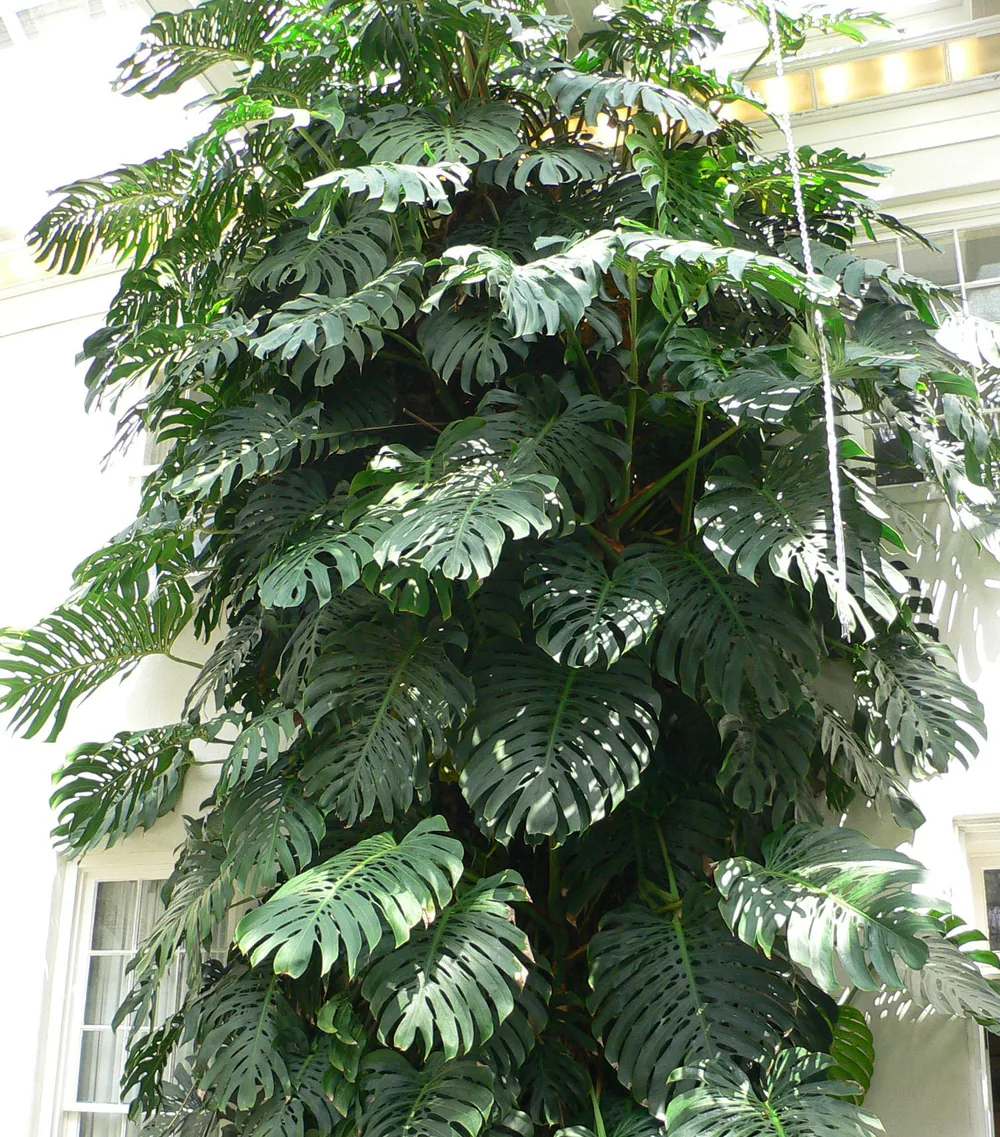
Monstera (Monstera deliciosa)

Monstera

Monstera deliciosa
Care level: Easy

Native to the rainforests of southern Mexico, Monstera deliciosa climbs tree trunks in the wild using aerial roots, which is exactly why the split, hole-punched leaves (called fenestrations) only appear once the plant matures. Young plants start out with solid, heart-shaped leaves.

I have this plant

Information

Varieties and related species
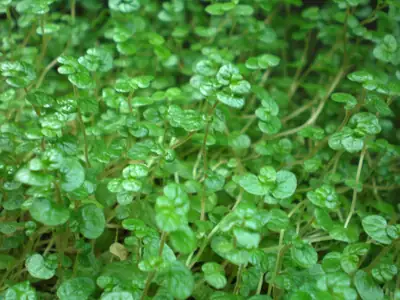
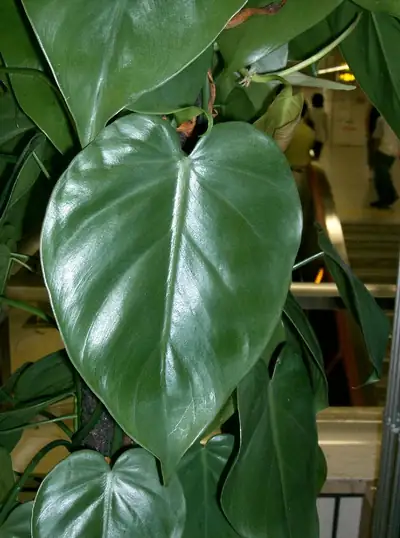
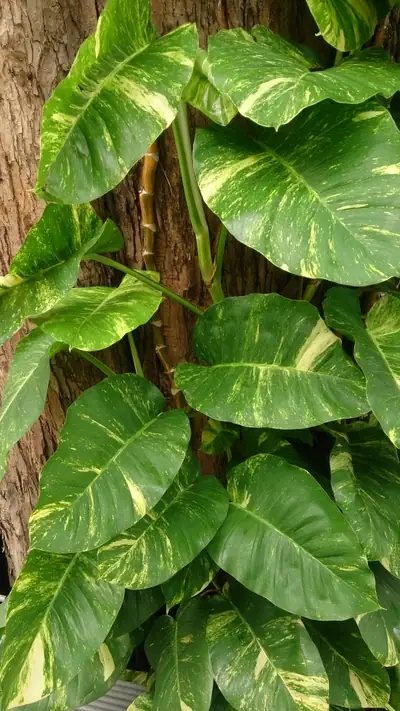
Monstera AdansoniiMonstera Thai Constellation

Light

Bright, indirect light

Water

Water when top 2-3cm of soil is dry, roughly every 1-2 weeks

Humidity

Prefers 50-60% humidity

Soil

Well-draining, chunky aroid mix

Temperature

16-29°C. Growth stops below 10°C and frost kills the plant.

Size

Usually 1.8-2.4m tall indoors, far larger in the wild.

Growth speed

Fast

Best position

  • east / south-east-facing windowanywhere up to about 2 m from the window
  • north / north-east / north-west-facing windowanywhere up to about 1 m from the window
  • south / west-facing windowabout 1 m from the window or further back

Watch for strong direct sun at south / west windows.

See every window direction Hide window directions
Best positionright by the windowabout 1 mabout 2 mabout 4 m4 m or more
northworks wellworks welltoo darktoo darktoo dark
north-eastworks wellworks welltoo darktoo darktoo dark
eastworks wellworks wellworks welltoo darktoo dark
south-eastworks wellworks wellworks welltoo darktoo dark
southjust aboutworks wellworks welltoo darktoo dark
south-westjust aboutjust aboutworks welltoo darktoo dark
westjust aboutworks wellworks welltoo darktoo dark
north-westworks wellworks welltoo darktoo darktoo dark

works well just about too dark too much direct sun

A rough guide based on window direction and typical daylight through the year. Window size, curtains and whatever stands outside matter just as much.

Toxic to pets

Toxic to cats and dogs if eaten.

Chewing it can irritate the mouth, causing drooling and trouble swallowing.

If your pet has eaten some, contact your vet.

Source: ASPCA

Did you know?

Monstera fenestrations likely evolved to let dappled sunlight pass through to leaves below and to help the broad leaves survive heavy tropical rain and wind without tearing.

Care by Season

Spring

Resume regular watering and start light feeding as new growth appears.

Summer

Peak growth: water more often, keep humidity up, watch for fast-growing aerial roots.

Autumn

Reduce watering frequency as growth slows; stop feeding by late autumn.

Winter

Water sparingly, keep away from cold drafts and heaters, no fertilizer.

Growing & Maintenance

Soil and pot

A chunky aroid mix of potting compost, bark and perlite, in a pot with drainage holes that is only one size (2-3cm) wider than the root ball.

Repotting

Every two years in spring, or when roots circle the pot or grow out of the drainage holes. Aerial roots can be tucked into the new compost or left outside; do not cut them off.

Fertilising

A balanced liquid houseplant feed at half strength every 2-4 weeks from spring to early autumn. No feeding in winter.

Pruning

Cut overlong stems back to just above a node in spring or summer, and remove yellow leaves at the base of their stalk. The plant branches from the node below the cut.

Support

A moss pole or coir stake lets it climb as it does in the wild: tie the stems on loosely and the aerial roots will grip. A climbing plant makes larger, more deeply split leaves than one left to sprawl.

Propagation

Stem cuttings in spring or summer. Each piece needs a node, ideally with an aerial root; root it in water or damp compost and pot it up when the roots reach 5-8cm.

Pests & Diseases

Common problems

Yellow leaves

Most likely cause: Overwatering. Compost that stays wet starves the roots of air and they begin to rot.
What to do: Let the top 2-3cm of compost dry before watering again and empty the saucer. If the roots are brown and mushy, cut them away and repot in fresh mix.

Brown, crisp leaf edges

Most likely cause: Air that is too dry, often from a radiator or heater nearby.
What to do: Move the plant away from heat sources and raise the humidity with a humidifier or a tray of wet pebbles.

New leaves without holes or splits

Most likely cause: Too little light, or a plant that is still young.
What to do: Move it to a brighter spot out of hot direct sun and give it a moss pole to climb. Young plants need time: solid leaves come first.

Drooping leaves

Most likely cause: Usually compost that has dried out. If the compost is wet, the roots are probably rotting instead.
What to do: Feel the compost. Dry: water thoroughly until it drains from the pot. Wet: stop watering, let it dry and check the roots.

Water droplets on the leaf tips

Most likely cause: Compost that is kept too moist.
What to do: Water less often. It is an early warning, and easing off now prevents root rot.

Pale or scorched patches on the leaves

Most likely cause: Sunburn from sudden strong direct sun, typically after a move to a sunny window or outdoors.
What to do: Move it back into bright, indirect light. Get it used to stronger light gradually, over a couple of weeks.

Pests & Diseases

Spider mites

Signs: Fine webbing, speckled yellow leaves
Treatment: Wipe leaves, increase humidity, apply insecticidal soap. Check the undersides of the leaves and the crevices where the leaf stem meets the main stalk.

Mealybugs

Signs: White cottony clumps at leaf joints
Treatment: Dab with rubbing-alcohol cotton swab, repeat weekly. Check the undersides of the leaves and the crevices where the leaf stem meets the main stalk.

Root rot

Signs: Yellowing leaves, mushy dark roots
Treatment: Remove from soggy soil, trim rotten roots, repot in fresh dry mix.

FAQ

Why does my Monstera have no holes in its leaves?

Usually because the plant is still young or is not getting enough light. Young plants make solid, heart-shaped leaves, and the splits only develop as the plant matures in bright, indirect light. Move it closer to a window and give it a pole to climb.

Should I give my Monstera something to climb?

Yes, a moss pole or sturdy stake is worth adding. In the wild it climbs trees, and a supported plant grows larger leaves with deeper splits than one left to sprawl. The support also stops the heavy stems from snapping.

How often should I water a Monstera?

Water when the top 2-3cm of compost is dry, which is roughly every 1-2 weeks. Water thoroughly until it runs out of the drainage holes, then empty the saucer. In winter the plant needs less.

Why are the leaves of my Monstera turning yellow?

The most common cause is overwatering. Compost that stays wet suffocates the roots, and yellowing leaves are the first sign of root rot. Let the compost dry out more between waterings and check that the pot drains freely.

Can I cut off the aerial roots of a Monstera?

It is better to leave them on. The plant uses them to grip its support and to take up water. Guide them onto the moss pole or tuck them into the compost instead.

When should I repot a Monstera?

In spring, about every two years, or sooner if roots grow out of the drainage holes. Choose a pot only one size larger. A pot that is much too big holds extra wet compost around the roots, which encourages rot.

Is Monstera toxic to cats and dogs?

Yes, Monstera deliciosa is toxic to cats and dogs. The plant contains needle-like calcium oxalate crystals, and chewing it irritates the mouth and can cause drooling and vomiting. Keep it out of reach of pets that chew plants.

Can you eat the fruit of a Monstera?

Only when it is fully ripe, and a Monstera grown indoors rarely fruits at all. Unripe fruit contains calcium oxalate crystals that burn the mouth and throat. The fruit is ripe when its green scales fall off by themselves.

You might also like