No results. Is a plant missing? Tell uscontact@wikiplant.net
Bedding Begonia
Begonia semperflorens
Care level: Easy
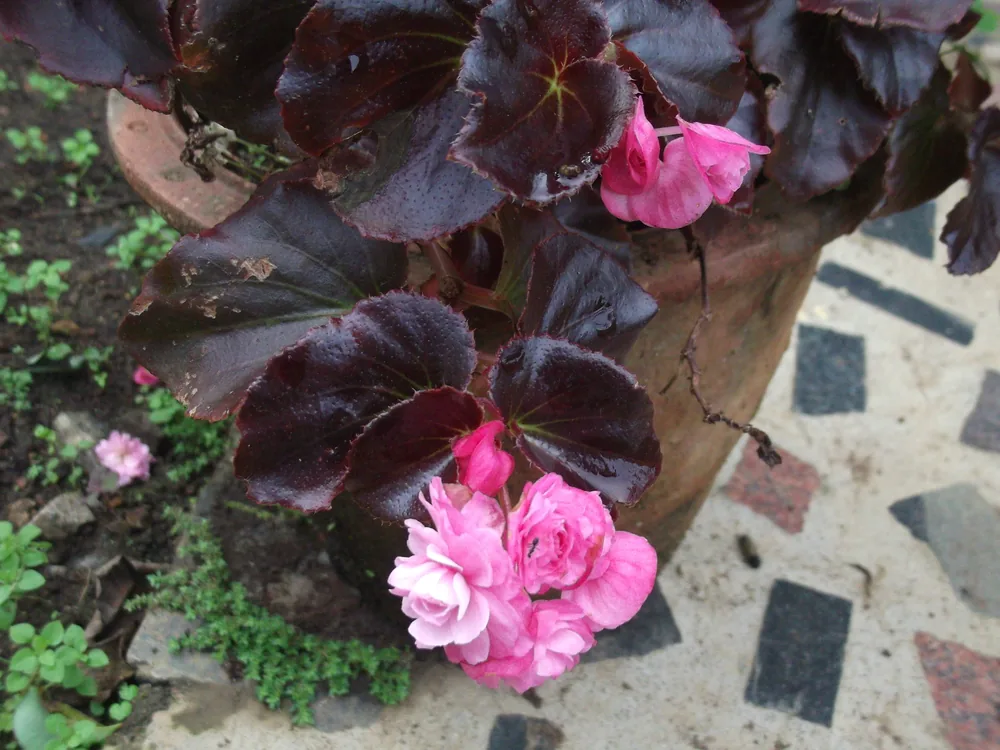
The bedding begonia, also sold as wax begonia, is the low mounded plant used by the million in summer bedding schemes, window boxes and balcony pots. Its leaves are thick and waxy, either fresh green or a deep bronze-red, and it flowers non-stop from late spring until frost without any deadheading at all. Unusually for a summer bedder it flowers just as well in shade as in sun, which is why it ends up in so many north-facing balconies.
'Cocktail' series'Ambassador' seriesBegonia x tuberhybridaBegonia 'Dragon Wing'
Light
Bright indirect light or part shade. Bronze-leaved varieties take direct sun; green-leaved ones scorch in it. It flowers in deeper shade than almost any other summer bedder.
Water
Keep the compost evenly moist but never soggy, and always water at the base rather than over the leaves. The fleshy stems rot easily when water sits on them.
Humidity
Average room humidity is fine. Indoors it does not need misting, and wet foliage in winter invites mould.
Soil
Any free-draining multipurpose compost. In containers add a little perlite, since the shallow roots dislike sitting in a saturated base.
Temperature
Not frost-hardy at all. Even a light frost kills the top growth.
Best position
east / south-east / south / west-facing windowanywhere up to about 2 m from the window
north / north-east / north-west-facing windowanywhere up to about 1 m from the window
south-west-facing windowabout 1 m from the window or further back
Watch for strong direct sun at south-west windows.
See every window directionHide window directions
Best position
right by the window
about 1 m
about 2 m
about 4 m
4 m or more
north
works well✓
works well✓
too dark○
too dark○
too dark○
north-east
works well✓
works well✓
too dark○
too dark○
too dark○
east
works well✓
works well✓
works well✓
too dark○
too dark○
south-east
works well✓
works well✓
works well✓
too dark○
too dark○
south
works well✓
works well✓
works well✓
too dark○
too dark○
south-west
just about~
works well✓
works well✓
too dark○
too dark○
west
works well✓
works well✓
works well✓
too dark○
too dark○
north-west
works well✓
works well✓
too dark○
too dark○
too dark○
✓works well~just about○too dark☼too much direct sun
A rough guide based on window direction and typical daylight through the year. Window size, curtains and whatever stands outside matter just as much.
!Toxic to pets
Toxic to cats and dogs if eaten.
Chewing it can irritate the mouth, causing drooling and trouble swallowing.
If your pet has eaten some, contact your vet.
Source: ASPCA
Signature feature
It is treated as an annual almost everywhere, but it is not one. A bedding begonia lifted from the garden in September and brought indoors to a bright windowsill will carry on flowering through the winter and can be planted back out the following May, which is how the name semperflorens, always flowering, was earned.
Care by Season
Spring
Plant out or pot up after the last frost, usually mid-May. Space plants 20 cm apart for air movement, and pinch out the growing tip once to encourage branching.
Summer
Flowering continuously. Feed a container plant every two weeks with a balanced liquid feed. No deadheading is needed; spent flowers drop by themselves.
Autumn
Still flowering until the first frost kills the top growth. To keep a plant, lift it or bring the pot indoors in September before nights turn cold.
Winter
Not frost hardy at all, and even a light frost turns the stems to mush. Indoors on a bright sill it keeps growing slowly; water sparingly and stop feeding.
Growing & Maintenance
Planting
Plant out or pot up after the last frost, about 20cm apart so air can move between the plants.
Soil and pot
Any free-draining multipurpose compost. In containers, add a little perlite: the shallow roots dislike wet compost.
Fertilising
Feed plants in containers every two weeks in summer with a balanced liquid feed.
Pruning
No deadheading is needed. Remove any soft or mouldy growth at once.
Propagation
From stem cuttings, which root easily, or by lifting a plant before the first frost and keeping it on a bright windowsill over winter.
Pests & Diseases
Common problems
Soft, mouldy base
Most likely cause: Botrytis, encouraged by water sitting on the crown.
What to do: Remove the affected parts at once and water at the base, never over the plant.
Scorched leaves on green-leaved plants
Most likely cause: Direct sun. Green-leaved varieties burn; bronze-leaved ones take sun.
What to do: Move green-leaved plants to part shade, or grow a bronze-leaved variety in the sunny spot.
Leggy plants with few flowers
Most likely cause: Too much shade.
What to do: Give them bright, indirect light or part shade, not deep shade.
Stems turned to mush overnight
Most likely cause: Frost.
What to do: Plant out only after the last frost and bring plants in before the first one.
Yellow leaves in a wet pot
Most likely cause: Compost that stays soggy.
What to do: Let the compost dry slightly between waterings and add perlite when you repot.
Pests & Diseases
Botrytis (grey mould)
Signs: Fuzzy grey growth on stems and flowers, with soft brown collapse at the base, usually after a wet spell or in a crowded planting.
Treatment: Remove affected parts immediately and bin them. Water at soil level in the morning, thin out crowded plants and improve air movement.
Powdery mildew
Signs: A white dusty coating on the upper leaf surfaces, most often late in the season on plants that dry out between waterings.
Treatment: Water more evenly, remove the worst leaves and space plants further apart. It rarely kills the plant but does spoil the display.
Vine weevil
Signs: A container plant wilts for no obvious reason and lifts out of the compost with no roots left; white grubs with brown heads are in the rootball.
Treatment: Check the rootball of any collapsed container plant. Treat with nematodes in late summer, which is when the grubs are small and most vulnerable.
FAQ
Should I plant the green-leaved or the bronze-leaved kind?
The choice is about sun, not just colour. Bronze-leaved varieties have far more pigment in the leaf, which acts as a natural sunscreen, so they hold up in full afternoon sun where green-leaved ones scorch and bleach. Green-leaved varieties in turn look fresher and flower more generously in shade. For a hot south-facing balcony choose bronze; for a shaded courtyard choose green.
Why has my begonia gone soft and mouldy at the base?
Almost always botrytis, encouraged by water sitting on the crown. Begonia stems are full of water and rot quickly when they stay wet, so the two common causes are overhead watering late in the day and plants packed too tightly in a box or pot. Water at soil level in the morning, remove any collapsed stems and dead flowers straight away rather than leaving them on the compost, and give each plant about 20 cm of space.
Are bedding begonias toxic to cats and dogs?
Yes, bedding begonias are toxic to cats and dogs. Chewing the plant irritates the mouth. Keep pots out of reach of pets.
Do bedding begonias need deadheading?
No. They flower continuously through summer and drop their faded flowers by themselves.
Can I keep a bedding begonia over winter?
Yes. It is treated as an annual but is not one. Lift it or bring the pot indoors before the first frost and keep it on a bright windowsill.
How often should I water a bedding begonia?
Often enough to keep the compost evenly moist but never soggy. Always water at the base, because wet stems and leaves rot quickly.