No results. Is a plant missing? Tell uscontact@wikiplant.net
Bishop's Cap Cactus
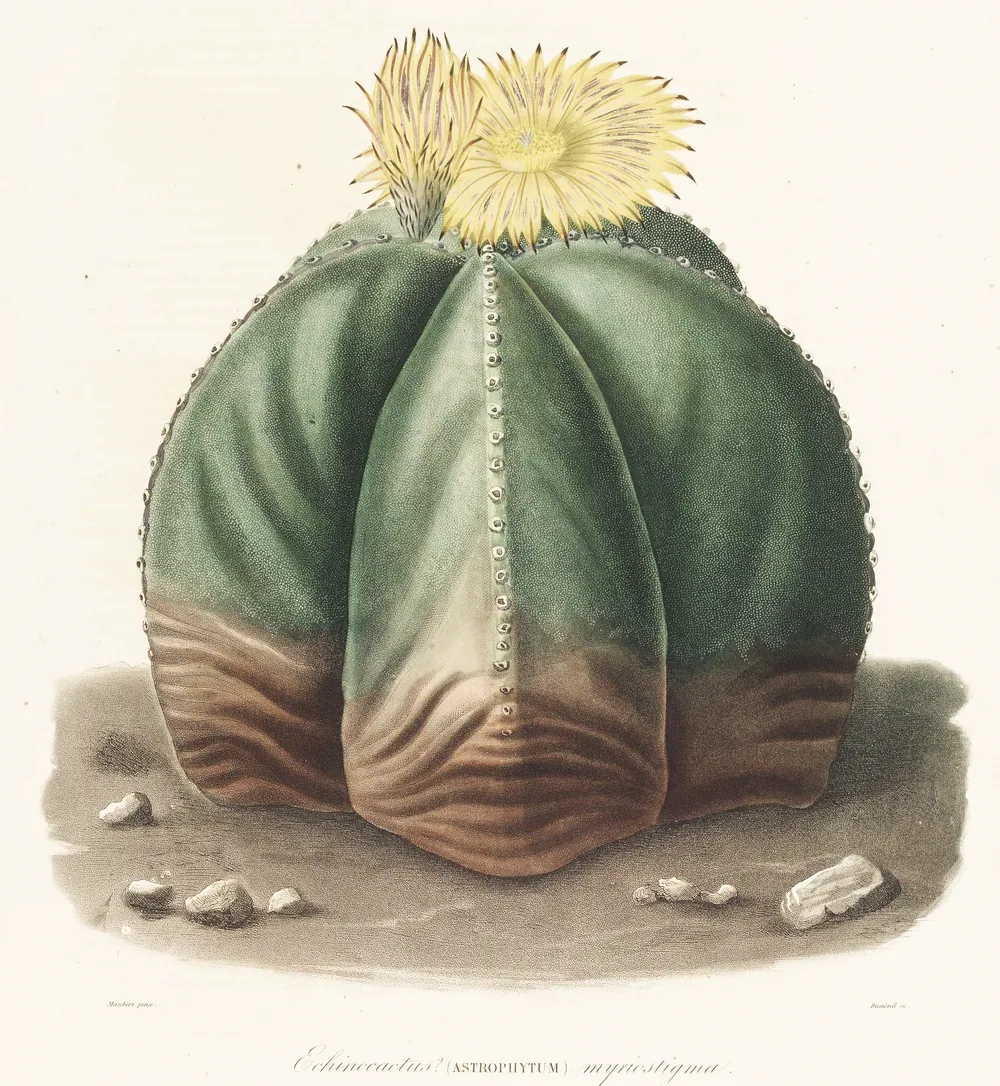
Astrophytum myriostigma
Care level: Easy
Named for its resemblance to a bishop's pointed mitre, this cactus typically grows five smooth, rounded ribs dusted with fine white speckles (actually tiny felt-like hair tufts) instead of the sharp spines most cacti rely on for defense. It's a slow, spineless grower prized as much for its sculptural, geometric shape as for the large yellow flowers it can produce once mature, and it has become something of a collector's plant thanks to unusual ribbed and patterned varieties.
Full sun to bright light for most of the day; too little light causes dull, stretched growth.
Water
Let soil dry out completely between waterings, roughly every 2-4 weeks, much less in winter.
Humidity
Prefers very low humidity and dry, arid conditions.
Soil
Very fast-draining cactus mix with extra grit or coarse sand.
Temperature
21-35°C in summer. In winter a cool, dry rest at 4-21°C.
Growth speed
Slow
Best position
south-east / south / south-west-facing windowanywhere up to about 1 m from the window
east / west-facing windowright by the window
See every window directionHide window directions
Best position
right by the window
about 1 m
about 2 m
about 4 m
4 m or more
north
too dark○
too dark○
too dark○
too dark○
too dark○
north-east
too dark○
too dark○
too dark○
too dark○
too dark○
east
works well✓
too dark○
too dark○
too dark○
too dark○
south-east
works well✓
works well✓
too dark○
too dark○
too dark○
south
works well✓
works well✓
too dark○
too dark○
too dark○
south-west
works well✓
works well✓
too dark○
too dark○
too dark○
west
works well✓
too dark○
too dark○
too dark○
too dark○
north-west
too dark○
too dark○
too dark○
too dark○
too dark○
✓works well~just about○too dark☼too much direct sun
A rough guide based on window direction and typical daylight through the year. Window size, curtains and whatever stands outside matter just as much.
?Pet safety not confirmed
As a precaution, keep it out of reach of children and pets.
Did you know?
Unlike most cacti, Astrophytum myriostigma has no spines at all; its defining white speckles are actually clusters of tiny felted hairs called trichomes, which help reflect intense sun and reduce water loss rather than deter predators.
Care by Season
Spring
Resume watering gradually as soil dries and begin light feeding with cactus fertilizer.
Summer
Water once soil is fully dry and give as much direct sun as possible to encourage flowering.
Autumn
Taper off watering and stop feeding as the plant heads toward dormancy.
Winter
Water rarely, if at all, and keep cool and dry to support healthy spring blooming.
Growing & Maintenance
Soil and pot
A very fast-draining, sandy cactus mix with extra grit, in a pot with drainage holes.
Fertilising
A light feed with cactus fertiliser in spring and summer. Stop in autumn.
Propagation
From seed.
Pests & Diseases
Common problems
Dull, stretched growth
Most likely cause: Too little light.
What to do: Give it full sun or very bright light for most of the day.
Soft, mushy base
Most likely cause: Root rot from overwatering or soggy compost.
What to do: Stop watering at once, let the plant dry out fully and repot in fresh, gritty mix.
Shrivelled body
Most likely cause: A very long dry spell during the growing season.
What to do: Water thoroughly once the compost is dry, then let it dry out completely again.
No flowers
Most likely cause: Too little sun, or no cool, dry winter rest.
What to do: Give it as much direct sun as possible in summer and keep it cool and nearly dry in winter.
White speckles thinning out
Most likely cause: Lower light, or rubbing from handling.
What to do: Increase the light and handle the plant as little as possible.
Pests & Diseases
Mealybugs
Signs: White cottony spots nestled in the ribs or near the crown.
Treatment: Remove with an alcohol-soaked cotton swab and monitor for regrowth. Check the undersides of the leaves and the crevices where the leaf stem meets the main stalk.
Scale insects
Signs: Small brown bumps along the ribs that resist wiping off.
Treatment: Scrape off gently and treat with insecticidal soap.
Root rot
Signs: Soft, discolored base and a mushy feel from overly wet soil.
Treatment: Stop watering immediately, let it dry out fully, and repot into fresh, gritty mix if rot has developed.
FAQ
Why doesn't my bishop's cap cactus have any spines?
That's completely normal for this species, it's naturally spineless, relying instead on its white, felty speckles and thick ribbed skin for sun protection rather than the spines most other cacti have.
Why is my bishop's cap cactus losing its white speckled pattern?
The speckling can thin out or look patchier when a plant is grown in lower light or after physical contact rubs the delicate hair tufts off; keeping it in strong, bright light helps maintain the speckled look on new growth.
How often should I water a bishop's cap cactus?
Roughly every 2-4 weeks in the growing season, once the compost has dried out completely. In winter it needs very little water, if any.
Does a bishop's cap cactus flower?
Yes, given plenty of sun in summer and a cool, dry winter rest. Without that rest it is much less likely to bloom.
How should I overwinter a bishop's cap cactus?
In a cool, dry room with some sunshine. Water rarely or not at all until spring.
How do I propagate a bishop's cap cactus?
From seed. It does not readily produce offsets, so seed is the normal way to raise new plants.