No results. Is a plant missing? Tell uscontact@wikiplant.net
Bunny Ear Cactus
Opuntia microdasys
Care level: Easy
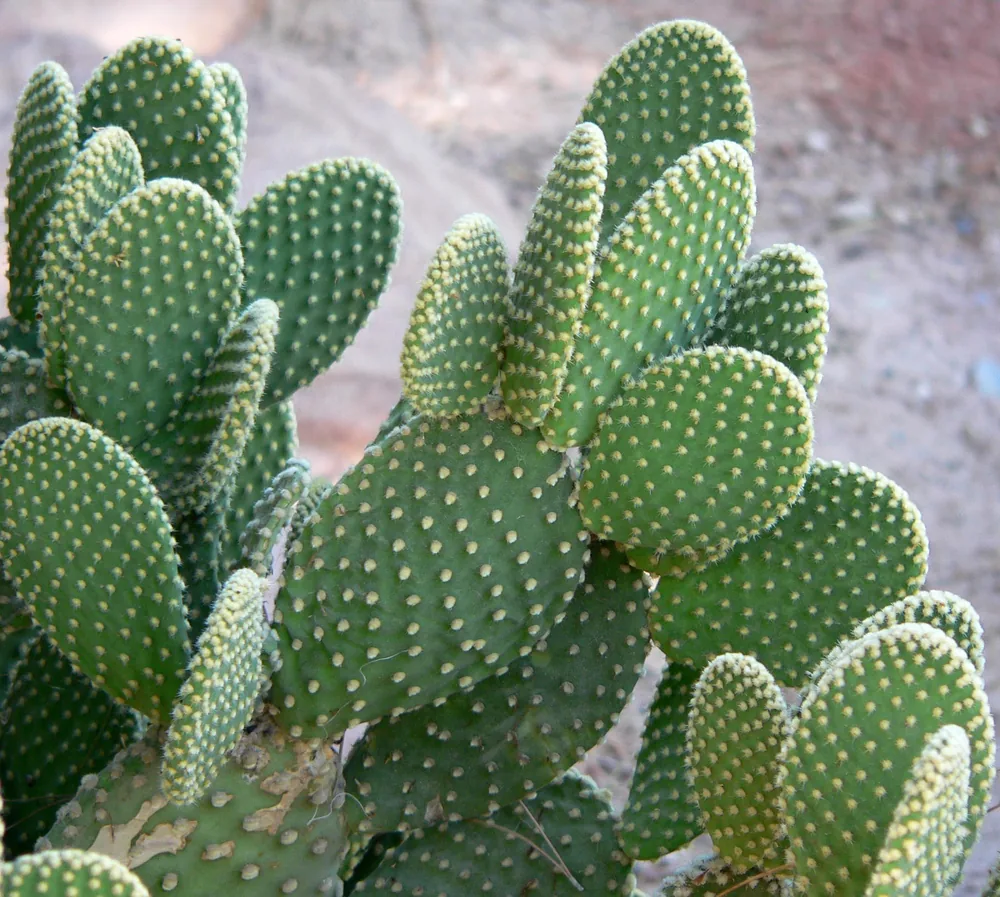
Named for its paired, ear-like pads, Opuntia microdasys is a Mexican desert native that looks harmlessly fuzzy but is covered in glochids, tiny barbed hair-like spines that detach at the slightest touch and are notoriously difficult to remove from skin, making this one of the few houseplants best appreciated with a healthy amount of distance.
Opuntia Microdasys AlbataOpuntia Microdasys var. rufidaOpuntia Microdasys Aurea
Light
Needs full, direct sun for several hours daily to stay compact and healthy.
Water
Very drought-tolerant; water deeply only when soil is bone dry, about every 3-4 weeks.
Humidity
Prefers low humidity typical of arid climates.
Soil
Very fast-draining cactus mix with added sand or pumice.
Temperature
Warm in summer. A cool winter rest at 10-18°C; not frost-tolerant.
Size
60-90cm tall and 1.2-1.5m wide with age.
Growth speed
Slow
Best position
south-east / south / south-west-facing windowanywhere up to about 1 m from the window
east / west-facing windowright by the window
See every window directionHide window directions
Best position
right by the window
about 1 m
about 2 m
about 4 m
4 m or more
north
too dark○
too dark○
too dark○
too dark○
too dark○
north-east
too dark○
too dark○
too dark○
too dark○
too dark○
east
works well✓
too dark○
too dark○
too dark○
too dark○
south-east
works well✓
works well✓
too dark○
too dark○
too dark○
south
works well✓
works well✓
too dark○
too dark○
too dark○
south-west
works well✓
works well✓
too dark○
too dark○
too dark○
west
works well✓
too dark○
too dark○
too dark○
too dark○
north-west
too dark○
too dark○
too dark○
too dark○
too dark○
✓works well~just about○too dark☼too much direct sun
A rough guide based on window direction and typical daylight through the year. Window size, curtains and whatever stands outside matter just as much.
?Pet safety not confirmed
As a precaution, keep it out of reach of children and pets.
Safety note
The fuzzy dots on each pad are glochids, not soft hairs, and they lodge in skin on contact; always handle this cactus with thick gloves or folded paper, and keep it away from curious pets and small children who might touch the inviting-looking pads.
Care by Season
Spring
Resume watering gradually and feed once with a low-nitrogen cactus fertilizer.
Summer
Water when fully dry and provide maximum sun exposure.
Autumn
Taper off watering as growth slows and light levels drop.
Winter
Keep nearly dry and cool (around 10°C) to encourage healthy dormancy.
Growing & Maintenance
Soil and pot
A very fast-draining cactus mix with added sand or pumice, in a pot with drainage holes.
Fertilising
One feed in spring with a low-nitrogen cactus fertiliser is enough.
Propagation
Break off a pad in spring and root it in well-drained cactus mix. Use tongs or folded paper, never bare hands.
Pests & Diseases
Common problems
Wrinkled, puckered pads
Most likely cause: Thirst. The plant is drawing on its stored water.
What to do: Water deeply, then let the compost dry out completely again.
Soft, mushy pads or base
Most likely cause: Root rot or stem rot from overwatering and poor drainage.
What to do: Cut away the rotten parts, let the cuts dry and repot in fresh, dry cactus mix.
Thin, elongated new pads
Most likely cause: Too little light.
What to do: Give it several hours of direct sun a day.
No flowers
Most likely cause: Normal. This cactus rarely blooms indoors.
What to do: Nothing to do.
Pale, scorched patches
Most likely cause: A sudden move from shade into full sun.
What to do: Increase the sun exposure gradually.
Pests & Diseases
Mealybugs
Signs: White cottony patches nestled among the glochid clusters.
Treatment: Remove carefully with tweezers or an alcohol swab, wearing gloves. Check the undersides of the leaves and the crevices where the leaf stem meets the main stalk.
Scale insects
Signs: Small brown or grey bumps on the pads.
Treatment: Scrape off gently and treat with horticultural oil.
Root rot
Signs: Pads turning soft, discolored, and mushy from excess water.
Treatment: Remove from wet soil, let cut ends callus, and repot in dry cactus mix.
FAQ
How do I safely remove glochids if I get them in my skin?
Try pressing a piece of tape or a thin layer of white glue firmly onto the area and peeling it off to lift the glochids out, then follow up with tweezers for any that remain; washing the area first can drive them in deeper, so remove them before rinsing.
Why are my Bunny Ear Cactus pads wrinkling?
Wrinkled, slightly puckered pads usually just mean the plant is thirsty and drawing on its stored water reserves; give it a deep watering and the pads should plump back up within a few days, but persistent wrinkling alongside yellowing points to root problems instead.
How often should I water a Bunny Ear Cactus?
About every 3-4 weeks, and only when the compost is bone dry. In winter it needs very little water.
How do I propagate a Bunny Ear Cactus?
Break off a pad in spring and root it in well-drained cactus mix. Handle it with tongs or folded paper to avoid the glochids.
Does a Bunny Ear Cactus flower?
Rarely indoors. It can flower in ideal outdoor conditions, but as a houseplant it is grown for its pads.
How should I overwinter a Bunny Ear Cactus?
Keep it cool, at about 10-18°C, and nearly dry. It is not frost-tolerant, so it must stay above freezing.