No results. Is a plant missing? Tell uscontact@wikiplant.net
Bleeding heart
Lamprocapnos spectabilis
Care level: Easy
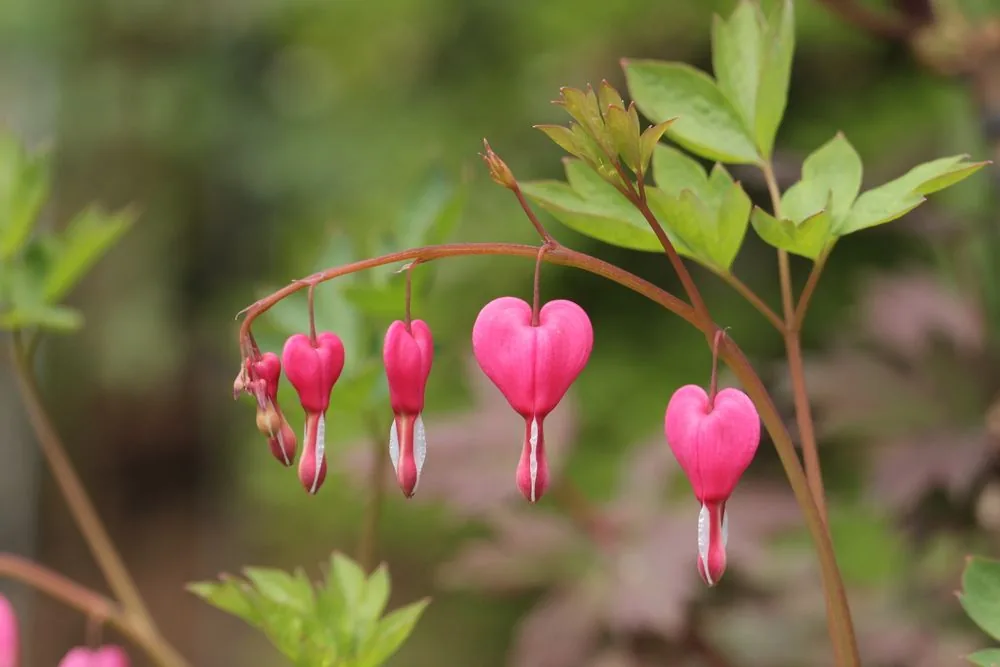
The bleeding heart is a clump-forming perennial from the woodlands of north-east Asia, grown for one of the most recognisable flowers in the garden. In late spring and early summer its arching, fleshy stems carry a row of dangling, rose-pink hearts, each with a white tip that pushes out at the bottom like a drop. The soft, divided, fern-like leaves make a mound up to about a metre across. It is hardy, long-lived and easy in a cool, lightly shaded border with moist soil. It was long known as Dicentra spectabilis and is often still sold under that name.
Eating it causes vomiting and diarrhoea, and in larger amounts staggering, tremors and seizures.
If your pet has eaten some, contact your vet.
Source: NC State Extension, Pet Poison Helpline
Did you know?
It disappears in midsummer, and that is normal. Once flowering is over the leaves yellow and the whole plant dies back to its roots, sooner in sun and dry soil. It is resting, not dying, and returns in spring. Plant hostas, ferns or late perennials beside it to fill the gap.
Care by Season
Spring
Shoots emerge early; protect them from late frost. Mulch, and enjoy the flowers from late spring.
Summer
Flowering ends and the leaves yellow. Cut the plant down once it has died back.
Autumn
Dormant below ground. Plant new plants and divide established clumps if needed.
Winter
Dormant. Mark the position and keep heavy soil from waterlogging.
Growing & Maintenance
Planting
Plant in spring or autumn with the crown just below the surface, in soil improved with leaf mould or garden compost. Handle the brittle roots gently and water in well.
Fertilising
Mulch with garden compost or leaf mould each spring. No other feeding is needed in good soil.
Pruning
No pruning. Cut the yellowed stems to the ground after the plant has died back.
Propagation
By division in early spring or after the leaves have died down, or by root cuttings in winter.
Pests & Diseases
Common problems
Plant gone by late summer
Most likely cause: Natural dormancy.
What to do: Leave it alone and fill the gap with later plants.
Leaves yellow soon after flowering
Most likely cause: Dry soil or too much sun.
What to do: Water in dry spells and move to partial shade in autumn.
Blackened shoots in spring
Most likely cause: Late frost.
What to do: Protect with fleece; the plant usually regrows.
Stems snapped
Most likely cause: Wind or passing traffic.
What to do: Plant in a sheltered spot away from paths.
Few flowers
Most likely cause: Deep shade or a recently moved plant.
What to do: Give brighter shade and leave it undisturbed for a few years.
Does not reappear in spring
Most likely cause: Roots rotted in waterlogged soil, or damaged by digging.
What to do: Improve drainage and mark the position of dormant plants.
Pests & Diseases
Slugs and snails
Signs: New shoots and young leaves eaten in spring, with slime trails.
Treatment: Hand-pick after dark and protect the emerging shoots with barriers or traps.
Aphids
Signs: Clusters of small insects on the soft shoot tips and flower stems.
Treatment: Rub them off or rinse with water; predators usually keep them in check.
Crown rot
Signs: Shoots fail to appear in spring or collapse at the base, with soft, brown roots, in heavy soil that stays wet in winter.
Treatment: Improve the drainage with grit and organic matter, or replant on slightly raised ground.
FAQ
Why has my bleeding heart vanished in summer?
It goes dormant after flowering. The leaves turn yellow and die away between midsummer and early autumn, and new shoots appear the following spring. Mark the spot so you do not dig into the roots.
Where should I plant it?
In partial shade, in moist, fertile soil rich in leaf mould or compost, sheltered from strong wind, which snaps the brittle stems. It tolerates sun only where the soil stays reliably moist.
Can I cut it back after flowering?
Wait until the leaves have yellowed, since they feed the roots for next year. Then cut the stems down to the ground.
Why were the new shoots killed in spring?
The shoots come up early and are tender, so a late frost can blacken them. The plant usually reshoots. Cover the emerging growth with fleece on frosty nights and avoid frost pockets.
Can I move or divide it?
With care. The thick roots are brittle and resent disturbance, so divide only when needed, in early spring as growth starts or after the leaves have died down, and replant the pieces straight away.
Is it the same plant as Dicentra?
Yes. Botanists moved this species from Dicentra to its own genus, Lamprocapnos. The smaller, ferny-leaved plants still called Dicentra, such as Dicentra formosa, are relatives that flower for longer.
Should I wear gloves?
Yes, if you have sensitive skin. Contact with the leaves and sap can irritate the skin, and all parts of the plant cause stomach upset if eaten.